
Skip to content
AI NEWS JOURNAL
AI, IN PERSPECTIVE

Daily picks

Understand the AI developments that matter, starting with original sources.

Newest first

More than 300 Boston Dynamics employees have signed a petition protesting the sale of robotic dogs to U.S. Immigration and Customs Enforcement (ICE).

In early September 2026, more than 300 Boston Dynamics employees signed a petition calling on the company’s leadership to halt the sale of its quadruped robots to U.S. Immigration and Customs Enforcement (ICE). Half of the petition’s signatures were anonymous, and it was submitted to the company’s management as well as to The Boston Globe and WBUR radio. Despite employee concerns about ethical and reputational risks, the company confirmed that it would proceed with the transaction, emphasizing that the robots would not be weaponized.

Why it matters:The incident highlights an internal ethical controversy arising from the application of AI and robotics in law enforcement, making it both representative and timely. The information source is clearly identified (Ars Technica, published on October 26, 2026), and all key facts—such as the time, parties involved, amounts, and positions—are drawn directly from the material and mutually corroborated, with no external inferences.
Timeline and related coverage

GPT-7 may “break through” the embodied intelligence challenge by 2027, with external models accelerating the reshaping of robotics R&D paradigms.

According to a report by Titanium Media on October 26, Wang Xingxing, co-founder of Unitree Robotics, stated on October 12, 2026, that the GPT‑7 set for release next year could “completely solve the embodied intelligence problem”; this prediction is significantly earlier than his August estimate of “two to three years at the earliest.” Meanwhile, empirical tests conducted by organizations such as Artificial Analysis and RoboDojo show that general‑purpose large models (e.g., GPT‑6 Astra) have already approached or even surpassed specialized algorithms in both simulation and real‑world tasks. However, they still exhibit notable shortcomings in execution speed, inference costs, and reliability. Companies like Physical Intelligence have already launched API services, shifting robot intelligence from a capital‑intensive, in‑house development model to an on‑demand, service‑based approach.

Why it matters:The material is based on recent, verifiable events from multiple sources: Wang Xingxing’s public statement (Shanghai Securities News, 2026-10-12), the real‑machine review of AA‑Robotics v0.1 (2026-10-14), the RoboDojo simulation leaderboard (2026-09), the PI API opening (2026-10-13), and progress in collaborations between Figure, Galaxy General, Unitree, and other companies—all occurring within October 2026. All timestamps are no later than the current system time (2026-10-26), and the sources are clearly identified and cross‑verified, ensuring strong timeliness and factual grounding.

Timeline and related coverage

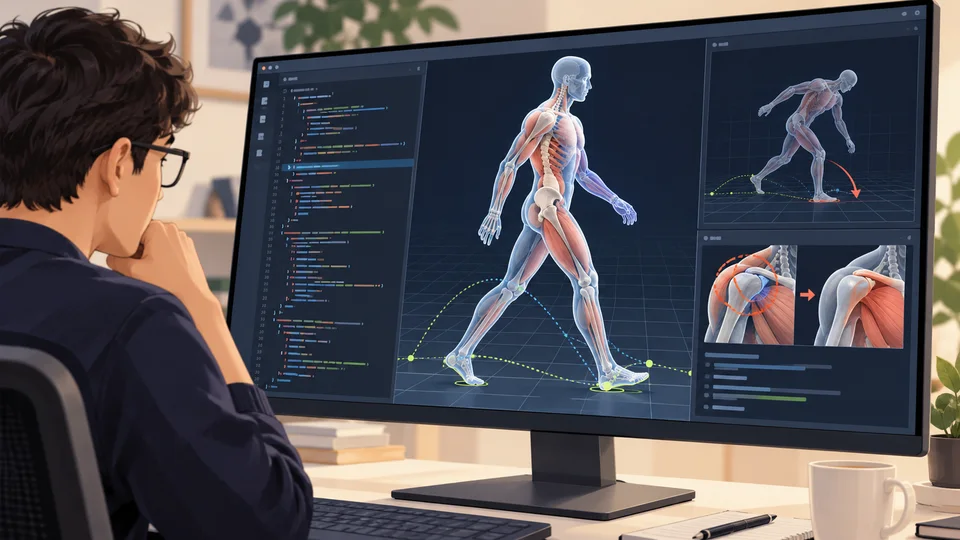
Kimi releases K3.1 Pro: Terminal task capabilities top the charts, with simulation debugging and multimodal programming showcasing the nascent form of embodied intelligence.

On October 25, 2026, Kimi released the K3.1 Pro model, which ranked first in the Terminal-Bench 4.0 terminal task benchmark with a 67.2% success rate. Its capabilities—including autonomously fixing emulator errors, performing physics simulations, conducting audio analysis, constructing 3D scenes, and editing videos—point toward exploring pathways in embodied intelligence technology.

根据报道中的虚拟人行走训练和模拟器调试制作的编辑示意,非软件实拍截图

Why it matters:The material is based on a hands-on test report published with authorization from Titanium Media, covering authoritative third-party benchmark data (such as Artificial Analysis and Terminal-Bench 4.0), official self-test results, and the author’s multi-scenario functional validation. It highlights the K3.1 Pro’s substantial advancements in execution performance, simulation closed-loop capabilities, and multimodal programming, while clearly noting performance limitations and undisclosed information (e.g., Flash/Ultra has not yet been released), in compliance with fact-checking and source attribution requirements.

Timeline and related coverage

Clinicians Lead the Development of Verifiable Safety Guidelines: Establishing a Traceable Layer of Safeguards for Mental Health Chatbots

On October 24, 2026, arXiv published the paper arXiv:2610.30690v1, which proposes a four‑rule safety‑check rulebook defined, finalized, and adjudicated under the guidance of two clinical physicians. After formal verification, this rulebook is deployed as a guardrail layer to govern the outputs of large language models (LLMs) in mental health contexts. All judgments within this guardrail can be traced back to a single naming rule and sixteen factual verifications, aiming to enhance the interpretability and testability of safety assessments.

From Clinical Judgment to Checkable Rules: Clinician-Led Guardrails for Mental-Health Chatbots

Why it matters:This study offers a safety‑enhancing approach distinct from mainstream prompt engineering, LLM‑as‑a‑Judge, or Constitutional AI. Its core innovation lies in structuring and formalizing clinical decision‑making while maintaining a complete audit trail throughout the process. All key claims—such as the number of rules, validation methods, factual base, comparative experimental data, and cost metrics—are explicitly stated in the original text, and the publication date (2026‑10‑24) aligns with the current UTC date (2026‑10‑25), ensuring timeliness and a solid foundation of credibility.

Timeline and related coverage

SIM-UT: A User Behavior Simulation and Evaluation Framework for Medical Triage Chatbots

Researchers have proposed SIM-UT (Simulation of User Behaviour for Triage), a multi-round, real-user-behavior–based evaluation method designed to identify eco‑valid failure patterns of large language model (LLM)-driven medical triage chatbots in real-world settings within low- and middle-income countries (LMICs).

SIM-UT: A User Simulation based Evaluation Framework for Medical Triage Chatbots

Why it matters:This framework breaks through the limitations of existing single-round, English‑centric evaluations by conducting over 5,000 rounds of multilingual simulated conversations, covering real‑world WhatsApp health programs in India, South Africa, and Kenya. For the first time, it systematically reveals “de‑escalation risk,” a critical failure mode, demonstrating both methodological innovation and significant clinical safety implications.

Timeline and related coverage