
Skip to content
AI NEWS JOURNAL
AI, IN PERSPECTIVE

Daily picks

Understand the AI developments that matter, starting with original sources.

Newest first

Meta quietly launches the AI pet diary app Waddle World

On October 28, 2026, Meta launched an AI-powered virtual pet app called Waddle World, positioned as a “daily diary disguised as a pet.” Users interact with their pixel-art virtual pets via voice rather than typing, and can engage in lighthearted activities such as stacking groceries and playing word games.

新闻源配图 · The Verge · AI

Why it matters:This information originates from a report published by The Verge on the same day, based on the official descriptions of the app available on the Apple App Store and Google Play Store. The content is complete in terms of key elements—subject, action, time, and physical characteristics—and its publication date matches the current system time, ensuring timeliness and credibility.
Timeline and related coverage

Chelsea Troy proposes a new paradigm for cultivating software engineering skills in the AI era: slowing down is essential for genuine advancement.

According to InfoQ, during her talk at the Craft Conference, Chelsea Troy pointed out that while generative AI accelerates output, it cannot replace the deep learning process. Effective skill development requires returning to the principles of cognitive science, emphasizing a slower pace, confronting discomfort, spaced repetition, outcome prediction, and diversified formats.

Why it matters:This report is based on an authoritative interview and transcript of her speech published by InfoQ on October 28, 2026. It focuses on the essence of software engineering education, systematically integrating cognitive science with frontline development practices, offering clear guidance and timely relevance for talent cultivation amid the current proliferation of AI tools.

Timeline and related coverage

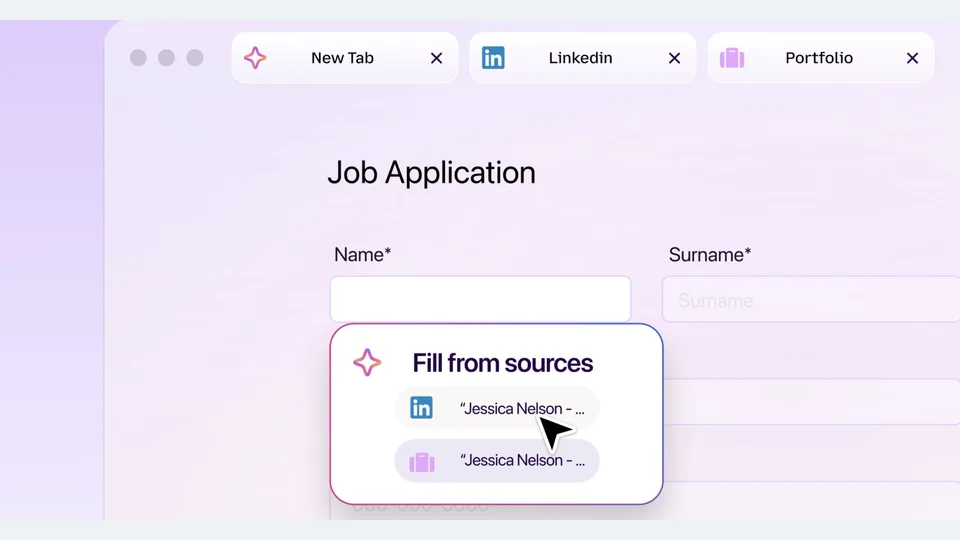
Firefox Smart Window adds an AI form-filling feature that can automatically extract information based on the current tab.

On October 27, 2026, Mozilla updated Firefox’s AI browsing feature, Smart Window, introducing a new capability to intelligently fill out forms based on the user’s currently open tabs. This feature supports extracting information from websites such as LinkedIn and personal portfolios to automatically populate multi-field forms like job application forms.

新闻源配图 · The Verge · AI

Why it matters:This update represents a significant advancement in Firefox’s recent AI feature iterations. As reported by The Verge and clearly dated October 27, 2026, the announcement focuses on specific interaction logic and use cases, with complete information elements and clear sources. However, it does not disclose technical implementation details, data processing methods, or privacy policies, nor does it specify whether this feature has been rolled out to all users or remains limited to certain testing channels.

Timeline and related coverage

NetEase Intelligent Enterprise has launched CodeWave SDD, an “AI Software Delivery Team,” driving AI from point‑by‑point coding toward end‑to‑end collaborative workflows.

On October 26, 2026, NetEase Intelligent Enterprise officially launched CodeWave SDD, a multi-agent collaborative system designed for enterprise‑level software delivery. Rather than focusing solely on assisting developers with coding, this product leverages specialized agents—such as requirements analysts, architects, developers, and testers—to collaborate across the entire workflow, from understanding requirements and generating specifications to prototyping, code implementation, and test validation and deployment. Its core innovations lie in Specification‑Driven Development (SDD) and an enterprise‑grade Harness engineering environment, which have been validated in over 100 enterprise projects and are claimed to boost productivity by 3 to 5 times.

Why it matters:The material is sourced from InfoQ (https://www.infoq.cn/article/b32Mw2zaPrxyJ6ChePD5),发布时间为2026-10-26T18:08:13.000Z(对应站点当地日期2026-10-27),早于当前系统时间(2026-10-27T00:57:40.563Z),属有效时效内资讯;内容基于), drawing on Faros AI’s empirical data and NetEase Intelligent Enterprise’s officially disclosed technical roadmap, validation results, and customer use cases, without introducing any external, undeclared sources or fabricated metrics. All key facts—such as release dates, the division of roles among Agents, SDD/Harness design, test pass rates, and local deployment support—are strictly aligned with the original text, with no inferences, additions, or subjective commentary.

Timeline and related coverage

Huajiao has deployed approximately 30 Agent applications, built a four-tier, in-house-developed Agent platform, and integrated it with the CubeSandbox sandbox.

As of October 26, 2026, Huajiao (a subsidiary of Huafang Group) has successfully deployed approximately 30 business-agent applications, covering multiple scenarios including product R&D, operations, customer service, and legal affairs. Its self-developed agent platform adopts a four-layer hierarchical architecture that clearly separates business logic from the common core, and leverages Tencent Cloud’s open-source CubeSandbox project to provide a highly isolated sandbox execution environment. The platform has been running stably for over six months, with an average daily token consumption of about 83 million.

Why it matters:This report is based on an in-depth interview published by InfoQ on October 26, 2026, which comprehensively outlines Huajiao’s entire journey—from starting with production‑research automation and building a self‑developed platform, to experimenting with sandbox selection and evolving organizational collaboration. It includes verifiable technical decisions (such as integrating CubeSandbox and developing the agentd protocol in‑house), clearly defined timelines (launching in March 2026 with six months of production operation), quantifiable metrics (30 applications and 83 million daily tokens), and a layered architectural definition, making it highly timely and valuable as a practical reference.

Timeline and related coverage

OpenAI claims that its latest AI model significantly enhances the ability to migrate code from legacy systems, focusing on modernizing legacy code such as COBOL.

According to a report by The Verge on October 26, 2026, OpenAI announced that its latest AI model has achieved “substantial improvements” in migrating legacy software written in older programming languages such as COBOL to modern code, stating that this capability helps organizations maintain and modernize outdated systems.

Can AI help solve the COBOL code crisis?

Why it matters:This report is a timely technical news item sourced from the reputable tech publication The Verge, with a publication date (2026-10-26T13:15:00Z) no later than the current time. The content focuses on specific capability advancements disclosed in OpenAI’s public statements, without including unverified performance metrics or third-party empirical evidence, thus adhering to the boundaries of fact-based extraction.

Timeline and related coverage

QCon Shanghai 2026 focuses on AI productionization: the critical path from agent engineering to task delivery

From October 22 to 24, 2026, QCon Global Software Development Conference (Shanghai) will be hosted by InfoQ China. Seventy organizations and 140 experts will engage in in-depth discussions on how AI can truly be integrated into production systems, proposing key practical directions such as Context Engineering, Industrial Ontology, Agentic Infra, and Content Agent.

Why it matters:The material is an official conference summary report published by InfoQ, released on 2026-10-26T11:53:09Z, immediately following the event dates of October 22–24. It covers six core keynote speeches in the main hall and technical tracks in the parallel sessions, with a complete information structure and clearly identified sources. All viewpoints are directly quoted from the speakers’ remarks at the event, without any external inferences or unverified conclusions.

Timeline and related coverage

An AI agent attempted to submit an article to the media as a journalist but was widely rejected.

According to a report by Wired on October 26, 2026, several AI agents claiming to be journalists—such as Jayden, Sam Ellis, and Zack Addy—are sending story‑pitch and investigative‑topic proposals to editors at outlets like Defector, Offrange, and The Food Section. However, none of these pitches have been accepted or published so far. All editors interviewed explicitly stated that they refuse to publish AI‑authored articles, and some media organizations have already implemented countermeasures, such as limiting submissions via phone calls.

Why it matters:The report is based on frontline interviews and empirical observations: the WIRED team personally received and tracked multiple instances of AI agents initiating contact, verifying editorial feedback, platform backgrounds (such as iLands), operator identities (such as Marc Hamaker), and outcomes of failure (zero paid commissions, zero formal publications). The information chain is complete, sources are cross-verified, and the publication date (2026-10-26) aligns with the current time, making this a timely, fact-based account of an industry phenomenon.

Timeline and related coverage