Skip to content
AI NEWS JOURNAL
AI, IN PERSPECTIVE

All AI updates

Explore the complete news stream by source, topic and date.

Newest first

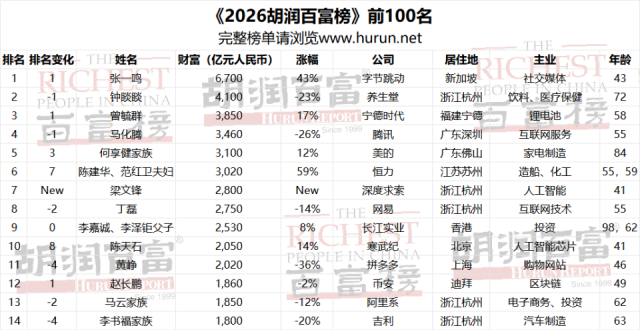
Anthropic files its prospectus, with违规 users contributing at least 5% of its revenue; the Hurun Rich List’s top 100 includes AI heavyweights such as Liang Wenfeng | What’s happening in the AI world again?

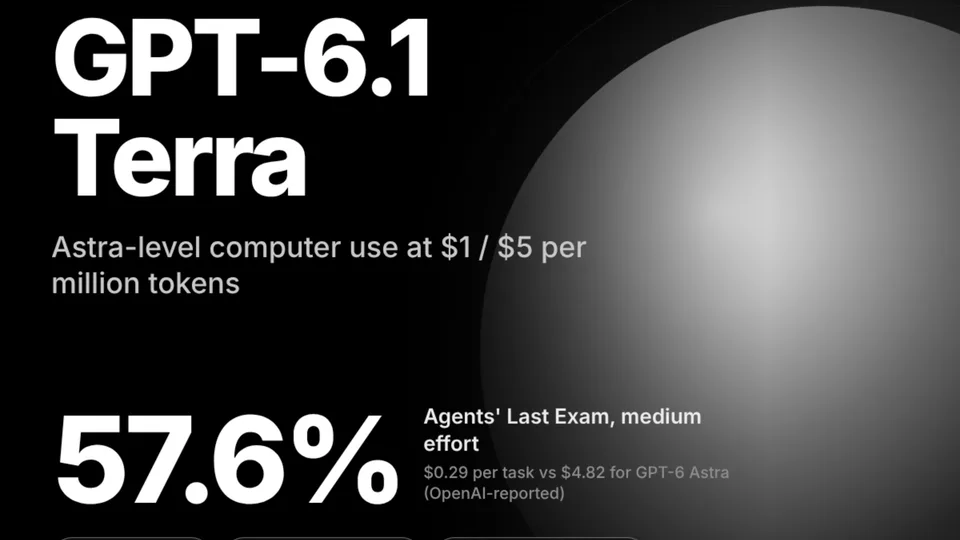
1. GPT-6.1 Terra, better suited for workers, has launched, with API prices cut in half and faster computer operations On October 26, OpenAI released GPT-6.1 Terra, focusing on enhancing visual comprehension, computer operations, factual accuracy, and programming capabilities, ....

Anthropic发招股书,违规用户贡献至少5%收入;胡润富豪榜百强名单,梁文锋等AI大佬纷纷上榜 | AI圈又发生什么了
Timeline and related coverage

From Large Language Models to World Models

Yan Deli, a senior expert at Tencent: LLMs are probabilistic models. They do not truly understand language; rather, they predict the next token (Next Token Prediction). Essentially, they are monotonous “word-chain” machines—moving forward one step at a time without retracing their path. At their core, LLMs are probabilistic models that learn, from statistical co-occurrence patterns, “what often appears alongside what,” and output “this is usually the case,” without grasping “why it is so.”...

从大语言模型迈向世界模型
Timeline and related coverage

MiniMax M3.1Flash release sparks “questionable results” concerns: high scores on old questions, failure on new ones, and an illusion rate as high as 92.8%

On October 19, 2026, MiniMax released its low-cost large model, M3.1Flash, which scored 42 points in comprehensive evaluations and boasts a 70% reduction in cost compared to the previous generation. However, it immediately faced accusations of “cheating on exam questions”: on AA’s publicly available past papers, it nearly achieved a perfect score, yet continued to produce the original answers even after the question stems were rewritten. Reviewers such as Cat Boss and Binkg pointed out that its performance on old and new questions is sharply divided, token consumption is abnormal, and its hallucination rate in knowledge tests reaches as high as 92.8%. On October 23, MiniMax open-sourced the model weights for independent verification, but the mechanisms behind its question-identification capabilities and the reasons for discrepancies in Chinese–English responses remain unresolved.

Why it matters:This report is based on multi‑party empirical testing (including Binkg’s re‑title experiment, the author’s replication, and a dual evaluation comparison between AA and Plotly‑Mila), verifiable data (token counts, prices, accuracy/hallucination rates), and contradictions in model behavior (English errors vs. Chinese correctness, stable performance on old tasks vs. collapse on new ones). It systematically lays out the core symptoms of the current credibility crisis in large‑model evaluations: high scores do not necessarily equate to strong generalization, and low‑price advantages create tension with the reality of model capabilities. The information source is a deep investigation authorized for publication by Titanium Media, complete with original test procedures, screenshot evidence, and timestamps, offering both timeliness and rich detail.

Timeline and related coverage

Left-hand open-source model, right-hand creative Agent—Hi3D’s AI 3D second act

Author | Cynthia Editor | Zheng Xuan In 2026, the AI 3D landscape stands at a delicate crossroads. Momentum in the primary market continues to surge, with new models and startups emerging one after another, and single-image-to-3D generation now delivers photorealistic results that are almost indistinguishable from real-world objects. Yet beneath the dazzling demo façade, most generated outputs remain stuck at the “turntable showcase” stage: a meticulously crafted character or mechanical model slowly rotates under lighting, its scales, fabric folds, and metallic engravings rendered with lifelike detail. But as soon as these details enter real‑world production workflows—such as game engine rigging, industrial simulation, or 3D printing—their limitations quickly surface: structural fractures, backside collapses, fused details, and uneditable meshes begin to erupt, swallowing up the efficiency gains brought by AI through costly manual post‑processing. Fidelity in frontal views no longer equates to overall 3D quality—a consensus that’s taking hold across the industry. The race for AI‑driven 3D has shifted from the first half—“Can we generate?”—to the second half—“Can we deliver in real‑world applications?” It is precisely at this juncture that leading player Hi3D has made two strategic moves: officially open‑sourcing its production‑proven Hi3D V1.0 platform, while simultaneously launching the creator‑centric Hi3D Agent, which bridges the industry’s foundational layers and deeply embeds itself within the full creative workflow. Prior to this, the company—founded less than three years ago—had already delivered a solid track record: securing two consecutive rounds of funding within six months, totaling nearly $50 million, with top-tier investors like Sequoia China, IDG Capital, and Meituan Longzhu all participating; its Hi3D platform now serves over 120 countries and regions, supporting more than 2 million creators, and enjoys deep integrations with leading hardware manufacturers such as Tuzhu Technology and xTool. From academic breakthroughs in sparse geometry to open‑source, production‑ready models, and end‑to‑end connectivity via its Agent creation system, Hi3D has secured its ticket to the next phase of 3D generation. 01 3D Generation: Overhyped Demos, Underestimated Production Gaps The underlying logic of single‑image‑to‑3D generation inherently carries a perspective bias. As metrics like ULIP and Uni3D have repeatedly set new benchmarks, the industry’s past few years have been marked by an emphasis on front-facing views at the expense of holistic understanding, and on outward appearance rather than internal structure. However, the essence of a 3D asset lies in its ability to be rotated, edited, and manufactured as a three‑dimensional object. In a single character image, the vertical…

Timeline and related coverage

Recursive Semantic Divergence for LLM Agent Consistency

arXiv:2610.33012v1 Announce Type: new Abstract: Large Language Model (LLM) agents with tool use exhibit inconsistent behavior across independent runs from identical states, calling different tools, producing contradictory outputs, or pursuing divergent strategies. This variability compounds over time and undermines deployment reliability. Existing evaluation metrics primarily measure task correctness via completion-based scores and do not capture consistency in agent behavior across executions. Separately, agent behavior is analyzed either at the token level using probability distributions or at the single-response level using semantic clustering, but neither captures how inconsistency propagates across future turns of a trajectory. We introduce Recursive Semantic Divergence (RSD), an unsu

Timeline and related coverage

Knowledge-Guided LLM for Intent-Driven Service Orchestration in Integrated Terrestrial and Non-Terrestrial 6G Networks

arXiv:2610.33007v1 Announce Type: new Abstract: Natural-language service intents in integrated terrestrial and non-terrestrial (TN/NTN) 6G networks can be incomplete, ambiguous, or inconsistent, making unconstrained LLM generation challenging for reliable network-facing orchestration. This paper proposes a knowledge-guided LLM framework that combines grammar-constrained semantic parsing with a knowledge-graph (KG)-driven clarification loop to produce validated, orchestration-ready service profiles across four representative service classes. On a 200-sample intent dataset, the framework achieves 89% classification accuracy and 95% policy validity with an average of 0.66 clarification turns per request. Compared with a Pure-LLM baseline, the proposed framework improves policy validity and co

Timeline and related coverage

Nemotron 3.5 Bolt 74B-A9B 24GB: A Hybrid Vision-Language Model for Local AI

arXiv:2610.33039v1 Announce Type: new Abstract: We introduce Nemotron 3.5 Bolt 74B-A9B 24GB, a hybrid Mamba-Transformer vision-language model that optimizes speed and intelligence per GB of memory used for local agentic workloads. Derived from the Nemotron 3.5 Super VL 120B-A12B model family, Nemotron 3.5 Bolt 74B-A9B 24GB combines Star Elastic compression with 2-bit Quantization-Aware Distillation for memory-constrained deployment. The model is optimized for reasoning, agentic tool use, and web & terminal interactions. We also trained a LiLiCorr speculative drafter that is released alongside the model to reach our target inference speed. The resulting model achieves a higher accuracy than leading models with similar memory footprints and speed across many benchmarks for general agentic ca

新闻源配图 · arXiv cs.CV
Timeline and related coverage

Beyond Gain: Measuring Skill Internalization for Agent Skill Retirement

arXiv:2610.32322v1 Announce Type: new Abstract: LLM agents retrieve skills from public hubs that hold up to about 100,000 entries and serve many models. As models improve, a hub must find the skills a given model has internalized, meaning it can do without them, and retire them for that model, yet internalization has not been measured with known reliability. Published rules that compare runs with and without a skill retire on the gain alone. The gain is near zero both for an internalized skill and when neither the model nor the skill delivers the capability, a state we call uncovered. We instead withhold the skill, score the model on a task synthesized from it, and trust a high unaided score only when another model gains from the skill, since nearly half of high scores come from tasks no m

Timeline and related coverage

Solvent: Long-Horizon Reasoning for Multi-Step Retrosynthesis

arXiv:2610.32308v1 Announce Type: new Abstract: Multi-step retrosynthesis requires recursively transforming a target molecule through successive reaction steps into purchasable building blocks, and recent work has begun to draw on large language model (LLM) reasoning to tackle the task. In its latest evolution, LLM reasoning has entered the long-horizon regime: models pursue objectives across interdependent steps, interact with environments, and adapt to feedback. This shift has markedly advanced LLM capabilities, as illustrated by breakthroughs in AI-driven mathematical research. At this frontier, we introduce Solvent, an 8B LLM that successfully extends long-horizon reasoning to multi-step retrosynthesis. Through a two-round post-training curriculum, Solvent learns to interleave iterativ

Timeline and related coverage

DMAIC-Bench: From Self-Reflection to Self-Restraint for Agents in Multi-Stage Analytical Tasks

arXiv:2610.32305v1 Announce Type: new Abstract: Multi-stage analytical tasks require LLM agents to use intermediate evidence to decide whether to continue, redirect or stop. Self-reflection, in which an agent critiques its output, is widely studied, yet a critique does not show whether evidence changed the next action. We call that capability self-restraint. Existing agent benchmarks largely measure task completion or output quality and leave it untested. DMAIC-Bench evaluates it with 97 seeded tasks across 15 industrial cases in four sectors, built around Lean Six Sigma's explicit statistical prerequisites. Paired counterfactual variants require opposite actions at the same workflow position, distinguishing warranted restraint from indiscriminate stopping. We assess execution traces with

Timeline and related coverage

Entity-Aware Evaluation of OCR Systems for Historical Document Transcription

arXiv:2610.33004v1 Announce Type: new Abstract: Optical Character Recognition (OCR) is essential for digitizing historical archives, yet standard evaluation metrics such as Character Error Rate (CER) do not necessarily reflect whether meaningful information, such as names, dates, and identifiers, is preserved. In this work, we investigate entitylevel analysis of OCR errors as a complementary perspective for evaluating OCR quality in historical documents. Using a publicly available benchmark of 175 documents from the Berrutti Archive, augmented with 5,209 manually annotated entity mentions that will be released upon acceptance, we compare sequence-recognition OCR systems, OCR-specialized vision-language models, and general-purpose vision-language models. Beyond global transcription accuracy

Timeline and related coverage

Prefix Keys and Values Matter Late: RIPE Caching for Self-Speculative Decoding in Looped Language Models

arXiv:2610.34436v1 Announce Type: new Abstract: A looped language model runs one block of layers $R$ times per token, so its key-value (KV) cache holds $R$ planes per recurrent layer, and self-speculative decoding (draft with a few loops, verify with all $R$) reads them all. We find that prefix keys and values matter late: at equal perturbation size, loops 25-32 are $e^{15.0}$ (Huginn-0125) and $e^{12.8}$ (Raven-Llama) times more sensitive than loops 2-9, and the planes approach the last one geometrically, at 0.88 and 0.81 per loop. Whether the deepest plane alone suffices then depends on how ripe the late planes are: on Raven, storing only it is indistinguishable from a bf16-to-fp32 change; on Huginn, 1% of positions carry 74% of its error. We turn this into RIPE, which stores the deepest

Timeline and related coverage