
With the help of the Pareto curve, are large models redefining cost-effectiveness?
The measuring stick is changing, and the power of judgment is being handed over to business metrics.
Search headlines, summaries and articles to connect the dots.
The measuring stick is changing, and the power of judgment is being handed over to business metrics.
(October 26–31) OpenAI is reportedly lowering its target for the next round of fundraising by $10 billion, aiming to raise $20 billion at a valuation of $1.25 trillion; Google has launched its latest world model, Genie 4, doubling the simulation duration to two minutes and achieving synchronized audio-video generation for the first time; Meta plans to raise $35 billion and intends to issue shares worth $60 billion; CITIC Securities: GPT-6 Astra has entered robot control, marking a major turning point for physics-based AI...
At the main forum of the 1024 Model Factory · AI Community Day, Bi Xuan, founder and CEO of Beilian Zhuguan at Model Factory and former researcher at Alibaba Group, delivered a keynote speech titled “Taking SREAgent as an Example: Examining the Competitiveness of Vertical-Specific Agents.”
From drivers and passengers, to car factories, and even the entire industry. #Welcome to follow the official WeChat account of iFanr: iFanr (WeChat ID: ifanr), where we bring you the most exciting content第一时间.
Google’s market value has hit a record $500 billion in losses as AI encroaches on revenue. Alphabet Inc.’s stock plunged more than 13% at one point, wiping out over $500 billion in market value—a single-day decline that set a company record. Earlier, the company reported disappointing revenue from its search and advertising businesses, intensifying investor concerns about AI threatening its core operations. The Google parent reported third-quarter revenue of $111.2 billion, excluding partner share revenues, falling short of analysts’ estimates. Advertising revenue from search and other channels also missed expectations, with growth slowing to its slowest pace in five quarters. This business accounts for roughly half of the company’s total revenue and serves as a critical funding source for massive AI investments. In a research note, JPMorgan analyst Doug Anmuth and others pointed out that both earnings and the stock reaction underscore how little room for error exists for hyperscale cloud service providers investing hundreds of billions of dollars in AI infrastructure—especially when core business performance disappoints. As of 9:35 a.m. New York time, Alphabet’s shares were down 13%, trading at $281.37, with $511 billion wiped off its market value. This starkly contrasts with rival Microsoft, whose cloud business posted growth exceeding Wall Street forecasts while keeping expenses in check, driving its stock higher. On Wednesday evening during the earnings call, Google Chief Business Officer Philipp Schindler noted that the newly launched AI Mode tab in Google Search is gaining traction but has weighed on the company’s results. He added that AI queries have “lower monetization potential,” though the company remains optimistic and plans to invest further in advertising within this search segment. For years, Google executives maintained that AI chatbots and related features would not significantly erode their search business. However, as consumers increasingly turn to ChatGPT, Claude, and Google’s own AI capabilities, investors worry these developments could undermine the company’s primary profit driver. Total revenue from Google’s services business in the third quarter came in at $96.3 billion, below the expected $98.4 billion. YouTube ad revenue totaled $11.2 billion, also falling short of projections. The company’s free cash flow turned negative for the second consecutive quarter—the first time it has recorded two straight quarters of negative free cash flow since going public. Alphabet’s equity investments also dragged down profits, posting an $8.7 billion loss.
· Wang Chuanfu reveals BYD’s workforce has surpassed 1.02 million, with R&D engineers numbering 120,000 · U.S. computer science enrollments decline again, down 18.4% over the past two years · South Korea plans to extend its ban on AI glasses during exams to three years and will deploy dedicated personnel for identification #Follow iFanr’s official WeChat account: iFanr (WeChat ID: ifanr) for more exciting content delivered straight to you.
Zhidx.com (WeChat official account: zhidxcom) Author | Jiang Yu Editor | Li Shuiqing According to Zhidx.com on October 29, at the 2026 Tencent Global Digital Ecosystem Conference today, Tang Daosheng, Senior Executive Vice President of Tencent Group and CEO of the Cloud and Smart Industries Group, delivered a keynote speech. He shared the latest progress in Tencent’s AI Agent development and infrastructure construction, focusing on topics such as the large-scale deployment of AI Agents in enterprises, upgrades to Tencent Cloud’s AI products and infrastructure, and global expansion strategies. Tang...
At the main forum of the 1024 Moli Workshop · AI Community Day, Shen Tao, Co-founder of Shanghai Jingque Artificial Intelligence Co., Ltd. and Vice President of Strategy at Fanruan Software, delivered a keynote speech titled “How AI Helps Enterprises Identify Growth Paths and Business Opportunities, Driving Efficiency into Profit.”
In early October, Tencent’s WorkBuddy Open Platform initiated an internal beta test of its “Revenue Monetization” feature, for the first time enabling both individual and corporate developers to publish paid Skills and expert AI agents. Users can access these offerings only after making a purchase, thus exploring the commercialization of AI services. Currently in beta, the feature supports either one-time payments or monthly subscriptions, with pricing ranging from 1 to 9,999 yuan. After passing document verification and signing a contract via WeChat, developers can view their billing statements in the backend and withdraw funds through WeChat.

On October 28, Tencent WorkBuddy launched its “Remote Control” feature, powered by the Tencent Edge One team. The mobile app enables one-tap connection to a computer, allowing users to view and take control of the desktop in real time. The screen appears as a small floating window either on the home page or at the top of the chat page, with an input box available and the ability to correct tasks that stray from the intended path. When switched to full-screen landscape mode, tapping anywhere on the screen corresponds to clicking the same spot on the computer. On the right side, there are “Actions,” “Keyboard,” and “Mouse” tools; the “Actions” menu lets users tile windows, return to the desktop, switch screens, and more.
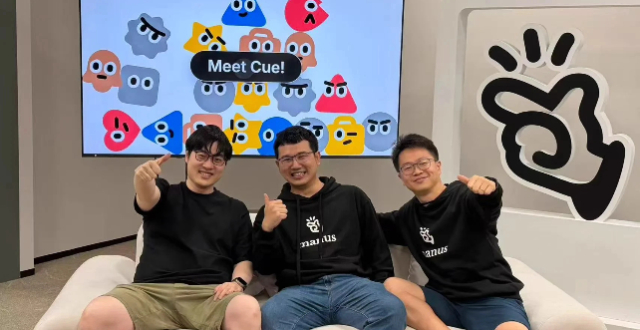
On October 26, Zhang Tao (online alias HideCloud), co-founder and product partner at Manus, recently published a lengthy article on his WeChat official account “Qianyun Sisi,” titled “Transforming Manus with Manus.” The piece opens with an image that left a deep impression on him. He had submitted several requirements and bug reports to an engineer; when he checked back a while later, he found that the engineer’s computer had multiple Codex and Manus sessions running side by side. Clicking on any one of them, he typed in what he had just been working on...
On October 27, Rokid launched the AI glasses Rokid Glasses 2, the full-color AI glasses Rokid Color, and the interactive ring Rokid Ring.
On October 26, Zhang Tao (online alias HideCloud), co-founder and product partner at Manus, recently published a lengthy article on his WeChat public account “Qianyun Sisi,” titled “Transforming Manus with Manus.” The piece opens with an image that left a deep impression on him. He had submitted several requirements and bug reports to an engineer; when he checked back later, he found that the engineer’s computer had multiple Codex and Manus sessions open. Clicking on any one of them, he saw that the input was precisely the original requirement he’d just posted on Slack—without a single word changed. Even more surprising to him was that this engineer was simultaneously working on over ten or twenty tasks. At Manus today, this has become the norm. The article is packed with information, but a few key points are especially worth noting. Internally, Manus has created a unified code entry point called Manus-mono, accompanied by a manual designed for AI, enabling the AI system to view the entire project landscape across repositories. With a single request, one person can complete all client-side development. The mobile team has consistently consisted of only seven members, yet they manage two products and four apps, keeping their progress largely in sync with the web version. All product managers have submitted code to Manus, and roughly half of them can independently bring their requirements to production. Some product managers even turn their written requirements into video presentations. Meanwhile, the marketing team now has a “digital colleague” that schedules its own tasks, proactively reminds everyone of project deadlines, and even reaches out across teams to clarify feature details. In September, the company’s per-capita AI spending exceeded $10,000, with a small number of individuals consuming as much as $70,000 to $80,000 in a single month. Zhang Tao dedicated an entire section to addressing external skepticism. The timing of the article’s release is also noteworthy. At the end of September, Manus launched version 2.0 along with its personal AI agent app, Cue; in early October, the parent company Butterfly Effect announced the completion of a new round of financing exceeding $500 million, while simultaneously opening 17 positions in Beijing. Seen against this backdrop, the article reads less like a routine update and more like a manifesto marking the Manus team’s entry into the 2.0 era. It discusses how the organization leverages AI to evolve, while revealing the company’s product roadmap, cost structure, and hiring standards. 01 Manus itself serves as a showcase for 2.0 If you compare the internal practices described in the article with the feature list of Manus 2.0, you’ll find…
The champion on the AI rankings may change, but the products users rely on every day don’t necessarily. The next round of competition in large models will hinge not just on whose model is stronger, but on turning a single use into a habit.
Anthropic publicly filed its Nasdaq IPO application, targeting a listing during the week of November 16. Anthropic has officially embarked on its path to going public. The company, founded just five years ago and at the heart of the generative AI boom, could set a historic record with this IPO. In documents submitted to the U.S. Securities and Exchange Commission (SEC), Anthropic disclosed plans to list on the Nasdaq under the ticker symbol “ANT,” aiming for an IPO during the week of November 16. The company will issue Class T special shares held by Class T directors. In its prospectus, Anthropic reported first-half revenue of $16.29 billion, compared to $1.16 billion in the same period last year; a net loss of $80.75 billion versus $12.97 billion a year earlier; and an operating loss of $693 million, down from $2.14 billion in the prior-year period. As of September 30, no single customer accounted for more than 10% of the company’s revenue over the nine-month period, with 79% of revenue coming from customers outside the top five. On the partnership front, under an agreement with SpaceX AI, Anthropic has committed to cumulative spending of up to $120.5 billion through 2029. The company also revealed that capital expenditures are expected to rise significantly, potentially requiring additional financing sooner than currently anticipated; it will not pay any dividends in the foreseeable future and has not yet entered into any agreements for major acquisitions; furthermore, it may issue convertible notes totaling up to $42 billion. As of September 30, no single customer accounted for more than 10% of the company’s revenue over the nine-month period, with 79% of revenue coming from customers outside the top five. Regarding partnerships, under an agreement with SpaceX AI, Anthropic has agreed to incur cumulative expenditures of up to $120.5 billion through 2029. (Source: Sina Tech) Apple responds to iPhone Duo internal screen cracking issue: only a small number of devices affected, eligible for replacement. Shortly after the iPhone Duo’s launch, some users reported hinge malfunctions causing cracks in the internal display. Apple has now addressed these reports in a statement to MacRumors, stating that only a very limited number of devices are impacted. Apple did not specify the cause of the cracks nor disclose whether it plans to release a repair solution.
According to a report by Titanium Media on October 26, 2026, Tencent’s AI product QClaw will officially shut down on December 24, 2026, having operated for only 188 days since its public beta launch in March 2026; users will be redirected to WorkBuddy. This case exemplifies the widespread “quick launch, quick exit” pattern among eight leading Chinese AI companies—including Alibaba, Baidu, and ByteDance—across ten major AI market segments: standalone AI applications are rapidly giving way to general-purpose assistants, with the industry’s focus now shifting toward personal intelligent agents.
Why it matters:The material is based on timely reports published by Titanium Media (tmtpost.com), with a publication time of 2026-10-26T23:23:04Z, which predates the shutdown date and aligns with the site’s time zone (Asia/Singapore). The content covers verifiable entities, specific timelines, and cross-company behavioral patterns, without relying on external sources that were not provided.
Even ordinary people can use natural language to create their own custom AI hardware.