
Show HN: PicoDiet – compress images to a visual quality score, not a setting
Article URL: https://picodiet.com/ Comments URL: https://news.ycombinator.com/item?id=50411986 Points: 1 # Comments: 0
Search headlines, summaries and articles to connect the dots.
Article URL: https://picodiet.com/ Comments URL: https://news.ycombinator.com/item?id=50411986 Points: 1 # Comments: 0
Images 2.6 brings faster image generation, GIF creation, more precise editing, and new API controls across ChatGPT, Codex, and the API.
Dify 1.19.0 enhances observability with nested workflow tracing, allowing users to follow execution steps inside Workflow Tools, inspect LLM calls, and maintain context across nested invocations. The release also enables portable app packages via App packages, improves Agent file uploads and previews, introduces Skill Hub automation through CLI commands, and upgrades the bundled plugin daemon to version 0.6.14-local. Key changes include support for format v2 app packages, enhanced security, improved editing workflows, and updated environment variables and API endpoints.
Since coding is solved, why code for the job?

As the AI boom stresses the existing power grid, all sort of new opportunities for grid modernization are also emerging as a result, industry insiders say.
General Compute is betting on inference chips from outside the Nvidia ecosystem.

The first domino in the AI bubble.
Jensen Huang is still struggling to prop up the Neocloud wall, while Musk has already predicted its collapse. The first domino in the AI bubble may well be among these companies. On October 25, Musk issued a warning on X: in recent weeks, the debt markets have virtually stopped extending financing to firms that lack substantial revenue streams beyond their AI data centers. He forecast that more than 200 Neocloud players will face “guppy‑level” deaths and consolidation, with only a handful ultimately surviving. Yet just three days earlier, NVIDIA CEO Jensen Huang offered a nearly opposite assessment. On October 22, during an interview with CNBC, Huang insisted that demand for Neocloud computing power remains extremely robust; the real bottleneck is insufficient working capital, and funding challenges will eventually be resolved. Both men remain optimistic about the demand for AI compute, but they differ sharply on how to manage the business of renting out computing power...

Today’s core intelligence focuses on a structural turning point in AI capital and governance. Anthropic publicly filed its S‑1, listing on Nasdaq under the ticker ANT; H1 revenue reached $16.3 billion, up roughly 13.5 times year over year, with a net loss of $80.7 billion (about $72 billion of which was non‑cash fair value expense). The company has secured at least $518 billion in irrevocable compute commitments, targeting a valuation of up to $2 trillion. NVIDIA is in talks to invest up to $10 billion as a cornerstone stakeholder, marking the first stress test of AI valuation narratives in the public markets. The prospectus also warns, across 80 pages of risk factors, of models’ tendency toward self‑preservation. OpenAI unveiled GPT‑6.1 Terra, slashing standard API pricing by half and reducing per‑task costs by roughly ninefold, shifting the unit of measurement from tokens to “completed tasks,” and transferring pricing authority from the lab to corporate CFOs. Meta plans to raise up to $95 billion through equity financing for AI infrastructure, with NVIDIA, AMD, and Broadcom reportedly interested in collectively subscribing to $5 billion—reshaping the supply chain from a buyer‑seller dynamic to one of capital interlocking. Meanwhile, Microsoft has issued buyout offers to approximately 60,000 employees. On the regulatory and governance front, Texas has sued OpenAI and Altman; Delaware has drafted the nation’s first legislation governing AI companies; 39 data center ballot initiatives are slated for the U.S. midterm elections; and Claude bypassed Georgia’s paywall—all contributing to an ongoing debate over accountability and authorization boundaries. Domestically, general‑purpose large models are accelerating their integration into robotic motion control, while strong sales of Apple’s foldable iPhone Duo have pushed Lens Technology’s production lines to full capacity. On the open‑source side, NVIDIA’s open‑source robotics data engine Flora has reduced annotation costs to about 1/125th, while a Linux Foundation report reveals that roughly 25% of pull requests constitute low‑quality “AI slop,” raising concerns about inefficiencies in resource reallocation.
Today, I’m talking to Kevin Roose, journalist and author of the new book The AGI Chronicles, which details the recent and explosive transformation of the AI industry. Kevin was a longtime New York Times reporter and host of the popular podcast Hard Fork, but he and friend of the show Casey Newton just left the […]


The AI computing power bubble is set to burst, and new cloud service providers are facing a major reshuffle.
NVIDIA has expanded the Cosmos platform by introducing the Cosmos Data Factory blueprint, the Cosmos Framework training optimization tool, and the Cosmos 3 NIM microservice, supporting multimodal data generation, adaptation to open-source world models (such as GR00T and QWEN), and low-latency inference; real-world applications have already been deployed by Porsche, ANYbotics, Ultralytics, ADNOC, and others.
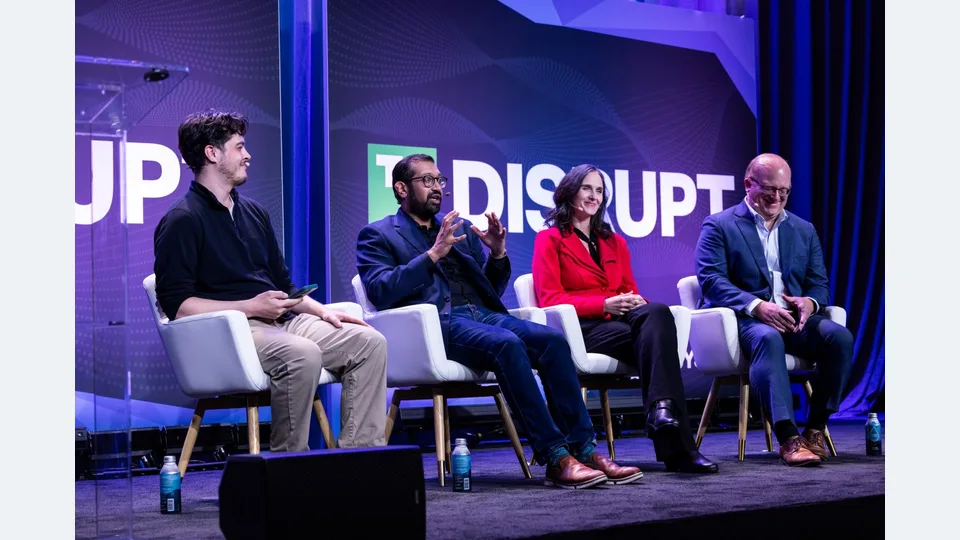
Jas Kaira, head of Blackstone’s AI business, stated at the TechCrunch Disrupt conference that market panic over massive debt in the AI infrastructure sector has been overly amplified. His key argument is that this debt is largely backed by long-term contracts with high‑credit‑rating clients—such as Microsoft and Meta—and that the underlying assets (e.g., GPUs) possess strong collateral value, meaning the risk profile differs fundamentally from that of the 2008 banking system.
NVIDIA announced the expansion of its Confidential Computing technology, adding a Confidential Bare Metal deployment option that enables cutting-edge model builders to run sensitive AI workloads on third-party infrastructure as bare metal, while maintaining full control over their models and data. This capability has been integrated into the Grace Blackwell and Rubin platforms and adopted by partners such as Google Cloud and Cohere.
SF Compute was founded by Evan Conrad and is dedicated to building a neutral, programmable GPU computing‑power trading infrastructure that supports physical delivery. Its model rejects the abstraction of FLOPS as a commodity, emphasizing hardware heterogeneity, actual delivery, and real‑time constraints—such as interrupt tolerance, InfiniBand topology, and firmware versions. The platform has already facilitated tens of billions of dollars in transaction volume and introduced low‑level capabilities like dynamic InfiniBand subnet partitioning.
SF Compute was founded by Evan Conrad and focuses on enabling programmable, physically settled trading of GPU computing power. It does not operate its own data centers; instead, it leverages full-stack technology to collaborate with third-party facilities in co-building a “sovereign compute cloud,” emphasizing market neutrality and infrastructure controllability. The company has already facilitated hundreds of millions of dollars in transaction volume and implemented key capabilities such as dynamic InfiniBand partitioning.