
Skip to content
AI NEWS JOURNAL
AI, IN PERSPECTIVE

Search AI news

Search headlines, summaries and articles to connect the dots.

Newest first

Measuring Definition Sensitivity in LLM Annotation of Social Science Concepts

arXiv:2611.13339v1 Announce Type: new Abstract: In social science research, text annotation is a fundamental task that is traditionally a costly, hard-to-scale manual process. Researchers have used large language models (LLMs) to perform annotation by writing a definition of a concept into a prompt - a rule that determines whether a label should be attributed to a text depending on its content. However, concepts such as hate speech, fake news, and terrorism typically have several theoretically defensible competing definitions. It is also unknown whether the model actually applied the definition to provide the label or the label was based on the model's pretrained notion of the concept. To test this, we have the model annotate the same texts twice, each time with a different definition. We call the disagreement between the two sets of annotations definition sensitivity. As a control, we paraphrase one definition but leave its requirements unchanged - the disagreement between the annotations with the two wordings becomes the paraphrase floor. Across six concepts and three LLMs, a swap of competing definitions always changes more annotations, on average, than a paraphrase. This shows that the annotations depend on the prompted definition, so any set of annotations should be interpreted together with the definition that produced it. The LLM annotator's definition sensitivity and its paraphrase floor should both be reported in such work.
DeFSM: Robust and Efficient Decentralization of Federated Submodular Maximization

arXiv:2611.11866v1 Announce Type: new Abstract: Submodular maximization seeks a small subset best representing a large dataset. In its federated setting, the server is a single point of failure and some clients may be Byzantine. Removing the server raises a trilemma of decentraliza- tion, efficiency, and security. We propose DeFSM, a Byzantine-robust and communication-efficient architecture that replaces the server with a lightweight smart contract and a pool of independent, consensus-free agents. Its aggregation rule, SafeGM, builds on two notions from combinatorial geometry: Tukey depth and safe points (the points lying in the convex hull of the good points wherever the bad points are). SafeGM makes the robust decision on 2D Gaussian random projections, which the contract can compute efficiently, and lifts it back as a convex combination of actual updates. Since lifting loses information, it uses the projected geometric median only when its depth certifies it, and otherwise a Tukey median. The share of bad updates is then bounded only by a count: how many there are, not what they contain. We prove, and confirm empirically, that this bound controls the solution quality. On CIFAR10 and PathMNIST, with up to 30% Byzantine clients and agents, DeFSM never collapses and retains on average about 91% of the quality of the ideal reference, the geometric median at a trusted central server. The geometric median decentralized in its best setting would retain about 96%, but the contract cannot compute it, and so each agent would have to download six times more data, or each client twice as much.

Faster Retrieval for Better, More Efficient RAG

Maximum inner product search (MIPS) sits at the core of recommendation systems, search, and retrieval-augmented generation (RAG). Given a query vector, MIPS systems search within a database of millions of candidate key vectors for the one that best matches the query. The original data point associated with that best-matching key is then used to handle the query: in RAG, the document that is best suited to answer the question is typically prefixed to the query. As the number of keys grows to millions and vector dimensions reach thousands, the computational cost of running an exhaustive…

Meta acquires AI coding startup Conductor, whose app runs several coding agents at once

Meta Platforms Inc. has acquired artificial intelligence coding startup Conductor in a deal first reported today by Axios. Conductor confirmed it’s joining Meta in a post on its website. Terms were not disclosed. Conductor’s software lets a developer run several coding agents at once, each in an isolated copy of the codebase, and then review […] The post Meta acquires AI coding startup Conductor, whose app runs several coding agents at once appeared first on SiliconANGLE.

v1.19.0 - Trace Your Workflows, Layer by Layer

Dify 1.19.0 enhances observability with nested workflow tracing, allowing users to follow execution steps inside Workflow Tools, inspect LLM calls, and maintain context across nested invocations. The release also enables portable app packages via App packages, improves Agent file uploads and previews, introduces Skill Hub automation through CLI commands, and upgrades the bundled plugin daemon to version 0.6.14-local. Key changes include support for format v2 app packages, enhanced security, improved editing workflows, and updated environment variables and API endpoints.

What Constitutes Food Similarity? Visual Representations and Retrieval in Indian Cuisine

arXiv:2610.37867v1 Announce Type: new Abstract: Food similarity underlies retrieval, recommendation, substitution, and other food computing tasks, yet food representations are typically evaluated by identity preservation. We ask what happens to food similarity beyond identity: how different visual representations organize foods into relational neighborhoods, what culinary relationships these neighborhoods reveal or obscure, and how consistently these structures emerge across representations. Indian cuisine provides a challenging setting in which visually similar foods may have different culinary identities, while foods within a culinary family can vary substantially in appearance. Using an expanded Khana dataset and seven pretrained visual representations spanning convolutional, transforme

Timeline and related coverage

Vercel Connect adds webhook triggers for more providers

Vercel Connect now enables webhook triggers for Resend, X, Twilio, Notion, and Telegram, automatically registering webhooks for Resend and Telegram while requiring manual setup for the others. It verifies requests, handles heartbeats, and forwards events to specified endpoints in Vercel projects, with support for monitoring via the Observability tab. This expands existing trigger support for Slack, Discord, Microsoft Teams, GitHub, and Linear.

Dell sees AI agent guardrails as a path to greater autonomy

As enterprises put AI agents to work, they face a challenge: How can they give those systems more autonomy while keeping AI agent guardrails in place? Security and resilience are becoming central considerations as enterprises decide which tasks to delegate to AI agents. Those decisions extend beyond individual actions to the data protection and cyber […] The post Dell sees AI agent guardrails as a path to greater autonomy appeared first on SiliconANGLE.

Timeline and related coverage

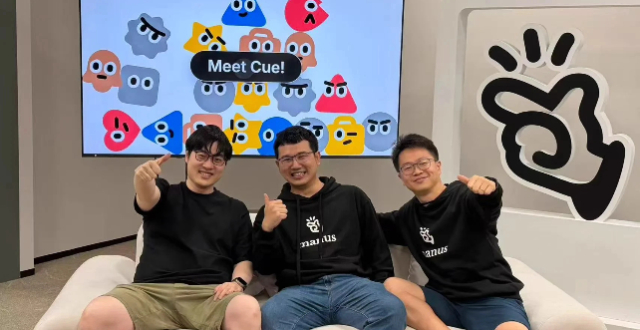
Manus has just quietly unveiled its 2.0 manifesto.

On October 26, Zhang Tao (online alias HideCloud), co-founder and product partner at Manus, recently published a lengthy article on his WeChat official account “Qianyun Sisi,” titled “Transforming Manus with Manus.” The piece opens with an image that left a deep impression on him. He had submitted several requirements and bug reports to an engineer; when he checked back a while later, he found that the engineer’s computer had multiple Codex and Manus sessions running side by side. Clicking on any one of them, he typed in what he had just been working on...

Manus,刚刚悄悄发布了自己的2.0宣言
Timeline and related coverage

Manus has just quietly released its 2.0 manifesto.

On October 26, Zhang Tao (online alias HideCloud), co-founder and product partner at Manus, recently published a lengthy article on his WeChat public account “Qianyun Sisi,” titled “Transforming Manus with Manus.” The piece opens with an image that left a deep impression on him. He had submitted several requirements and bug reports to an engineer; when he checked back later, he found that the engineer’s computer had multiple Codex and Manus sessions open. Clicking on any one of them, he saw that the input was precisely the original requirement he’d just posted on Slack—without a single word changed. Even more surprising to him was that this engineer was simultaneously working on over ten or twenty tasks. At Manus today, this has become the norm. The article is packed with information, but a few key points are especially worth noting. Internally, Manus has created a unified code entry point called Manus-mono, accompanied by a manual designed for AI, enabling the AI system to view the entire project landscape across repositories. With a single request, one person can complete all client-side development. The mobile team has consistently consisted of only seven members, yet they manage two products and four apps, keeping their progress largely in sync with the web version. All product managers have submitted code to Manus, and roughly half of them can independently bring their requirements to production. Some product managers even turn their written requirements into video presentations. Meanwhile, the marketing team now has a “digital colleague” that schedules its own tasks, proactively reminds everyone of project deadlines, and even reaches out across teams to clarify feature details. In September, the company’s per-capita AI spending exceeded $10,000, with a small number of individuals consuming as much as $70,000 to $80,000 in a single month. Zhang Tao dedicated an entire section to addressing external skepticism. The timing of the article’s release is also noteworthy. At the end of September, Manus launched version 2.0 along with its personal AI agent app, Cue; in early October, the parent company Butterfly Effect announced the completion of a new round of financing exceeding $500 million, while simultaneously opening 17 positions in Beijing. Seen against this backdrop, the article reads less like a routine update and more like a manifesto marking the Manus team’s entry into the 2.0 era. It discusses how the organization leverages AI to evolve, while revealing the company’s product roadmap, cost structure, and hiring standards. 01 Manus itself serves as a showcase for 2.0 If you compare the internal practices described in the article with the feature list of Manus 2.0, you’ll find…

Timeline and related coverage

Kevin Roose is AGI-pilled. Why aren’t you?

Today, I’m talking to Kevin Roose, journalist and author of the new book The AGI Chronicles, which details the recent and explosive transformation of the AI industry. Kevin was a longtime New York Times reporter and host of the popular podcast Hard Fork, but he and friend of the show Casey Newton just left the […]

Kevin Roose is AGI-pilled. Why aren’t you?Kevin Roose is AGI-pilled. Why aren’t you?
Timeline and related coverage

AI Graveyard: A Continuously Updated List of Failed AI Projects and Startups

TechCrunch reported on October 25, 2026, reviewing several AI projects from 2023 to 2026 that failed to meet expectations, including startups and products such as Relay, Character.ai, Sora, and Humane AI Pin, as well as failed attempts or major adjustments by major companies like OpenAI, Apple, and Microsoft.

The AI graveyard: a running list of projects and startups that didn’t make it

Why it matters:This report provides an industry‑wide, phenomenon‑driven overview, with broad coverage and a clear timeline (including specific shutdown or delay dates), and cites S&P Global Market Intelligence data to substantiate the high attrition rate—42%—of enterprise‑level AI projects. It combines detailed case studies with structural analysis, making it a highly valuable reference.

Timeline and related coverage