Author: Han Lin | Editor: Shan Cha | Original by Youjie Unknown Zuckerberg’s secretly advanced robotics project has finally come to light. On October 31, according to foreign media reports, Meta has partnered with the Chinese robotics company Fourier Intelligence, ...
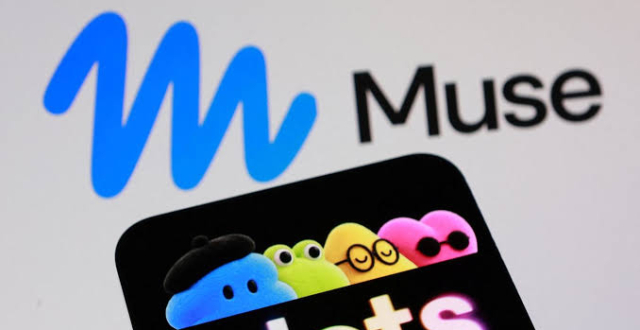
Text by Li Zhaofeng, Editor: Zhang Yuxin. 10.4 million downloads—this is the cumulative number of downloads for Meta’s AI personal assistant, Muse, in less than two months since its launch. As a result, a wave of Personal Agent products has quickly swept across China, with the question of who can create a “Chinese version of Muse” becoming the industry’s central topic. A number of startup teams are accelerating their entry into this space. Qi Junyuan, who left ByteDance last year after leading the PC-side product team at DouBao, has started his own venture again this year, launching a product that emphasizes continuous memory and proactive...
On the evening of October 31, the DeepSeek Harness team published a technical article titled “Exploring Super-Agent Design: Toward More Autonomous Agent Systems” on their official WeChat account. DeepSeek stated that advances in model capabilities have given rise to new application paradigms, with personal assistants (Personal Agents) beginning to emerge in large numbers. However, current mainstream agent designs still struggle to support this approach at scale across multiple tasks and team collaboration...
The artificial intelligence buildout is making an enormous bet on what businesses will eventually be willing to pay for intelligence. In our research this summer on forecasting the AI bubble, we argued that a key indicator to watch is productive utilization by enterprise customers. Specifically, we said at the time, if infrastructure supply catches up […] The post Can enterprise AI pay for the boom? appeared first on SiliconANGLE.
After the large-model industry has exhausted itself in competing over parameters and long texts, only to suffer repeated setbacks due to GUI Agent latency and high error rates, how exactly to implement Personal Agents has become a must-answer question for all major companies in the second half of 2026. On October 27, 2026, Ant Group launched Lingguang 2.0, becoming one of the earliest officially released Personal Agent products among domestic tech giants. It aims to transform AI from a one-off task executor into an assistant that continuously manages everyday life matters...
Editor | Zenan: “From the perspective of global resource allocation, having everyone hoard scarce DRAM in their own computers, where it sits idle most of the time, is a ‘quite terrible’ arrangement. Memory should instead be centralized in cloud-based data centers.” With that said, during an interview this Thursday with the YouTube channel Cheeky Pint, OpenAI CEO Sam Altman drank beer throughout, chatting casually and at ease about AI...
Cailian Press, October 31 (Editor: Ma Lan): The user base of Grok Bot, the AI assistant developed by SpaceX, is steadily expanding. According to reports, its daily active users have increased for 16 consecutive days, setting a new record for the longest growth streak since its launch. Daily active users have surged from fewer than 100,000 in early September to over 600,000 as of October 26. Earlier, Musk publicly stated on X that Grok Bot’s user growth rate outpaces any product he has ever seen. He also stressed that Grok Bot does not offer a free version...
At the main forum of the 1024 Model Factory · AI Community Day, Bi Xuan, founder and CEO of Beilian Zhuguan at Model Factory and former researcher at Alibaba Group, delivered a keynote speech titled “Taking SREAgent as an Example: Examining the Competitiveness of Vertical-Specific Agents.”
Article by AGI 2050 ● Editor’s Note: This episode of the podcast “Cheeky Pint,” hosted by Stripe co-founder John Collison, features a conversation with OpenAI founder Sam Altman. During his discussion with Collison, Altman revealed numerous internal practices and business insights at OpenAI: when the coding tool Codex went down, OpenAI engineers nearly forgot how to write code by hand; regarding commercialization, he openly stated his strong aversion to using tokens as the billing unit, and...
IT Home reported on October 30 that, according to Bloomberg, the core businesses upon which U.S. tech giants have long relied—namely advertising, consumer goods, and retail sectors that collectively account for this year’s $750 billion (IT Home note: approximately RMB 5.01 trillion at current exchange rates) in AI-related spending—are already showing signs of slowing growth. In some business lines, these established operations are being undermined by the very new technologies that companies have staked everything on. Earlier this week, Google’s parent company...
Just about two weeks after Gemini 4 Argon was made available to a broader audience, Google unveiled its next-generation cutting-edge model, Gemini 4 Carbon. This time, Google not only set its sights on the top spot in the overall large-model intelligence rankings but also placed programming, long-range agent tasks, and cybersecurity capabilities at the forefront.
The gap between China’s open-source models and cutting-edge U.S. AI is being reassessed. After Artificial Analysis upgraded its Intelligence Index—used to measure the overall capabilities of AI models—to version 5, domestic models collectively plummeted in the rankings, as if overnight the gap had widened by several orders of magnitude. Now, the top spots are almost exclusively occupied by leading U.S. closed-source models, far outpacing Chinese open-source ones. Although Kimi K3.1 Pro made it into the top ten, it has yet to...
Accordingly, Alibaba Cloud has extended its capability-building efforts to model training and inference, agent construction and operation, as well as enterprise data organization and utilization. Compared to purchasing a single product, enterprises now receive an integrated infrastructure that enables collaborative operations.