Skip to content
AI NEWS JOURNAL
AI, IN PERSPECTIVE

Search AI news

Search headlines, summaries and articles to connect the dots.

Newest first

Code with CodeQwen1.5

GITHUB HUGGING FACE MODELSCOPE DEMO DISCORD Introduction The advent of advanced programming tools, which harnesses the power of large language models (LLMs), has significantly enhanced programmer productivity and accuracy. Notwithstanding these advancements, dominant coding assistants like Github Copilot, built upon proprietary LLMs, pose notable challenges in terms of cost, privacy, security, and potential copyright infringement. Recognizing the imperative for a more transparent and accessible alternative, the open-source community has embarked on a concerted endeavor to develop open codeLLMs.

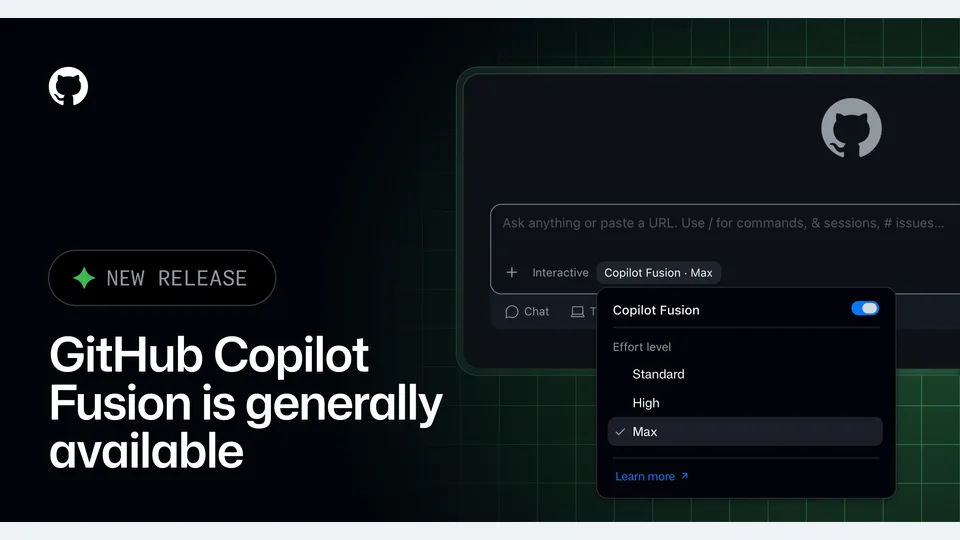
GitHub Copilot Fusion Launches with Dual Capabilities: Intelligent Model Orchestration and Local Model Routing

On October 28, 2026, GitHub released the official version of Copilot Fusion, simultaneously introducing an experimental local model routing feature. This capability enables automatic invocation of local models such as MAI Code 1.1 Flash on Windows devices and activates intelligent routing within VS Code, the CLI, and the Copilot App. The system automatically selects and combines cloud models—like those from OpenAI, Anthropic, and Google—based on three effort levels: Standard, High, and Max, achieving performance close to Claude Code while cutting costs in half during coding evaluations.

Timeline and related coverage

GitHub releases Copilot Fusion, an automated multi-model orchestration tool that boosts coding efficiency and cost-effectiveness.

At Universe 2026, GitHub unveiled Copilot Fusion, an intelligent orchestration layer that automatically routes and combines models from OpenAI, Anthropic, Google, and others to complete coding tasks—eliminating the need for developers to manually select models. It integrates existing automatic model-selection technologies with Project HydraFusion, previewed in September. Once the model selector is enabled, the system automatically adopts execution modes such as single-model, cascading, or critique, based on task complexity.

QQ20261029-155714.jpg
Timeline and related coverage

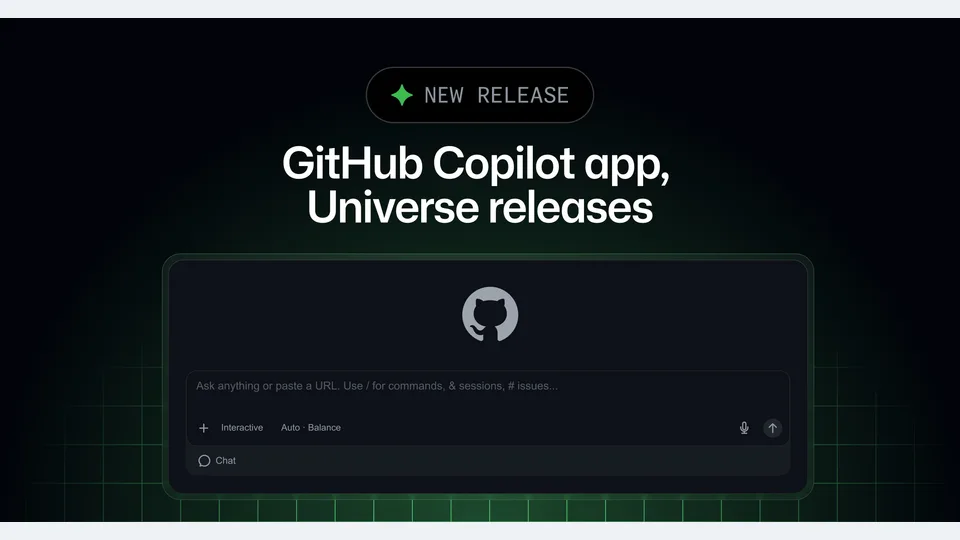
GitHub Copilot app, Universe releases

Work doesn’t always fit in a single repository or session. A feature can span several repositories. A launch plan can pull in specs, designs, and assets without touching a repository… The post GitHub Copilot app, Universe releases appeared first on The GitHub Blog.

新闻源配图 · GitHub Copilot changelog
Timeline and related coverage

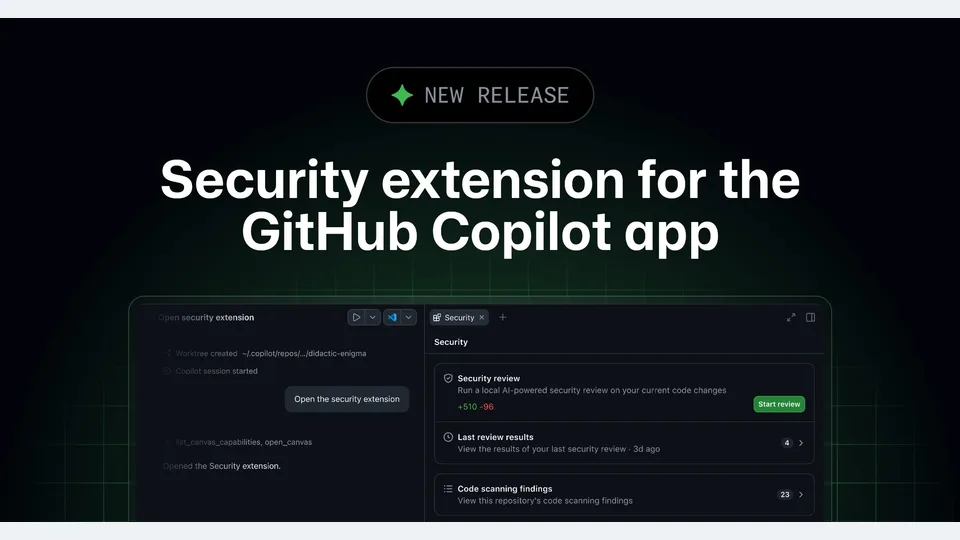
Security extension for the GitHub Copilot app

You can now work through your repository’s GitHub code scanning alerts without leaving the GitHub Copilot app. The new GitHub security extension, now in public preview, lets you find the… The post Security extension for the GitHub Copilot app appeared first on The GitHub Blog.

新闻源配图 · GitHub Copilot changelog
Timeline and related coverage

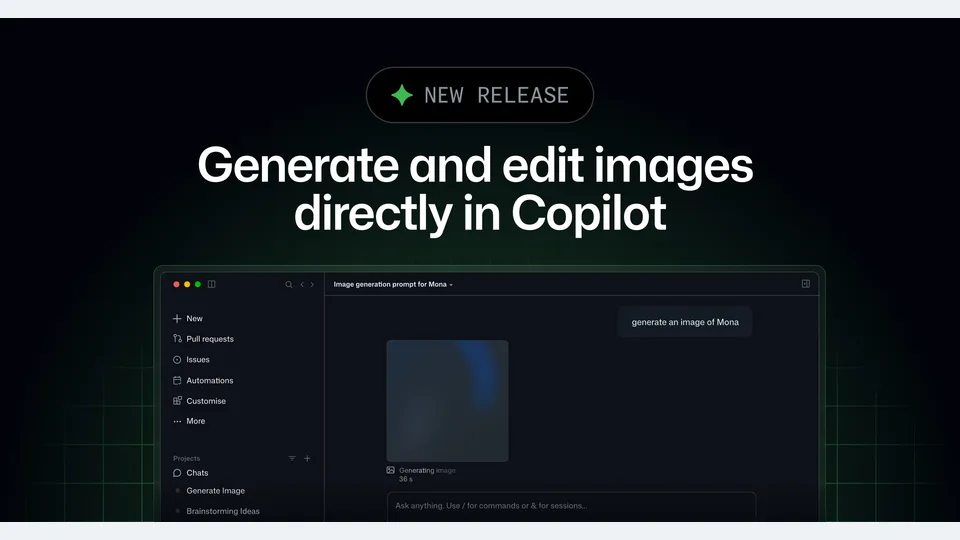
Generate and edit images directly in Copilot

You can now generate and edit images using natural language in GitHub Copilot. When you ask for an image, your selected reasoning model calls a dedicated image-generation tool powered by… The post Generate and edit images directly in Copilot appeared first on The GitHub Blog.

新闻源配图 · GitHub Copilot changelog
Timeline and related coverage

GitHub Copilot supports server-to-server authentication

GitHub Copilot now supports server-to-server authentication for GitHub Apps installed on organizations, available in public preview. Services and agents built with the GitHub Copilot SDK can now make requests on… The post GitHub Copilot supports server-to-server authentication appeared first on The GitHub Blog.

新闻源配图 · GitHub Copilot changelog
Timeline and related coverage

GPT-6.1 Terra in GitHub Copilot

GPT-6.1 Terra, OpenAI’s newest model, is now generally available in GitHub Copilot. It is designed for everyday agentic coding and terminal work at a lower cost than GPT-6.1 Sol. In… The post GPT-6.1 Terra in GitHub Copilot appeared first on The GitHub Blog.

Timeline and related coverage

Microsoft open-sources Agensh: a decentralized framework that supports 1024 autonomous, collaboratively operating AI coding agents.

On October 25, 2026, Microsoft Research open-sourced Agensh, a multi-agent runtime framework that operates without a central coordinator, enabling 1 to 1,024 LLM-powered coding agents to self-organize and collaborate on ProgramBench. The system achieves decentralized coordination through shared dashboards inspired by Gitea, Mattermost, and DeLM, with all agents following the same prompt-driven five-step loop; its scalability has been validated in a Linux + Docker environment.
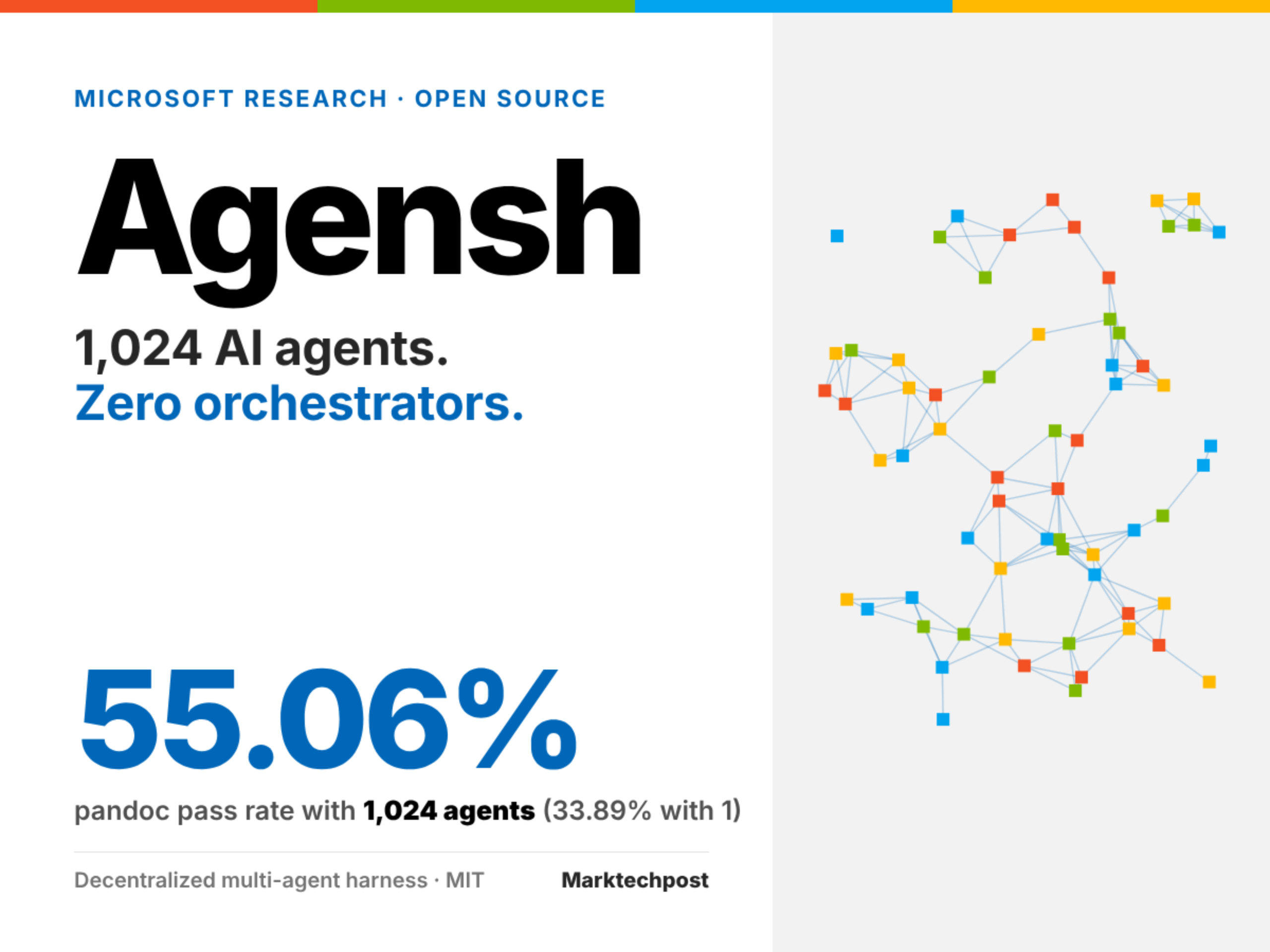
Microsoft Open-Sources Agensh: A Multi-Agent Harness for 1,024 Agents

Why it matters:This achievement represents a significant evolution in multi-agent system architectures—abandoning the traditional “master‑agent” paradigm and enabling large‑scale self‑organization through prompt engineering and lightweight service composition. Empirical results on ProgramBench (e.g., 128 agents achieving a 49% improvement in task load balancing across five tasks) establish a new benchmark for distributed AI engineering. Released under the MIT License and compatible with mainstream single‑agent tools such as Copilot CLI, it offers valuable guidance for practical development.

Timeline and related coverage

Amazon SageMaker AI has launched GPU-free managed model training sessions, now generally available.

AWS has announced that SageMaker AI’s serverless model customization feature now includes “Training Sessions,” which are fully available starting today. Users can independently define post-training logic—such as custom loss functions, reward signals, or multi‑round reinforcement learning—while the platform automatically handles GPU allocation, distributed execution, fault tolerance, and checkpoint storage.

Timeline and related coverage