Skip to content
AI NEWS JOURNAL
AI, IN PERSPECTIVE

Search AI news

Search headlines, summaries and articles to connect the dots.

Newest first

Morning Briefing: Apple Intelligence will launch in China with iOS 27.3

Apple Intelligence will launch in China with iOS 27.3; Apple’s bargaining power over flash memory has been suppressed; the official Claude Code extension was implanted with a backdoor; the U.S. FCC has banned Chinese laboratories from certifying electronic products destined for the U.S.; Baidu Cloud uses magnetometer data to bypass “shake-to-ad” permissions; $6.3 billion worth of assets were stolen from Binance; just take a look at this brief news roundup; recent updates from Minority Report; good articles you might have missed; read the full article

Timeline and related coverage

After talking to many parties, why did Apple ultimately choose only Alibaba?

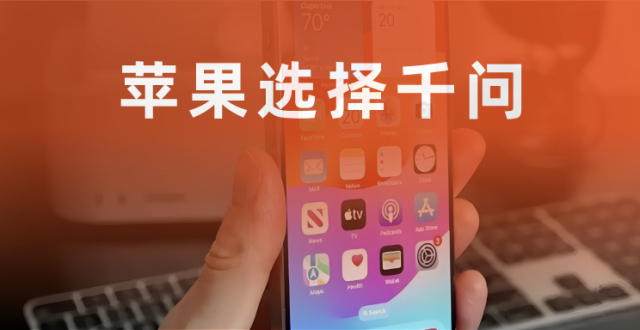
On October 31, the official announcement finally came: Apple and Alibaba have formally reached a cooperation agreement, allowing Chinese users to directly use Alibaba’s Qwen within Siri, writing tools, and visual intelligence applications. After more than two years of waiting, Apple Intelligence is finally coming to mainland China. Interestingly, over the past two years, numerous domestic large-model companies—Baidu, Tencent, ByteDance, DeepSeek, Zhipu…—have all been linked to Apple in one way or another. So why was it only Alibaba’s Qwen that ended up “winning the prize”? In fact, if we look closely, we’ll find that Apple had no real choice but to go with Alibaba. 01. Compliance Is the First Barrier Overseas, Apple Intelligence’s main partners are OpenAI and Google. But in China, neither of these companies’ models is available. However, this doesn’t mean that models which are usable domestically and properly registered can simply be integrated into Apple Intelligence; they still require separate on-device generative AI service registration. Meanwhile, as a hand...

谈了一圈,为什么苹果最后只能选阿里?
Timeline and related coverage

[Digital Intelligence Weekly Report] Zhang Yiming has topped the list of China’s richest individuals with a fortune of 670 billion yuan, setting a new record for China’s wealthiest person; Alibaba has partnered with Apple to integrate Qwen into Apple’s smart ecosystem; Anthropic has filed its IPO registration documents, planning to list on Nasdaq under the ticker symbol “ANT.”

(October 26–31) OpenAI is reportedly lowering its target for the next round of fundraising by $10 billion, aiming to raise $20 billion at a valuation of $1.25 trillion; Google has launched its latest world model, Genie 4, doubling the simulation duration to two minutes and achieving synchronized audio-video generation for the first time; Meta plans to raise $35 billion and intends to issue shares worth $60 billion; CITIC Securities: GPT-6 Astra has entered robot control, marking a major turning point for physics-based AI...

Timeline and related coverage

China‑bound Apple Intelligence enters beta testing in 4 days! Alibaba officially announces full integration of Qwen.

Author: Li Shuiqing | Editor: Xin Yuan — According to Zhidongxi (WeChat official account: zhidxcom), on October 31, Alibaba announced a partnership with Apple to integrate Qwen into Apple Intelligence. Chinese users will be able to directly access Qwen’s capabilities for text and image understanding, content generation, and more, within Siri, writing tools, and visual intelligence features. These functions will begin beta testing starting November 4 alongside the latest iOS Developer Beta version, and...

国行苹果智能倒计时4天开测!阿里官宣,千问全面接入
Timeline and related coverage

Refuse to Be Held Hostage by AI! Apple’s New Leader, John Ternus, Unveils a “Hardcore” Product Vision

IT Home reported on October 31 that Wired published a blog post yesterday (October 30), interviewing Apple’s current CEO, John Ternus, and discussing topics such as the future direction of Apple’s product lineup and developments in the field of AI. On the product front, Ternus repeatedly emphasized during the interview that he is a “product-focused CEO”: he loves products, values hardware and attention to detail, and hopes Apple will continue to succeed by creating experiences that people truly love...

拒绝被AI绑架!苹果新掌门特努斯的“硬核”产品宣言
Timeline and related coverage

Apple officially announces Apple Intelligence’s integration with Alibaba Qwen; DeepSeek completes its second round of financing totaling 105.5 billion yuan, with a valuation reaching 615.5 billion yuan; Intel’s stock plunges more than 30% at the open | Geek Morning Briefing

China-bound Apple Intelligence has confirmed its launch timeline: beta testing begins in November, and Qwen will be integrated into Siri on October 31. Apple announced that the first batch of features for China-bound Apple Intelligence will be available for beta testing starting November 4 alongside the iOS Developer Beta, and will officially roll out to users in December with iOS 27.3. The initial features include real-time translation, writing tools, photo removal, AI-generated emojis, and notification summaries, supporting the iPhone 15 Pro series, iPhone 16 and later models, as well as the iPhone Air and iPhone Duo. Alibaba emphasized that before any questions, documents, or images are sent to Qwen, user consent will always be obtained first. Apple stated that these features are powered by its own proprietary models, while users also have the option to integrate Alibaba Qwen to handle certain requests within Siri, writing tools, and visual intelligence. However, the initial update does not include the new version of Siri AI, and other platforms such as iPad and Mac will need to wait for necessary approvals. (Source: GeekPark) OpenAI rescinds its plan to reduce quotas for Pro 200 while increasing usage limits for Work and Codex. On October 29 local time, OpenAI announced adjustments to the usage quotas for Work and Codex under the Pro and Business Premium subscriptions. The original quotas for Pro 100 and Pro 500 have been doubled, and even users of the previously lower‑quota Pro 200 now receive a doubling of their limits, aligning them with those who originally enjoyed higher quotas. These new limits take effect immediately, without requiring existing subscribers to wait until their next renewal. This also means OpenAI has withdrawn its earlier announcement from late September regarding quota reductions for Pro 200, allowing users who previously had higher limits to retain them. It should be noted, however, that doubling the quota does not guarantee doubling the number of tasks you can complete—actual consumption depends on the model, task type, and speed mode. In Fast mode, quota consumption is roughly 2.5 times faster than in standard mode, while Ultrafast mode consumes at about eight times the rate. (Source: ITBears) Intel’s stock plunged more than 30% at the open, potentially marking the largest single-day drop in recorded history. Following the opening bell on October 30, Intel shares plummeted sharply, with intraday losses at one point exceeding 3

Timeline and related coverage

China‑specific Apple Intelligence official website officially launches: powered by Qwen, rolling out in November

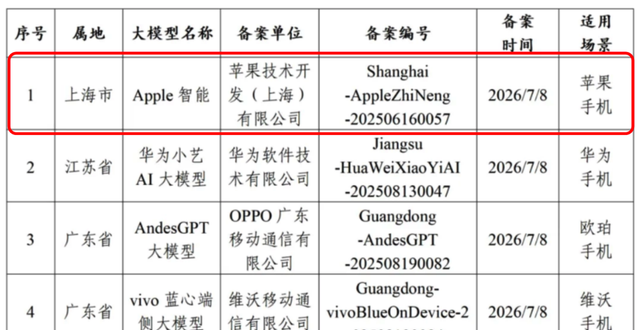
Image source for the header photo: Apple On October 31, Apple’s China website Newsroom released a press release titled “Apple Intelligence Coming to China,” outlining a specific timeline: starting November 4, the first batch of Apple Intelligence features will be available for testing through the latest iOS developer beta; and when iOS 27.3 is officially released in December, these features will roll out to Chinese users. The Apple Intelligence page on Apple’s China website has also been updated. Back in September, during the launch of the iPhone 18 and iPhone Duo, the China‑specific product page listed Apple Intelligence followed by the note “Release date subject to regulatory approval.” Even this week, with the new MacBook Pro launch, that same line remained on the China‑specific page. Now, the top of the page reads: “The first core features of Apple Intelligence will launch later this year.” Counting from its debut at WWDC in June 2024, China‑specific iPhones have waited a full two and a half years. In the early hours of March 31 this year, some China‑specific iPhone users noticed that “Siri” in Settings had changed to “Apple Intelligence & Siri”; according to reports at the time, the change was reversed within about two hours, with Apple attributing it to a software issue. On July 15, the Cyberspace Administration of China announced that seven mobile‑side generative AI services had completed registration, including “Apple Intelligence” from Apple Technology Development (Shanghai) Co., Ltd. On September 29, several China‑specific iPhone models—including the iPhone Duo and iPhone 18 Pro—completed their network access license renewals, with three new large‑model registration numbers added to the licensing documents, corresponding respectively to Apple Intelligence, Alibaba’s Tongyi Wanxiang, and Tongyi Qianwen. On October 15, Tim Cook, who has stepped down as CEO but remains Apple’s Executive Chairman, confirmed in an interview with The Paper in Shanghai: “We are very pleased to have received approval to bring the first core features of Apple Intelligence to Chinese users, including real-time translation, the removal tool in the Photos app, and writing tools, among others.” He also said he looks forward to delivering these features to users via a “beta version launching later this month.” However, the actual beta release ended up being delayed by a few days, landing on November 4—and only in the developer beta. For regular users to access them,

Timeline and related coverage

As Anthropic finally files for IPO, rising risks aren’t slowing the AI buildout – yet

The other artificial intelligence shoe dropped this week, as Anthropic filed for what surely will be the second blockbuster AI initial public offering of stock this year. Nearly 70,000 words in the filing list a ton of risks, but in short, it’s making unimaginably huge bets on buying computing power, it’s uncertain on how long […] The post As Anthropic finally files for IPO, rising risks aren’t slowing the AI buildout – yet appeared first on SiliconANGLE.

Timeline and related coverage

Claude’s multi-platform app has received a major upgrade, with the iPhone version now officially supporting CarPlay voice interaction.

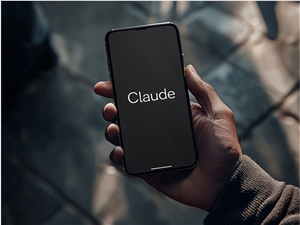
Recently, Anthropic announced on X that its cross-platform mobile app has undergone a comprehensive and in-depth upgrade. Most notably, the iPhone version of Claude’s voice mode has been officially integrated into Apple’s CarPlay system, allowing users to engage in seamless voice-based Q&A with Claude directly through their car’s infotainment system, delivering a brand-new intelligent human–vehicle interaction experience. Beyond in-car scenarios, this update also extends to interface and other multi-device features.

Claude多端应用迎来重磅升级,iPhone版正式支持CarPlay语音交互
Timeline and related coverage

Claude gets into the car: With CarPlay integration, you can even ask AI questions while driving.

On October 29, Anthropic announced an update to the Claude mobile app, supporting iPhone, iPad, Android, Chromebook, as well as web and desktop platforms. A key highlight is the integration of the iPhone version’s voice mode with Apple CarPlay, allowing drivers to ask AI questions hands-free—perfect for checking routes, finding information, and organizing thoughts during commutes. The in-car use case is seen as the most imaginative aspect of this upgrade.

image.png
Timeline and related coverage