Skip to content
AI NEWS JOURNAL
AI, IN PERSPECTIVE

Search AI news

Search headlines, summaries and articles to connect the dots.

Newest first

After talking to many parties, why did Apple ultimately choose only Alibaba?

On October 31, the official announcement finally came: Apple and Alibaba have formally reached a cooperation agreement, allowing Chinese users to directly use Alibaba’s Qwen within Siri, writing tools, and visual intelligence applications. After more than two years of waiting, Apple Intelligence is finally coming to mainland China. Interestingly, over the past two years, numerous domestic large-model companies—Baidu, Tencent, ByteDance, DeepSeek, Zhipu…—have all been linked to Apple in one way or another. So why was it only Alibaba’s Qwen that ended up “winning the prize”? In fact, if we look closely, we’ll find that Apple had no real choice but to go with Alibaba. 01. Compliance Is the First Barrier Overseas, Apple Intelligence’s main partners are OpenAI and Google. But in China, neither of these companies’ models is available. However, this doesn’t mean that models which are usable domestically and properly registered can simply be integrated into Apple Intelligence; they still require separate on-device generative AI service registration. Meanwhile, as a hand...
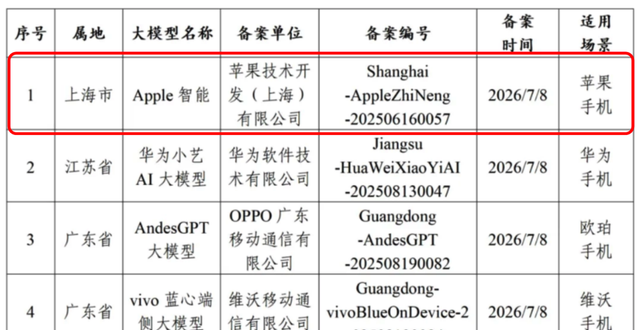
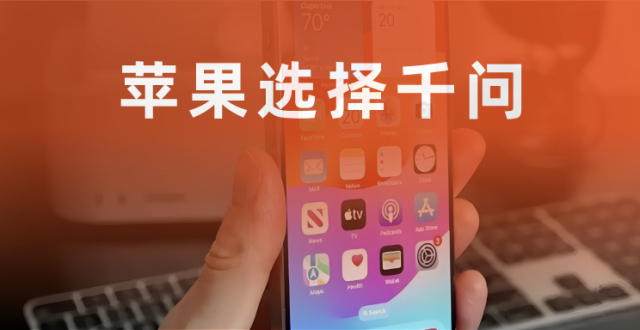
谈了一圈,为什么苹果最后只能选阿里?
Timeline and related coverage

China‑bound Apple Intelligence enters beta testing in 4 days! Alibaba officially announces full integration of Qwen.

Author: Li Shuiqing | Editor: Xin Yuan — According to Zhidongxi (WeChat official account: zhidxcom), on October 31, Alibaba announced a partnership with Apple to integrate Qwen into Apple Intelligence. Chinese users will be able to directly access Qwen’s capabilities for text and image understanding, content generation, and more, within Siri, writing tools, and visual intelligence features. These functions will begin beta testing starting November 4 alongside the latest iOS Developer Beta version, and...

国行苹果智能倒计时4天开测!阿里官宣,千问全面接入
Timeline and related coverage

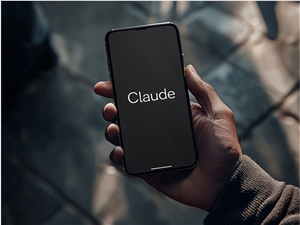
Claude’s multi-platform app has received a major upgrade, with the iPhone version now officially supporting CarPlay voice interaction.

Recently, Anthropic announced on X that its cross-platform mobile app has undergone a comprehensive and in-depth upgrade. Most notably, the iPhone version of Claude’s voice mode has been officially integrated into Apple’s CarPlay system, allowing users to engage in seamless voice-based Q&A with Claude directly through their car’s infotainment system, delivering a brand-new intelligent human–vehicle interaction experience. Beyond in-car scenarios, this update also extends to interface and other multi-device features.

Claude多端应用迎来重磅升级,iPhone版正式支持CarPlay语音交互
Timeline and related coverage

Claude gets into the car: With CarPlay integration, you can even ask AI questions while driving.

On October 29, Anthropic announced an update to the Claude mobile app, supporting iPhone, iPad, Android, Chromebook, as well as web and desktop platforms. A key highlight is the integration of the iPhone version’s voice mode with Apple CarPlay, allowing drivers to ask AI questions hands-free—perfect for checking routes, finding information, and organizing thoughts during commutes. The in-car use case is seen as the most imaginative aspect of this upgrade.

image.png
Timeline and related coverage

Recursive releases Flint: a lightweight, AI-driven programming model that can run locally.

AI startup Recursive has unveiled Flint, an open-source coding model that it claims was developed primarily using its in-house AI research system, Eureka Machine. With just 40 billion parameters and only 2.5 billion activations in practice, the model can run offline on a standard laptop—such as an M4 Pro MacBook—at an inference speed of 131 tokens per second, outperforming most models of comparable size on benchmarks like SWE-Bench.

Timeline and related coverage