
Apps for Caregivers Get a Dose of AI, but That Might Not Be Enough
The apps and platforms that help family caregivers manage their loved ones’ needs are becoming more capable, but the broader issue of caregivers’ well-being remains unsolved.
Search headlines, summaries and articles to connect the dots.
The apps and platforms that help family caregivers manage their loved ones’ needs are becoming more capable, but the broader issue of caregivers’ well-being remains unsolved.
Learn how to build a serverless Model Context Protocol (MCP) server on Amazon ECS with AWS Fargate that gives AI agents secure, metadata-driven access to an enterprise data lake. Exposing a new dataset requires only a JSON file, with no per-dataset integration code.
Anthropic is using AI to build more powerful AI. And it appears to be working remarkably well, with the company's models improving roughly twice as quickly as a year ago, with little indication of slowing down. That's according to a new report published Thursday by the AI safety research organization METR, following an 11-week investigation […]
OpenAI introduces BioBasicsBench, a 100-task benchmark measuring how well AI agents interpret raw experimental data and handle everyday wet-lab science.
arXiv:2611.07211v1 Announce Type: new Abstract: Looped transformers scale inference-time reasoning by repeatedly reusing a shared core, increasing computation without increasing parameter count. Serving prefilling and decoding with a uniform loop budget couples their costs. We present LoopDuet, a phase-dependent depth and training-free serving approach that selects the two budgets jointly while preserving decoding depth at prefilling boundaries. Our vLLM implementation gathers tokens requiring further recurrence into compact batches, turning the selected allocation into executable savings with existing weights and attention kernels. At runtime, a queue-age controller adjusts prefilling depth to retain quality as demand changes. Experiments on the full HotpotQA dataset with one A100-80GB demonstrate two benefits of this flexibility. First, separate phase budgets improve the quality--throughput trade-off: Huginn delivers 19\% more throughput than the fastest tested uniform setting meeting the same accuracy criterion, while a higher-throughput operating point gains 6.04 EM points over uniform depth eight at 97\% of its throughput. Second, the same execution mechanism retains more quality under load: on two evaluated OLMo arrival traces, adaptive prefilling gains 0.92--1.35 EM points over the most accurate tested fixed-depth controls at the same 100\% attainment of a one-second time-to-first-token target. Together, these results establish LoopDuet as a practical way to turn flexible model computation into higher serving capacity and better quality under load.
Flipsnack focused its ChatGPT Ads campaigns on getting people to try its product, growing registrations while lowering the cost per signup.
OpenAI introduces its National Community Compact and Compute Campus Policy Blueprint to protect local resources, create jobs, and guide responsible AI infrastructure development.
Hello everyone, I'm BIOcanse.Windows Task Manager has inaccurate readings and limited monitoring items. Various hardware adjustments are also very separated—CPU, GPU, and fans all require their own individual software. Their interfaces and interactions are primitive, and they often overwrite each other's configurations. Moreover, driver management of the CPU and GPU is too clumsy, and the memory usage issue on Windows is also very serious. So I made Resource Manager to view and manage all these resources in one place, making monitoring and scheduling work seamlessly together.Monitoring:This software integrates almost every possible monitoring item, letting you look at your computer from a God's-eye view!Scheduling:One of the core features. It uses algorithms I wrote to optimize memory usage and reasonably schedule processes across multiple CPU cores. It also supports GPU scheduling, which means it can switch the GPU a program uses while it is running. For example, after launching a game, if GPU usage is high or VRAM is about to overflow, it will move the remaining software to another GPU (for most personal computers, this is usually the integrated GPU).Reporting:Many times, computer performance problems are actually just caused by a single program or driver—the benefits of 100 programs optimizing themselves cannot make up for a memory leak in just one program. The reporting page reports abnormal resource usage (CPU, GPU, memory, VRAM, disk read/write, network traffic, and causing system interruptions).Hardware Adjustment:All the parameters you can think of for hardware like the CPU and GPU can be adjusted here. However, my own setup is an AMD CPU + NVIDIA GPU, so other setups still need to be verified. I do have several computers with Intel CPUs to verify Intel CPU support, but I really do not have a single AMD GPU. Although most of it uses mature open-source dependencies, there may still be risks, so please use it with caution. Comments URL: https://news.ycombinator.com/item?id=50380521 Points: 1 # Comments: 0
Some agent-evaluation questions are narrow and repeatable, and decision models answer exactly that kind of question. This post shows how to connect two decision models, Jev and Strands Decider, to Amazon Bedrock AgentCore Evaluations through code-based evaluators, and how to validate a decision-model check before you gate a release on it.
arXiv:2611.03916v1 Announce Type: new Abstract: Koopman representations describe nonlinear dynamics through linear evolution in a transformed space, offering an attractive framework for their linear simplicity and generality. Yet these advantages do not necessarily translate into improved performance in deep latent data assimilation (LDA). We systematically compare seven representative methods and structural baselines across five systems spanning approximately periodic to strongly chaotic dynamics and a broad range of state dimensions. We evaluate forecast and assimilation accuracy, physical state recovery, latent-trajectory behavior, and dynamical consistency, and assess Gaussian error assumptions, objective convexity, and uniqueness of analysis solutions. Our results reveal a trade-off between representational flexibility and optimization tractability. Linear evolution of the latent state can stabilize short-term forecasts but restrict expressiveness in strongly chaotic and high-dimensional systems, without consistently improving assimilation accuracy. Parameterized linear operators offer greater flexibility, yet their joint optimization with the encoder--decoder remains nonconvex. Methods with closed-form analysis updates generally perform better and exhibit greater robustness in our experiments, although matrix inversion remains a computational bottleneck. These findings show that the practical benefits of Koopman structure depend on both sufficient observational information and the choice of assimilation procedure.
arXiv:2610.37682v1 Announce Type: new Abstract: Listwise preference feedback offers richer supervision for large language model (LLMs) alignment than pairwise comparisons, but a full ranking also reveals more sensitive user preferences. Existing privacy-preserving alignment methods focus mainly on pairwise feedback, while listwise alignment under local differential privacy (LDP) remains unexplored. Extending LDP to this listwise domain raises a critical challenge: the high sensitivity of the full ranking space demands excessive noise, neutralizing the benefits of listwise supervision. To address this challenge, we analyze the interaction between supervision granularity and privacy noise in downstream training, and introduce a rank-aware exponential mechanism that privatizes listwise prefer
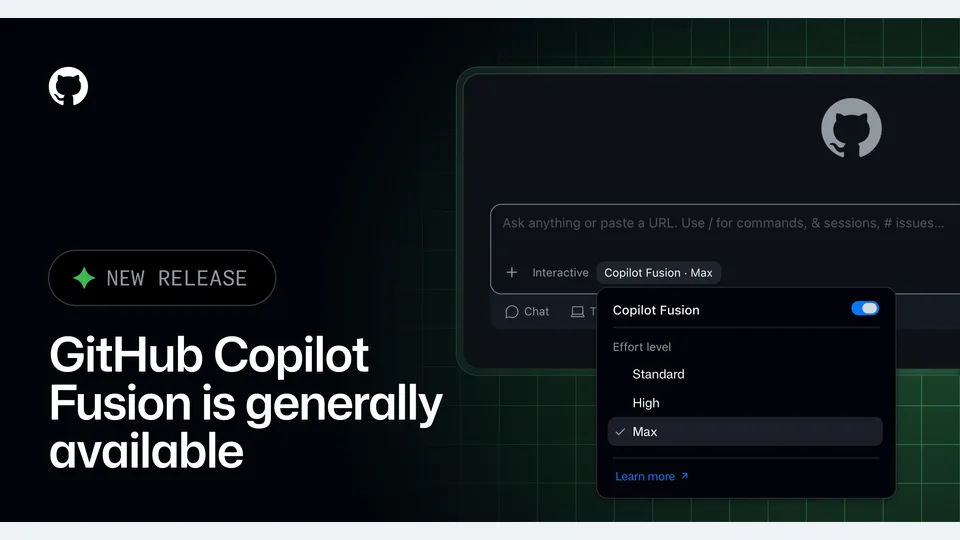
GitHub Copilot Fusion is generally available. Instead of picking a model for each task, choose Copilot Fusion and let Copilot intelligently route and orchestrate which models it uses for you.… The post Route and orchestrate models with GitHub Copilot Fusion appeared first on The GitHub Blog.
A family is suing OpenAI, saying ChatGPT coached their daughter to quietly taper off her seizure medication and keep it from her doctors before she died in February.
In this post, we show how Exowatt used Amazon SageMaker AI serverless model customization to build a repeatable AI pipeline that produces task-specific fine-tuned models for two deployment targets, edge and cloud, achieving higher accuracy than frontier models at up to 49x lower cost.
The new standard, WebAI, is designed to work with a variety of AI models.

arXiv:2610.32997v1 Announce Type: new Abstract: Automatic Speech Recognition (ASR) models such as OpenAIs Whisper have substantially improved speech recognition quality but remain expensive to fine-tune, especially when large amounts of transcribed audio are available. This makes it challenging for many practitioners to adapt these models to new languages or domains. In this work, we introduce an embedding-based subset selection approach for selecting smaller training sets for ASR fine-tuning. Using Whispers pretrained encoder, we map each audio sample into a fixed-dimensional embedding space and apply a greedy k-center algorithm to select diverse and representative subsets of the training data. We evaluate this approach on both Hebrew and Danish, showing that k-center selection often impr

arXiv:2610.32322v1 Announce Type: new Abstract: LLM agents retrieve skills from public hubs that hold up to about 100,000 entries and serve many models. As models improve, a hub must find the skills a given model has internalized, meaning it can do without them, and retire them for that model, yet internalization has not been measured with known reliability. Published rules that compare runs with and without a skill retire on the gain alone. The gain is near zero both for an internalized skill and when neither the model nor the skill delivers the capability, a state we call uncovered. We instead withhold the skill, score the model on a task synthesized from it, and trust a high unaided score only when another model gains from the skill, since nearly half of high scores come from tasks no m
We're at the start of a major effort to speed up drug development with Claude. Over the past several months, our scientists have engaged in deep research partnerships with six organizations developing new medicines.
A cross-section of the MIT community convened discussions on topics ranging from data centers and super pollutants to agriculture and education.

We ran one AI skill 80 times against four context sources. Engineered summaries cut cost 48.5% and run time 43.2%.