Shanghai’s Fourier Intelligence built a custom humanoid for Meta’s internal research in months. The company already has a rehab business, modest humanoid shipments, and a disclosed pre-money valuation of about 8 billion yuan. A marquee partner tests its engineering—it does not yet prove the equity story.
Google DeepMind released Genie 4, a world model with real-time audio, more realistic simulations, and mid-simulation text prompts, in research preview for trusted testers.
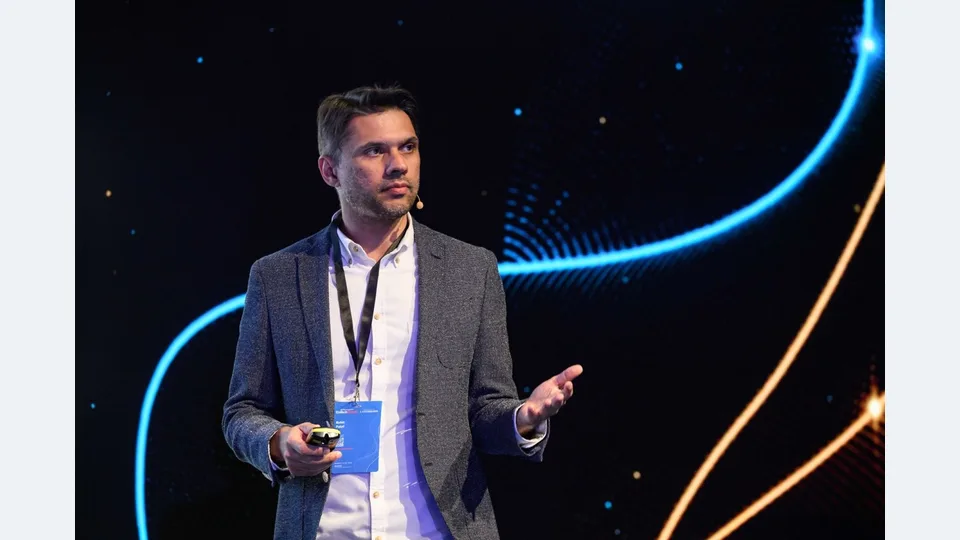
Rohit Patel is departing Meta after eight years working on AI evaluations and reinforcement learning, TechCrunch has exclusively learned. His startup, Ndoc, aims to take on Microsoft Office Suite.
For the past three years, the enterprise artificial intelligence conversation has focused on what models can say. The next three years will be about what systems are allowed to do. That’s a harder problem that better models alone won’t solve. On Wednesday, Oct. 28, I’ll be in Boston for the Bloomberg Tech Event: Building the […] The post What to watch for as enterprises move from AI experimentation to autonomous operations appeared first on SiliconANGLE.
# Release v5.21.0 ## New Model additions ### MiniCPM-OCR MiniCPM-OCR is a document-understanding model from OpenBMB's MiniCPM-V family. It keeps the MiniCPM-V 4.6 architecture, which pairs a SigLIP vision encoder and a window-attention merger with a Qwen3.5 language model. It is specialized for reading text-dense images such as scanned pages, screenshots, receipts and tables. **Links:** [Documentation](https://huggingface.co/docs/transformers/main/en/model_doc/minicpm_ocr) | [Paper](https://huggingface.co/papers/2509.18154) * Feat test (#49920) by @guarin in [#49920](https://github.com/huggingface/transformers/pull/49920) ### Flint Flint is Recursive's mixture-of-experts language model. Compared to a standard SwiGLU MoE transformer such as Qwen3-MoE, it uses hybrid attention (sliding-windo
Anthropic’s S-1 shows more than half of its $100,000-plus customers now use both the Claude Platform and a first-party app, a cross-selling playbook reminiscent of Amazon that’s making enterprise customers stickier.
Anthropic has officially filed for an IPO, revealing soaring revenue, mounting losses, major enterprise adoption, and an unusual governance structure designed to preserve founder control and its AI safety mission.
According to TechCrunch, citing CNBC, OpenAI is in talks with Coatue and UAE investors for a new round of private financing worth approximately $30 billion, with a pre-money valuation of $1.25 trillion; if finalized, this would set a new record for the highest valuation among unlisted companies worldwide. Earlier, Bloomberg reported a target valuation of $1.4 trillion, though the terms have not yet been finalized. OpenAI filed confidential IPO documents in June 2026, following a previous funding round in March 2026 that valued the company at $852 billion.
Former JPMorgan energy derivatives trader Anekha Sokhal founded Moshi to build a real-time AI recommendation system that integrates structured and unstructured data. Its core focus is not to replace Bloomberg, but rather to deeply embed AI into traders’ daily workflows, emphasizing trusted-source filtering, on-device processing of proprietary data, identification of conflicting signals, and customer‑driven product development.
At the AI Engineer New York Conference, organizations including OpenAI, Anthropic, Two Sigma, and Bloomberg jointly explored pathways to balance autonomy and safety in AI agents within the financial sector, emphasizing that “trustworthy autonomy” can be achieved through layered controls, identity and access management, sandbox-based approvals, traceability, and external determinism mechanisms—rather than simply restricting capabilities.
2022 is a year of generalist models! With the bloom of multimodal pretraining, especially the unified model, we have witnessed the opportunity to building a generalist model that is capable of processing tasks of different modalities or multi-modalities! Thus, we propose OFA1, namely One-For-All, a unified multimodal pretrained model that unifies understanding and generation tasks concerning modalities into a single framework, and we pretrain OFA with the instruction-based multitask-pretraining that endows it with multiple capabilities.