
Skip to content
AI NEWS JOURNAL
AI, IN PERSPECTIVE

Search AI news

Search headlines, summaries and articles to connect the dots.

Newest first

Gemini Omni 1.2 Flash: Fast and cost-effective with longer clips

Google DeepMind has launched Gemini Omni 1.2 Flash, introducing native 15-second video generation, improved reference adherence, stronger consistency across frames, multi-turn conversational editing, more natural speech, and cinematic camera movements. The model is now generally available via the Gemini API and Gemini for business, priced at $0.07 per second for 720p video—30% lower than its predecessor. It supports scalable workflows, including draft generation at lower resolutions, iterative edits, and upscaling to 1080p or 4K. Use cases include product explainers, social ads, virtual try-ons, and branded content, with applications across Google AI Studio, Google Cloud, Google Vids, Flow, the Gemini app, and Google Ads.

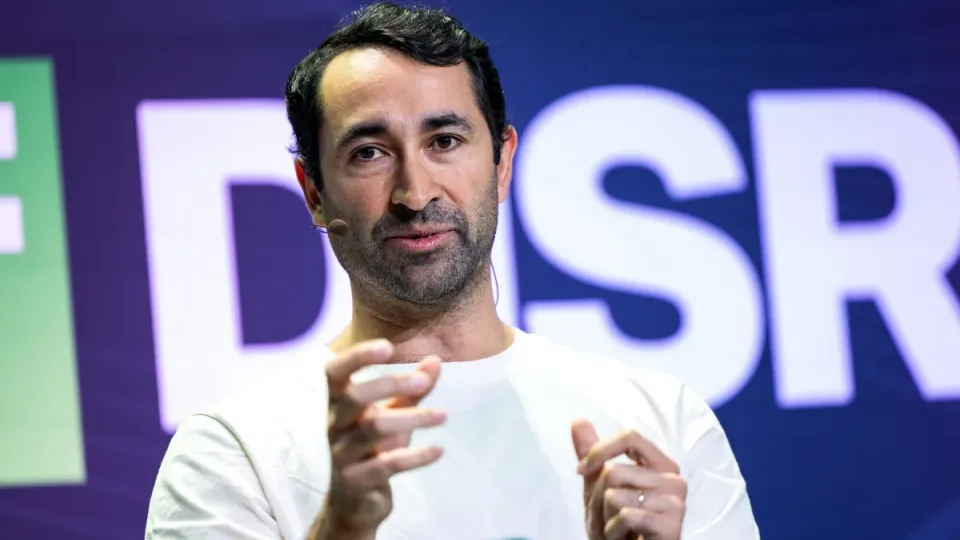
The Wizard of Open Weights: Chris Alexiuk Makes AI Easy With Open Models

Chris Alexiuk has a simple rule about open source AI: If you believe in it, be loud about it. “We should be shouting about this technology from the rooftops,” said Alexiuk, a Toronto-based senior product research engineer in deep learning at NVIDIA who specializes in making open large language models (LLMs) practical for working developers. […]

v1.19.0 - Trace Your Workflows, Layer by Layer

Dify 1.19.0 enhances observability with nested workflow tracing, allowing users to follow execution steps inside Workflow Tools, inspect LLM calls, and maintain context across nested invocations. The release also enables portable app packages via App packages, improves Agent file uploads and previews, introduces Skill Hub automation through CLI commands, and upgrades the bundled plugin daemon to version 0.6.14-local. Key changes include support for format v2 app packages, enhanced security, improved editing workflows, and updated environment variables and API endpoints.

AudioLift: Audio-Driven Single Image to Full-Head Gaussian Avatar via Multi-view Video Generation

arXiv:2610.31747v1 Announce Type: new Abstract: Existing 3D talking avatar methods mainly rely on parametric face models including 3DMM or FLAME, whose compact motion representations limit their ability to synthesize extreme expressions and to model accessories such as headwear. We introduce AudioLift, a two-stage framework that uses generated multi-view videos as the intermediate representation for audio-driven avatar generation without parametric face models or per-instance optimization. Our framework combines a synchronized multi-view video generation stage with an inconsistency-robust Gaussian reconstruction stage to recover coherent full-head geometry from a single portrait image. Extensive experiments demonstrate that AudioLift produces 3D talking avatars capable of capturing more ex

AudioLift: Audio-Driven Single Image to Full-Head Gaussian Avatar via Multi-view Video Generation
Timeline and related coverage

GHARP: Real-Time Gaussian Head Animation from Large-Scale Reconstruction Prior

We present GHARP (Real-time Gaussian Head Animation from Large-scale Reconstruction Prior), a method that animates 3D human heads in real time from a few input images of a subject and a driving expression signal. We decouple the problem into an identity stage that builds a representation of the subject’s geometry and appearance offline, and an animation stage that predicts expression-dependent residuals on top of it at runtime. This separation offers a favorable trade-off with respect to fidelity, quality and runtime: the identity stage can be expensive while the animation stage runs a…

Timeline and related coverage