Skip to content
AI NEWS JOURNAL
AI, IN PERSPECTIVE

Search AI news

Search headlines, summaries and articles to connect the dots.

Newest first

A roundup of the most anticipated AI-powered wearable devices in 2026: over ten new models, including Bee, Friend, Limitless, and more, make their debut.

On October 25, 2026, TechCrunch published a review summarizing more than ten AI-powered wearable devices, including Bee, Friend, Limitless, Muse Charm, Nirva, Omi, Plaud NotePin, Rabbit R1, Stream Ring, and others, covering their pricing, functional positioning, market availability, and privacy controversies.

The hottest AI wearables and gadgets you should know about

Why it matters:This report is an annual roundup of new products published by the authoritative tech media outlet TechCrunch on October 25, 2026. It covers both mainstream AI hardware manufacturers and startups, providing a comprehensive overview in terms of price, form factor, core features, release timelines, and points of contention. All statements are based solely on facts explicitly stated in the source material, with no speculation or extrapolation.

Timeline and related coverage

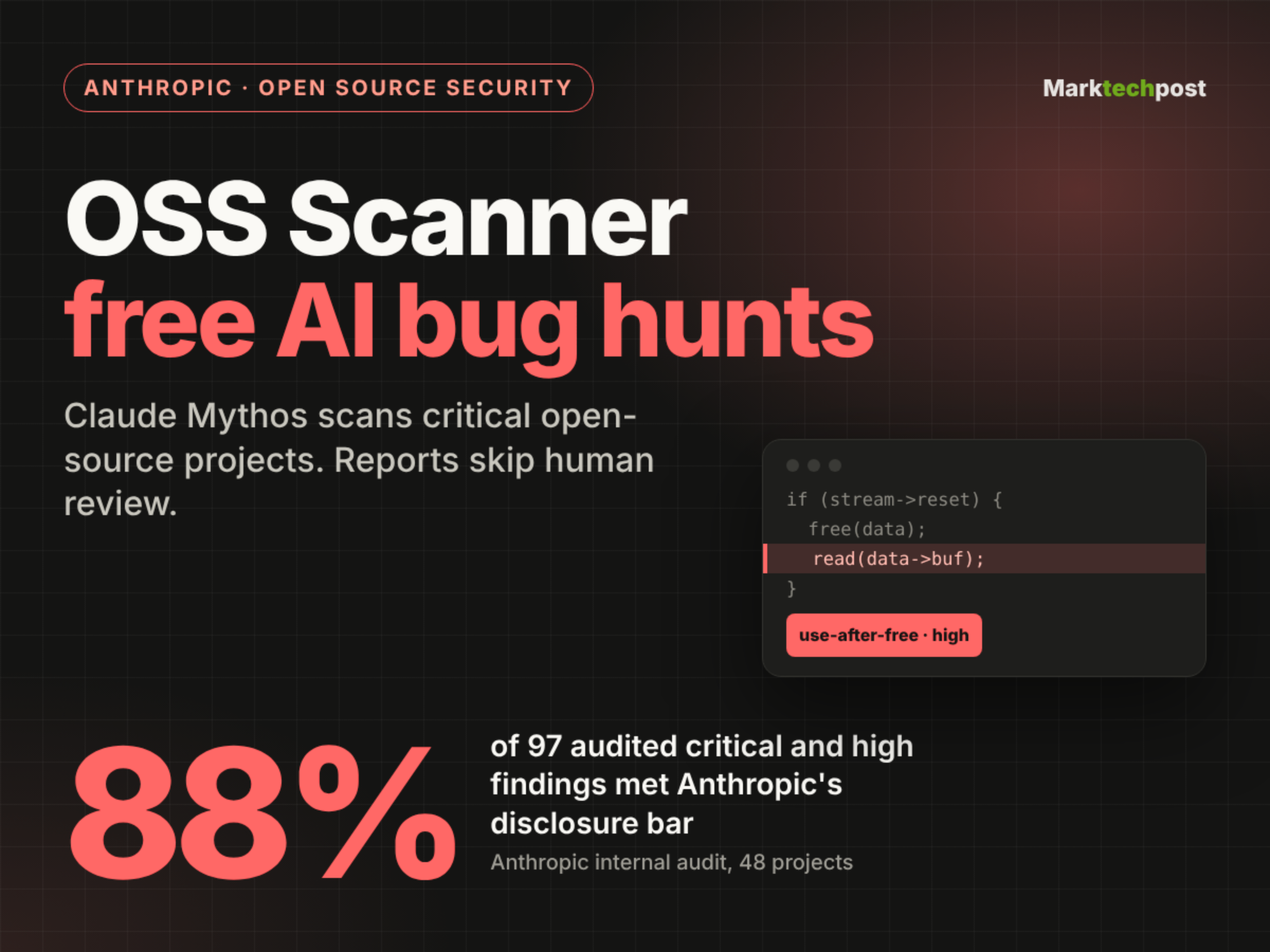
Anthropic launches OSS Scanner, a free AI-powered vulnerability scanner for critical open-source projects.

Anthropic launched OSS Scanner on October 8, 2026—a free, opt-in AI vulnerability-scanning tool powered by strong models such as Claude Mythos, designed specifically for critical open-source projects. As of October 19, it had onboarded 114 projects and, within 11 days, reported 77 high-severity and 803 medium-severity vulnerabilities (according to model ratings), with 88% of sampled audit results meeting its disclosure standards.

Anthropic Launches OSS Scanner, a Free AI Vulnerability Scanner

Why it matters:This tool represents a large-scale implementation of LLMs in the open-source security domain, characterized by zero cost, full automation, and offline auditing; however, bypassing the human review stage introduces risks of false positives and duplicate issues. Its accuracy metrics—88% detection rate and 1% false positive rate—and real-world project feedback (e.g., wolfSSL, curl) provide an empirical benchmark for the current state of AI‑driven vulnerability discovery.

Timeline and related coverage

Kimi releases K3.1 Pro: Terminal task capabilities top the charts, with simulation debugging and multimodal programming showcasing the nascent form of embodied intelligence.

On October 25, 2026, Kimi released the K3.1 Pro model, which ranked first in the Terminal-Bench 4.0 terminal task benchmark with a 67.2% success rate. Its capabilities—including autonomously fixing emulator errors, performing physics simulations, conducting audio analysis, constructing 3D scenes, and editing videos—point toward exploring pathways in embodied intelligence technology.

根据报道中的虚拟人行走训练和模拟器调试制作的编辑示意,非软件实拍截图

Why it matters:The material is based on a hands-on test report published with authorization from Titanium Media, covering authoritative third-party benchmark data (such as Artificial Analysis and Terminal-Bench 4.0), official self-test results, and the author’s multi-scenario functional validation. It highlights the K3.1 Pro’s substantial advancements in execution performance, simulation closed-loop capabilities, and multimodal programming, while clearly noting performance limitations and undisclosed information (e.g., Flash/Ultra has not yet been released), in compliance with fact-checking and source attribution requirements.

Timeline and related coverage

Panel manufacturers are collectively raising prices to cope with upstream cost pressures driven by AI, but downstream acceptance remains low, putting pressure on end-product quality control.

Starting in September 2026, panel manufacturers such as TCL CSOT, BOE, and HKC have issued price‑increase notices one after another. The primary reason is the rapid growth of AI large models, which has led to a sharp surge in demand for HBM, squeezing capacity for mature‑process chips and driving up the prices of key components like driver ICs, PCBs, and glass substrates. Upstream suppliers, including Corning, have also raised their prices in tandem. Despite clear cost pressures, downstream TV and monitor brands have yet to broadly increase purchase prices, while end users continue to report frequent quality‑control issues such as overheating and black spots. As a result, these price hikes have not yet translated into actual sales or improved user experiences.

AI大模型狂飙,面板行业也扛不住了

Why it matters:The materials system reveals the cross‑chain transmission mechanism through which the AI industry impacts indirectly related hardware sectors—rather than driving panel demand directly, it triggers a full‑chain cost repricing via the reallocation of wafer‑fabrication capacity. At the same time, it highlights a significant gap between price‑increase behavior and actual market feedback (price rigidity, declining shipments, and user complaints), underscoring the deep‑seated contradiction between industry bargaining power and product competitiveness.

Timeline and related coverage

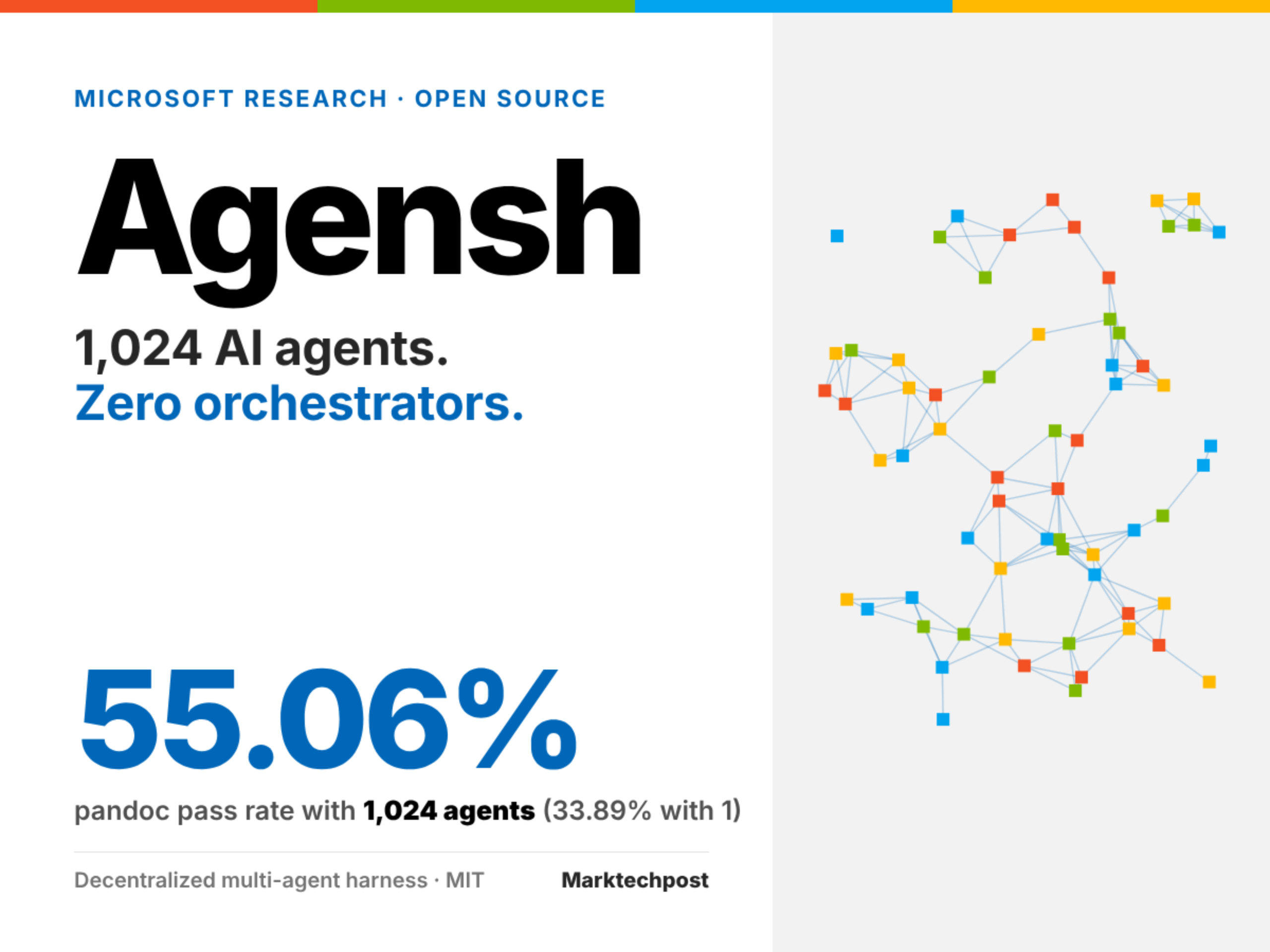
Microsoft open-sources Agensh: a decentralized framework that supports 1024 autonomous, collaboratively operating AI coding agents.

On October 25, 2026, Microsoft Research open-sourced Agensh, a multi-agent runtime framework that operates without a central coordinator, enabling 1 to 1,024 LLM-powered coding agents to self-organize and collaborate on ProgramBench. The system achieves decentralized coordination through shared dashboards inspired by Gitea, Mattermost, and DeLM, with all agents following the same prompt-driven five-step loop; its scalability has been validated in a Linux + Docker environment.

Microsoft Open-Sources Agensh: A Multi-Agent Harness for 1,024 Agents

Why it matters:This achievement represents a significant evolution in multi-agent system architectures—abandoning the traditional “master‑agent” paradigm and enabling large‑scale self‑organization through prompt engineering and lightweight service composition. Empirical results on ProgramBench (e.g., 128 agents achieving a 49% improvement in task load balancing across five tasks) establish a new benchmark for distributed AI engineering. Released under the MIT License and compatible with mainstream single‑agent tools such as Copilot CLI, it offers valuable guidance for practical development.

Timeline and related coverage

Taking on NVIDIA head-on to challenge Apple—Microsoft’s high-end AI PC gamble

Microsoft is courting local AI developers and high-end creators with the Surface Laptop Ultra, which features NVIDIA RTX Spark. The hardware brings large-capacity unified memory, CUDA, and RTX graphics capabilities to a portable device, but whether it can sustain competition against Macs will still depend on app optimization, agent-based experiences, and real-world workflows.

Why it matters:Ultimately, this competition comes down to whether on-device AI can genuinely boost creativity and development efficiency, and whether the associated costs—hardware, software, and migration—are justified. Hardware opens up new possibilities, but the ecosystem and real-world user experience determine how many users those possibilities can reach.

Timeline and related coverage

Apple’s first foldable-screen iPhone, the Duo, has already experienced widespread screen cracking shortly after going on sale.

Multiple users have reported that Apple’s first foldable smartphone, the iPhone Duo, develops screen cracks and splits right above the hinge shortly after unboxing, with failures occurring at a high rate. Cases have been documented in both Australia and China, reportedly due to tolerances in the hinge assembly. Apple has yet to issue an official response, and the outcome of the after-sales service assessment will determine whether the device will be replaced free of charge or require costly out-of-pocket repairs.

Why it matters:The incident involves widespread early‑stage quality issues with a new device, directly challenging the boundaries between consumer rights and corporate responsibility. Coupled with public concerns about the applicability of the “three‑guarantee” regulations and the positioning of AppleCare+ services, it carries significant warning implications and serves as a valuable reference for rights protection.

Timeline and related coverage

llama.cpp 发布 b11867 版本:服务端入口重构,全面支持多平台与异构加速后端

llama.cpp 于 GitHub 正式发布 b11867 版本,核心变更包括服务端(server)入口点重构(PR #31113),新增 server_role 机制;同时提供覆盖 macOS、Linux、Windows、Android、iOS 及 openEuler 的 40+ 预编译二进制包,支持 CPU、CUDA(12.4/12.8/13.4)、Vulkan、ROCm 10.0、OpenVINO、SYCL(FP16/FP32)、Snapdragon(Adreno+Hexagon)等多元硬件后端。

Why it matters:按信源设置仅收录,不参与自动精选

Timeline and related coverage

Sebastian Raschka has released an eight-video course titled “Building a Reasoning Model from Scratch.”

On October 24, 2026, Sebastian Raschka published an eight-part, over-11-hour hands-on video course on Python and PyTorch in Ahead of AI magazine (magazine.sebastianraschka.com), systematically covering the evaluation of inference models, scaling during inference, reinforcement learning (RLVR), and knowledge distillation, with all methods implemented using the pre-trained Qwen3-0.6B model.

Why it matters:This course is the author’s advanced technical educational offering, following “Building Large Language Models from Scratch.” It focuses on the core evolutionary direction of today’s mainstream LLMs—enhancing inference capabilities—covering the entire technical pipeline from setting up the foundational environment to GRPO reinforcement learning and self‑distillation. The author explicitly states that all implementations are “hand‑crafted from scratch,” fully reproducible, and highly instructive with significant engineering reference value.

Timeline and related coverage

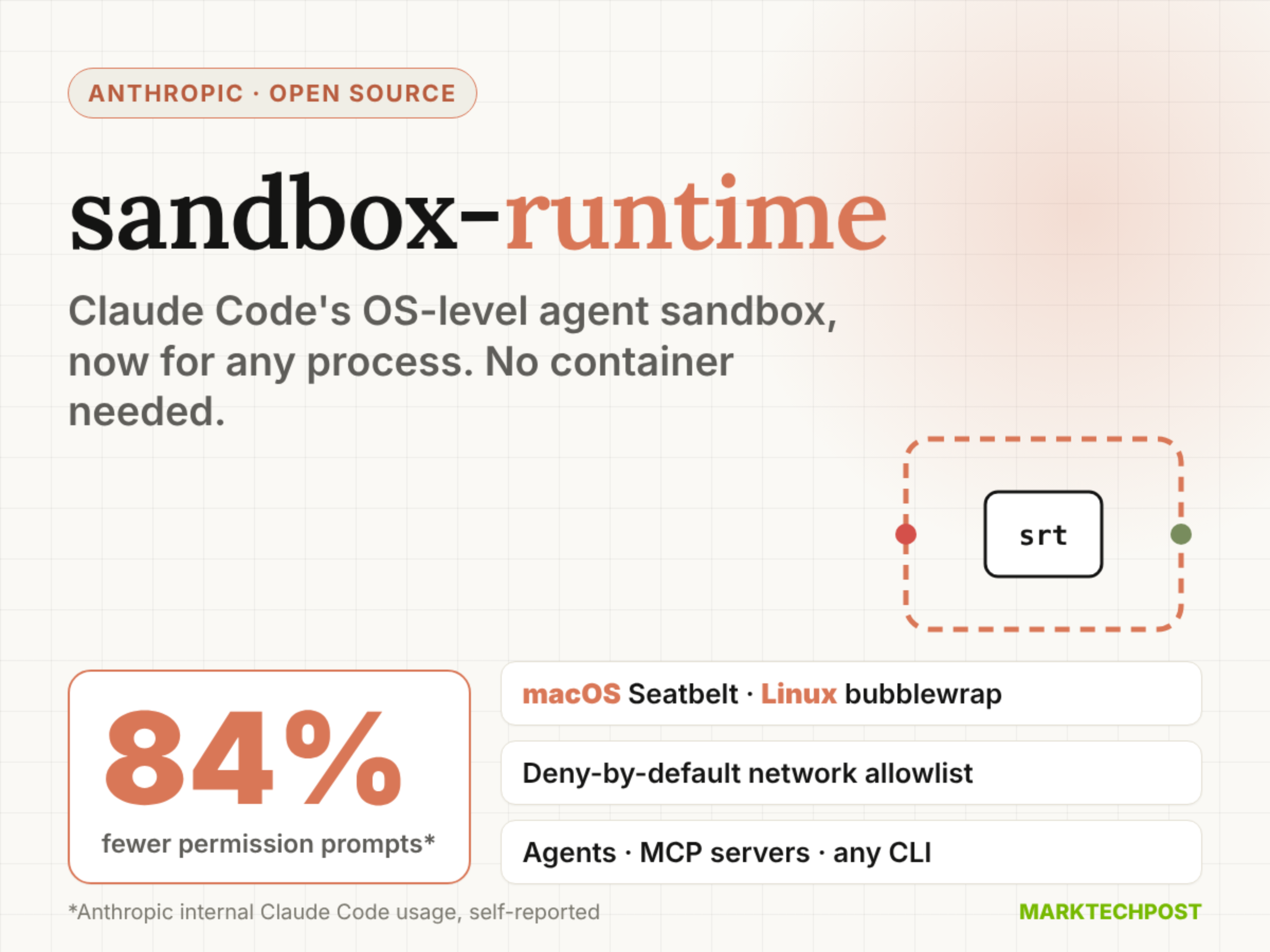
Anthropic open-sources the OS-level sandbox sandbox-runtime: providing container-free file and network isolation for AI agents.

On October 24, 2026, Anthropic open-sourced sandbox-runtime (srt), an OS-level sandboxing tool that operates without containers, designed to restrict file read/write and network access permissions for AI agents, MCP servers, and CLI tools. It supports macOS (Seatbelt), Linux (bubblewrap), and Windows (alpha), with npm package version 0.0.81 under the Apache-2.0 license.

Meet Anthropic’s sandbox-runtime: OS-Level Sandboxing for AI Agents, No Containers

Why it matters:This tool represents a significant advancement in AI security infrastructure—achieving fine-grained, full-process-tree coverage through the operating system’s native isolation mechanisms, directly addressing the risks of prompt injection and privilege escalation, and has already been deployed for internal validation within Claude Code.

Timeline and related coverage

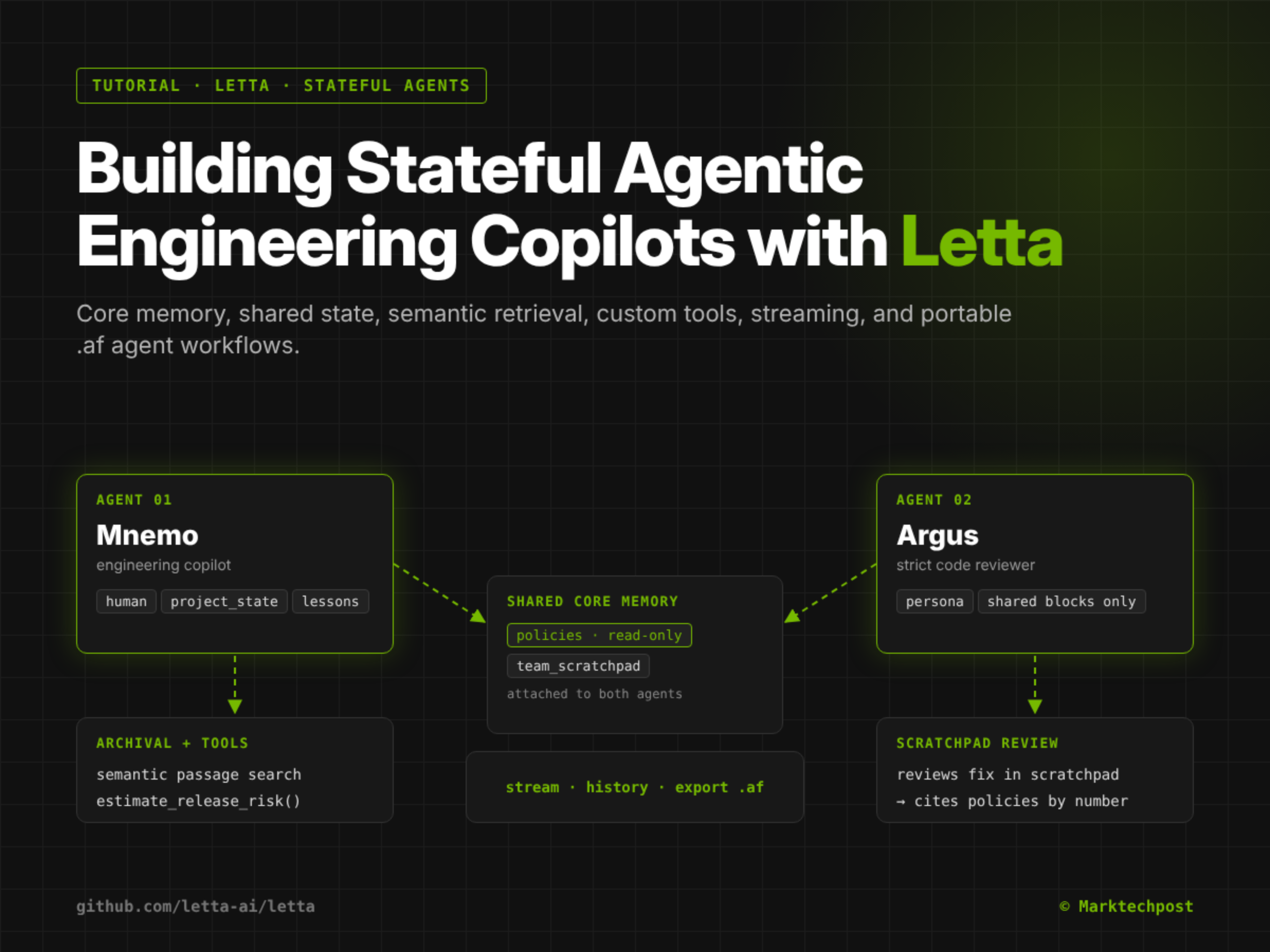
Letta platform releases a tutorial on building stateful engineering collaborators: supporting core memory, shared state, and portable workflows.

MarkTechPost published a tutorial on October 24, 2026, detailing how to build an agentic copilot with persistent state using the Letta framework. The guide covers capabilities such as verifiable core memory, multi-agent shared memory, semantic retrieval of archived knowledge, custom Python tool integration, streaming responses, and .agent format (.af) export. The content serves as a technical practice guide and does not provide performance metrics, security audits, or production‑environment validation.

Stateful Agentic Engineering Copilots with Letta: Core Memory, Shared State, Semantic Retrieval, Custom Tools, Streaming, and Portable Agent Workflows
Timeline and related coverage

TRIAD Release: The First Multimodal Large Model Evaluation Benchmark for All-Modal Ambiguity Resolution

On October 24, 2026, researchers published the paper arXiv:2610.30841v1 on arXiv, officially introducing the TRIAD benchmark—a new evaluation framework designed to assess the ability of text–image–audio tri-modal systems to resolve cross-modal ambiguities. The benchmark comprises 327 hand-crafted tri-modal samples, spanning 86 scenario groups and 18 categories of cross-modal ambiguity types.

TRIAD: Benchmarking Omni-Modal Ambiguity in Multimodal Large Language Models

Why it matters:This achievement directly addresses a core blind spot in current multimodal large-model evaluations: existing benchmarks focus on perception or reasoning under deterministic, single-modal inputs. In contrast, TRIAD is the first to systematically target “modal-complementary disambiguation” as its evaluation objective. Through rigorously designed leave-one-modal-out counterfactual tests, it reveals critical shortcomings—particularly in audio processing—and highlights weak scene-level robustness, thereby providing a reproducible diagnostic protocol and taxonomy for assessing next-generation all‑modal models.

Timeline and related coverage

TutorCaseBench Released: The First LLM Tutoring Evaluation Benchmark for Special Education Scenarios

On October 24, 2026, researchers published TutorCaseBench on arXiv (ID 2610.30828v1)—an LLM tutoring evaluation benchmark built on real-world cases from pedagogy, educational psychology, and special education, focusing on the ability to support students with learning and behavioral challenges. The benchmark comprises 923 dialogue segments, covering five categories of challenging behaviors, and employs a dual-track assessment approach: open-ended generation (1,560 questions) and multiple-choice questions (2,537 questions). Among 11 state-of-the-art large models, the top performer met the evaluation criteria in only 55.8% of the open-ended items.

TutorCaseBench: A Case-Grounded Benchmark for Evaluating LLM Tutors in Supporting Students with Challenging Behaviors

Why it matters:This study fills a critical gap in existing AI‑based educational assessment, which has overlooked the complexity of students with special needs. Its methodology emphasizes evidence‑based tracing—combining qualitative case studies with source‑grounded rubrics—and all data are openly available, ensuring reproducibility and relevance to educational practice. The findings clearly reveal significant shortcomings of current LLMs in generating contextually appropriate responses, offering important warnings and guidance for the practical implementation of educational AI.

Timeline and related coverage

Clinicians Lead the Development of Verifiable Safety Guidelines: Establishing a Traceable Layer of Safeguards for Mental Health Chatbots

On October 24, 2026, arXiv published the paper arXiv:2610.30690v1, which proposes a four‑rule safety‑check rulebook defined, finalized, and adjudicated under the guidance of two clinical physicians. After formal verification, this rulebook is deployed as a guardrail layer to govern the outputs of large language models (LLMs) in mental health contexts. All judgments within this guardrail can be traced back to a single naming rule and sixteen factual verifications, aiming to enhance the interpretability and testability of safety assessments.

From Clinical Judgment to Checkable Rules: Clinician-Led Guardrails for Mental-Health Chatbots

Why it matters:This study offers a safety‑enhancing approach distinct from mainstream prompt engineering, LLM‑as‑a‑Judge, or Constitutional AI. Its core innovation lies in structuring and formalizing clinical decision‑making while maintaining a complete audit trail throughout the process. All key claims—such as the number of rules, validation methods, factual base, comparative experimental data, and cost metrics—are explicitly stated in the original text, and the publication date (2026‑10‑24) aligns with the current UTC date (2026‑10‑25), ensuring timeliness and a solid foundation of credibility.

Timeline and related coverage

The study proposes a self-assessment reinforcement learning framework, SARL, which enhances the search state-awareness capability of retrieval-augmented large models.

On October 24, 2026, arXiv published the paper arXiv:2610.30435v1, introducing the Self-Assessment Reinforcement Learning (SARL) framework, which aims to address the issue in existing retrieval-augmented large language models where search agents lack the ability to perceive search states.

Self-Assessment Reinforcement Learning for Search-State Awareness in Retrieval-Augmented Large Language Models

Why it matters:This study addresses a critical limitation of retrieval-augmented large language models—namely, their tendency to generate hallucinatory reasoning and prematurely terminate searches when they fail to recognize previously acquired or missing information in complex tasks. It proposes an end-to-end reinforcement learning approach that requires no additional evaluation during testing, achieving significant performance improvements on multi-hop reasoning and deep-research benchmarks.

Timeline and related coverage

RIFT proposes a dynamic KV cache compression strategy to mitigate the issue of decoding staleness and improve speculative decoding quality.

On October 24, 2026, arXiv published the paper arXiv:2610.31098v1, introducing RIFT—a dynamic KV cache compression method for drafter models in speculative decoding. By balancing pre-filled information with newly generated tokens and incorporating compressibility training, RIFT enables the Qwen3.5-4B drafter model to maintain over 98% of its full cached receptive length when performing long-context generation at the scale of Qwen3.5-122B, all within an 8K-token KV cache budget.

RIFT: KV Cache Compression for Draft Models with Complementary Compressibility Training

Why it matters:This study directly addresses the trade-off between hardware costs and accuracy degradation caused by KV cache bloat in long‑sequence generation. It is the first to formally define and quantify the phenomenon of “decode staleness,” and proposes a practical refresh mechanism along with a training–inference co‑optimization scheme. The experimental setup is well specified (32K input / 4K output / 8K cache), and the results offer valuable engineering insights. The paper is an arXiv preprint, with a publication date (2026-10-24) that matches the system’s current date (2026-10-25), ensuring strong timeliness.

Timeline and related coverage

New research introduces the Cross-Language Poor-Condition Stimuli (CPOS) experimental paradigm, revealing the conditional transfer of hierarchical generalization capabilities in language models.

On October 24, 2026, arXiv published paper 2610.30960v1, introducing the Cross-Language Poor-Condition Stimulus (CPOS) experimental design to quantify language models’ ability to transfer hierarchical structural knowledge from a source language (L1) to a target language (L2) during cross-language continual training. The experiments show that this transfer partially holds but is imperfect, and it heavily depends on the specific language pair and the degree of lexical overlap.

Once a Tree, Always a Tree? Cross-lingual Transfer of Hierarchical Generalization in Language Models

Why it matters:This study is the first to construct a controllable cross-linguistic minimal-stimulus framework, directly testing whether “universal linguistic structures” constitute the cognitive basis for cross-linguistic transfer, rather than being driven solely by non-linguistic factors (such as positional encoding initialization). Its findings hold both methodological and theoretical value for understanding the mechanisms of grammar acquisition in large language models and multi-language alignment strategies.

Timeline and related coverage

New research introduces the ReflectPO framework, enhancing the autonomous error-correction capabilities of large language model agents in long-term tasks.

On October 24, 2026, arXiv published a research paper titled “ReflectPO: Reflection-Guided Policy Optimization for Long-Horizon LLM Agents” (ID 2610.30933v1), introducing a reinforcement learning framework called ReflectPO, designed to enhance the autonomous error-recovery capabilities of tool-augmented large language model agents in complex, multi-step, state-dependent tasks.

ReflectPO: Reflection-Guided Policy Optimization for Long-Horizon LLM Agents

Why it matters:This paper is a cutting-edge AI study recently published, focusing on a key bottleneck in the real-world deployment of LLM-based agents: the cumulative effect of early errors in long‑term tasks. Its proposed dual-component design—Reflection‑Guided Sampling and Tree‑Structured Credit Assignment—features methodological innovation and empirically outperforms multiple baselines across two benchmarking scenarios, making it a valuable technical reference.

Timeline and related coverage

New research reveals that open-book assessments primarily measure reading behavior rather than knowledge retention.

An arXiv paper published on October 24, 2026 (2610.31017v1) points out that, in document-level LoRA adapter evaluations, open-book scoring relies heavily on the model’s ability to read on the fly, rather than on whether the adapter has truly encoded knowledge specific to the document; random adapters can reproduce 82% of the performance advantage of expert adapters on open-book tasks, but on cloze tasks involving unstructured text, they only replicate 2%—statistically indistinguishable from zero.

Mostly Reading: What Open-Book Scores Measure in Document-Level LoRA Adapters

Why it matters:This study, through systematic controlled experiments—comprising 150 Wikipedia articles, the Llama-3.1-8B-Instruct model, and a two-task comparison—reveals the fundamental limitations of the current open-book evaluation paradigm: it fails to effectively distinguish between “reading” and “remembering,” posing methodological challenges to the practical utility of knowledge-editing and retrieval‑oriented adapters. The paper also reports four silent errors that lead to “clean yet incorrect results,” highlighting risks to reproducibility.

Timeline and related coverage

Research finds that word length can directly indicate the identity of Mandarin homophones: a new arXiv paper reveals the cognitive link between word frequency and pronunciation duration.

On October 24, 2026, arXiv published a new paper titled “Direct Prompting of Word Length for Lexical Identity: Evidence from Mandarin Chinese Homophones” (arXiv:2610.30682v1), reporting experiments that show that, in the absence of other phonetic cues or under high-noise conditions, native Mandarin speakers can infer word frequency based on differences in the pronunciation duration of disyllabic homophones—shorter pronunciations tend to be identified as high-frequency words. This suggests that word length may be encoded as a phonetic detail in the mental lexicon and contribute to spoken-word recognition.

Direct cueing of word identity through word duration: evidence from Mandarin homophones

Why it matters:This study takes the rich inventory of disyllabic homophones in Chinese as its starting point, employs a homophone ranking task while controlling for word frequency, and tests the functional role of word length under stringent auditory conditions. The findings provide new evidence for a cross-linguistic phonological implementation mechanism underlying the “word-frequency effect” and challenge the traditional view that word length is merely a paralinguistic phenomenon, bearing dual implications for psycholinguistics and speech-perception theory.

Timeline and related coverage