Skip to content
AI NEWS JOURNAL
AI, IN PERSPECTIVE

Search AI news

Search headlines, summaries and articles to connect the dots.

Newest first

Manus has just quietly unveiled its 2.0 manifesto.

On October 26, Zhang Tao (online alias HideCloud), co-founder and product partner at Manus, recently published a lengthy article on his WeChat official account “Qianyun Sisi,” titled “Transforming Manus with Manus.” The piece opens with an image that left a deep impression on him. He had submitted several requirements and bug reports to an engineer; when he checked back a while later, he found that the engineer’s computer had multiple Codex and Manus sessions running side by side. Clicking on any one of them, he typed in what he had just been working on...

Manus,刚刚悄悄发布了自己的2.0宣言
Timeline and related coverage

From Large Language Models to World Models

Yan Deli, a senior expert at Tencent: LLMs are probabilistic models. They do not truly understand language; rather, they predict the next token (Next Token Prediction). Essentially, they are monotonous “word-chain” machines—moving forward one step at a time without retracing their path. At their core, LLMs are probabilistic models that learn, from statistical co-occurrence patterns, “what often appears alongside what,” and output “this is usually the case,” without grasping “why it is so.”...

从大语言模型迈向世界模型
Timeline and related coverage

Manus has just quietly released its 2.0 manifesto.

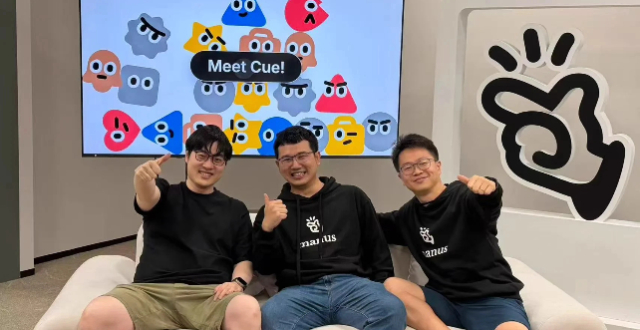
On October 26, Zhang Tao (online alias HideCloud), co-founder and product partner at Manus, recently published a lengthy article on his WeChat public account “Qianyun Sisi,” titled “Transforming Manus with Manus.” The piece opens with an image that left a deep impression on him. He had submitted several requirements and bug reports to an engineer; when he checked back later, he found that the engineer’s computer had multiple Codex and Manus sessions open. Clicking on any one of them, he saw that the input was precisely the original requirement he’d just posted on Slack—without a single word changed. Even more surprising to him was that this engineer was simultaneously working on over ten or twenty tasks. At Manus today, this has become the norm. The article is packed with information, but a few key points are especially worth noting. Internally, Manus has created a unified code entry point called Manus-mono, accompanied by a manual designed for AI, enabling the AI system to view the entire project landscape across repositories. With a single request, one person can complete all client-side development. The mobile team has consistently consisted of only seven members, yet they manage two products and four apps, keeping their progress largely in sync with the web version. All product managers have submitted code to Manus, and roughly half of them can independently bring their requirements to production. Some product managers even turn their written requirements into video presentations. Meanwhile, the marketing team now has a “digital colleague” that schedules its own tasks, proactively reminds everyone of project deadlines, and even reaches out across teams to clarify feature details. In September, the company’s per-capita AI spending exceeded $10,000, with a small number of individuals consuming as much as $70,000 to $80,000 in a single month. Zhang Tao dedicated an entire section to addressing external skepticism. The timing of the article’s release is also noteworthy. At the end of September, Manus launched version 2.0 along with its personal AI agent app, Cue; in early October, the parent company Butterfly Effect announced the completion of a new round of financing exceeding $500 million, while simultaneously opening 17 positions in Beijing. Seen against this backdrop, the article reads less like a routine update and more like a manifesto marking the Manus team’s entry into the 2.0 era. It discusses how the organization leverages AI to evolve, while revealing the company’s product roadmap, cost structure, and hiring standards. 01 Manus itself serves as a showcase for 2.0 If you compare the internal practices described in the article with the feature list of Manus 2.0, you’ll find…

Timeline and related coverage

Morning Briefing | Apple responds to cracks in the iPhone Duo’s inner screen / Anthropic files for a public IPO, aiming for the largest IPO in history / Xpeng’s Robotaxi receives approval for Level 4 demonstration operations

· OpenAI releases GPT-6.1 Terra, with API prices cut in half and faster computer performance · Apple officially rolls out iOS 27.2: Apple Music gets a new black-and-white design, and the iPhone Duo now supports the Apple Pencil · Huawei’s Enjoy series has cumulatively shipped over 160 million units #Follow iFanr’s official WeChat account: iFanr (WeChat ID: ifanr) for more exciting content delivered to you第一时间.

Timeline and related coverage

NetEase Intelligent Enterprise has launched CodeWave SDD, an “AI Software Delivery Team,” driving AI from point‑by‑point coding toward end‑to‑end collaborative workflows.

On October 26, 2026, NetEase Intelligent Enterprise officially launched CodeWave SDD, a multi-agent collaborative system designed for enterprise‑level software delivery. Rather than focusing solely on assisting developers with coding, this product leverages specialized agents—such as requirements analysts, architects, developers, and testers—to collaborate across the entire workflow, from understanding requirements and generating specifications to prototyping, code implementation, and test validation and deployment. Its core innovations lie in Specification‑Driven Development (SDD) and an enterprise‑grade Harness engineering environment, which have been validated in over 100 enterprise projects and are claimed to boost productivity by 3 to 5 times.

Why it matters:The material is sourced from InfoQ (https://www.infoq.cn/article/b32Mw2zaPrxyJ6ChePD5),发布时间为2026-10-26T18:08:13.000Z(对应站点当地日期2026-10-27),早于当前系统时间(2026-10-27T00:57:40.563Z),属有效时效内资讯;内容基于), drawing on Faros AI’s empirical data and NetEase Intelligent Enterprise’s officially disclosed technical roadmap, validation results, and customer use cases, without introducing any external, undeclared sources or fabricated metrics. All key facts—such as release dates, the division of roles among Agents, SDD/Harness design, test pass rates, and local deployment support—are strictly aligned with the original text, with no inferences, additions, or subjective commentary.

Timeline and related coverage

AWS releases a managed Bedrock knowledge base intelligent retrieval reference implementation based on CDK.

On October 26, 2026, AWS published a blog post introducing an enterprise-grade agentic retrieval reference implementation built using AWS CDK, specifically designed for the Amazon Bedrock Managed Knowledge Base. It supports cross-knowledge-base semantic routing, iterative retrieval, cited provenance-based answers, and seven-layer observability.

Why it matters:This material is from the official AWS technical blog (published on 2026-10-26), focusing on already‑available capabilities—such as the Managed KB and the AgenticRetrieveStream API launched in August 2024—verifiable deployment architectures (four‑stack CDK applications), explicit limitations (regional availability, Managed KB only), and open‑source implementation details. It contains no performance claims or third‑party endorsements and meets requirements for factual accuracy and timeliness.

Timeline and related coverage

IskayPet builds a multilingual enterprise knowledge assistant based on the Amazon Bedrock-hosted knowledge base.

Spanish pet-care company IskayPet leveraged Amazon Bedrock Managed Knowledge Bases to build an enterprise-grade knowledge assistant—covering Spain, Portugal, and France, and supporting four languages (Spanish, Portuguese, French, and English)—without needing to develop its own RAG infrastructure. The assistant supports business scenarios such as retail, veterinary care, onboarding, and procurement.

Timeline and related coverage

Amazon Quick has obtained HIPAA qualification, but compliance responsibility still rests with the customer.

Amazon Quick is an HIPAA‑compliant service offered by AWS that enables healthcare organizations to process Protected Health Information (PHI) upon signing a Business Associate Agreement (BAA); however, compliance with HIPAA does not equate to full regulatory compliance. Customers must rigorously manage its PHI processing workflows, encryption mechanisms, logging policies, and irreversible configuration requirements.

Timeline and related coverage

Rescale leverages the AWS AI-DLC framework and Strands Agents to rapidly build an AI test traffic-splitting proxy.

Rescale, in collaboration with AWS engineers and leveraging the AI-Driven Development Lifecycle (AI-DLC) methodology, the Strands Agents framework, and Amazon Bedrock (Claude Opus 4.8), completed within five days a production-ready AI test-routing agent designed to automatically classify and route nighttime end-to-end test failures, and rolled out this human-AI collaborative development paradigm across the organization.

Timeline and related coverage