Skip to content
AI NEWS JOURNAL
AI, IN PERSPECTIVE

Search AI news

Search headlines, summaries and articles to connect the dots.

Newest first

Microduck Obstacle Avoidance: A Sim2Real Workflow with Isaac Lab and Newton

This tutorial demonstrates how to add local obstacle avoidance to Microduck while keeping its walking policy fixed. It uses Isaac Lab for simulation training with Newton's physics and raycasting to model a VL53L5CX time-of-flight (ToF) sensor, trains a navigation policy via PPO across 16,384 parallel environments, evaluates the policy in varied obstacle courses built from SimReady assets, exports the trained controller to ONNX, and deploys it on a real Microduck robot using gamepad commands adjusted by the policy. The workflow enables real-robot navigation with obstacle avoidance based on simulated training.

Thinflow: Organizing HPC Benchmarking Campaigns as Rerunnable Directory Trees

arXiv:2611.26526v1 Announce Type: new Abstract: A benchmarking campaign provides the measurements behind an HPC performance study: code variants are built, swept over core or node counts, and measured repeatedly. Moving such a campaign to another supercomputer or rerunning it months later requires work that is not part of the study itself. Job scripts are adapted to each supercomputer, and what exactly ran is often reconstructed afterwards. We present Thinflow, a small Bash engine for organizing HPC benchmarking campaigns as rerunnable directory trees of tasks and runs. A task is a directory with a short shell script next to the code. For each sweep, one command builds the code, runs the benchmarks, and plots the results. Thinflow derives the execution order from declared dependencies and writes it to a plain-text manifest. Per-supercomputer profiles submit the runs to a workload manager such as Slurm. Each run writes a provenance record of its environment, hardware, and parameters. The engine ships inside the campaign directory, so a campaign stays rerunnable without installing a separate tool and, once completed, may serve as a paper artifact. In a case study, we ran one campaign with identical task files on three Slurm partitions of two supercomputers, on up to 16 nodes. This strong-scaling study of matrix multiplication in C/OpenMP, C/MPI, and Julia/MPI comprises 37 task files with 217 non-comment lines. Its 455 benchmark runs recorded what differed per partition, chiefly profiles and command-line parameters. This suggests that such a campaign needs little structure beyond plain shell files.

Thoughts from Before and After AI

Article URL: https://chevyclutchfoot.substack.com/p/thought-process-before-and-after Comments URL: https://news.ycombinator.com/item?id=50572638 Points: 24 # Comments: 11

DaisyRose-27B: Pushing the Frontier of Post-Training Efficiency

RadixArk has released DaisyRose-27B, its first model built on Qwen3.8-27B and trained using reinforcement learning with Miles. Trained on 1,200 curated long-horizon tasks over 18 days using 144 H200 GPUs, it improves Terminal-Bench 4.1 pass@1 from 5.6% to 12.0%, with gains across multiple reasoning, instruction-following, and coding benchmarks. The model retains Qwen3.8-27B's architecture, tokenizer, chat template, image understanding, and 256K-token context window. It is available under Apache 2.0 and can be served using SGLang and DSpark speculative decoding. Training efficiency was enhanced by an optimized backend achieving 57% lower cost and 2× faster end-to-end training, supported by a robust sandbox service that ran over 944,000 sandboxes with high reliability and reduced cloud costs.

TokenEconomizer: Learning from Experience to Make AI Coding Agents More Efficient

AI coding agents are increasingly helping developers fix bugs and build features largely on their own, but every interaction with their models consumes tokens. In each session, an agent sends instructions, tool descriptions, and session history to its model. Most efforts to reduce this cost focus on individual tasks. Yet developers return to the same […] The post TokenEconomizer: Learning from Experience to Make AI Coding Agents More Efficient appeared first on Microsoft Research.

Build a Robot Pick-and-Place Simulation with SimReady Assets

This walkthrough demonstrates how to create a beverage can pick-and-place task using the UR17G robot arm, Robotiq 2F-140 gripper, and a beverage can in Isaac Sim. The process involves downloading SimReady assets from SimReady Central on Hugging Face, assembling the robot and gripper, validating joint and physics settings, and using an AI agent to generate and run control code for the task. The simulation tests grasp accuracy, object stability during movement, and placement precision, with validation reports confirming compliance with SimReady profiles. The workflow supports reuse of validated assets and encourages developers to contribute their own SimReady-compatible robotics content.

LLMON: An LLM-Native Markup Language, now in Granite 4.1 3B and 8B

IBM has introduced LLMON (LLM Object Notation), a new markup language designed to explicitly communicate structure and semantics to large language models. Built to address issues like prompt injection attacks and brittle behavior in smaller models, LLMON uses reserved special-token delimiters to mark semantically coherent components such as instructions, data, and requirements, enabling precise binding between them. Two experimental preview models—granite-4.1-3b-LLMON-preview and granite-4.1-8b-LLMON-preview—are now available, alongside a GitHub repository with conversion tools, workflows, and examples. LLMON enhances robustness by separating instruction from data, reducing indirect prompt injection success rates nearly to zero while maintaining performance comparable to standard Granite 4.1 Instruct models. It also supports custom schemas via LoRA fine-tuning, as demonstrated in ScienceWorld and tool-calling agent use cases. The approach is distinct from JSON, which lacks model-friendly structure, and complements existing chat templates by adding semantic clarity across roles.

The Definitive Fine-Tuning Guide for 3D Generation Models

This blog post provides scripts and Docker containers for fine-tuning TRELLIS.2, a 3D generation model, using LoRA adapters on footwear data from the Google Scanned Objects (GSO) dataset. The approach focuses on improving geometric accuracy by training only the sparse-structure and shape flow diffusion transformers while freezing the texture stage. The process includes preprocessing with Blender to generate 16 views per object, converting meshes into latents, and training with Hugging Face Jobs or local Docker. Results show significant improvements in F-score, chamfer distance, and normal consistency on held-out test objects, demonstrating effective adaptation for specific 3D object categories.

Nemotron-Personas-Finance-Japan: A Synthetic Dataset Capturing Japan's Demographics and Financial Context

NVIDIA and Elith have released Nemotron-Personas-Finance-Japan, a large-scale open-source synthetic dataset featuring 9 million personas based on Japan’s official demographic, labor, and financial statistics. Built using NVIDIA’s NeMo Data Designer and SDG-PGMs framework, the dataset includes 50 fields per record with natural Japanese text, covering demographics, household finances, occupations, financial literacy, and personality traits. Designed for commercial and non-commercial use under CC BY 4.0, it enables privacy-safe development of financial AI applications such as conversational agents, customer simulations, and bias testing, while aligning with Japan’s cultural and regulatory context.

Pdb or Not to Be: Comparing Debugging Interfaces With Pass$_{X}$@$k$

arXiv:2611.08666v1 Announce Type: new Abstract: Interactive debuggers are indispensable to human software development, yet coding agents overwhelmingly rely on edit-execute-observe loops, using common bash tools, test scripts, and print statements to debug via repeated shell commands. Stepping through a debugger provides live access to runtime state, which may enable different problem-solving capabilities. However, prior work typically introduces the debugger as an additional tool or through a new subagent, making its individual contribution difficult to isolate from the associated scaffold changes. To address this, we compare a debugger-only agent against a bash-only agent on all 500 SWE-bench Verified instances, holding the rest of the scaffold fixed. We evaluate both architectures on two models, GPT-OSS-120B and Nemotron-3-Ultra-550B, with three independent runs per architecture $\times$ model configuration. Crucially, to distinguish interface specialization from expanded coverage under repeated sampling, we introduce pass$_X$@$k$, a cross-agent pass@$k$ that provides an unbiased estimator of the probability that at least one of $k$ agents is successful. Although the bash and debugger agents solve partially disjoint subsets of the benchmark in any single pair of runs, our pass$_X$@$2$ estimator reveals that this is largely due to run-to-run variance rather than tool complementarity. Across both models, we find that two bash rollouts outperform the combination of one bash and one debugger rollout. Our findings highlight the importance of accounting for stochastic variance in evaluating agent and tool diversity, and we hope that pass$_X$@$k$ will serve as a useful framework for the community.

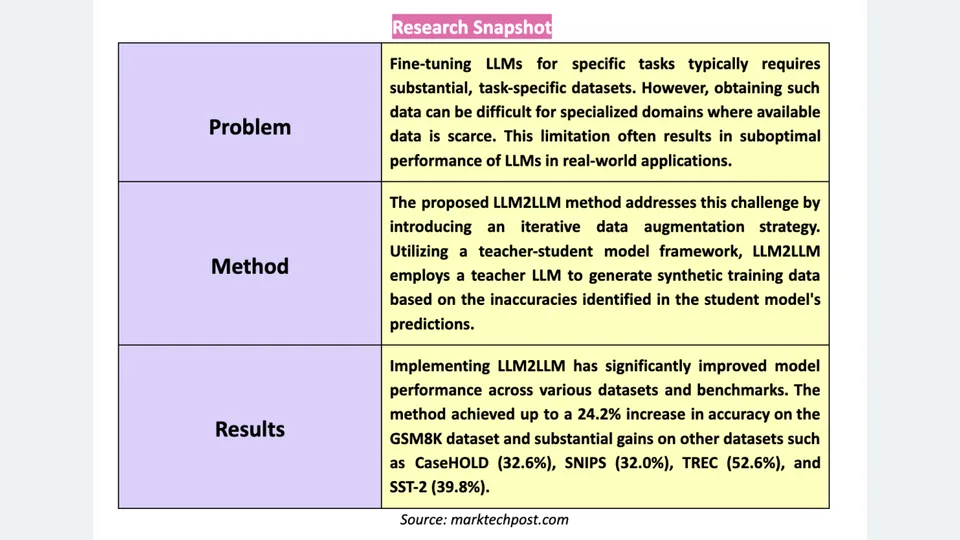
Your Experts Have Partners. There's HOPE for Keeping Them Together

HOPE, a second-order expert pruning method for Mixture-of-Experts (MoE) language models, accounts for pairwise expert interactions by optimizing a quadratic program based on an interaction matrix derived from calibration data. Unlike first-order methods that prune experts independently, HOPE preserves cooperative expert groups, leading to better performance—especially at high pruning rates like 50%. On benchmarks such as SWE-Bench Pro, HOPE outperforms state-of-the-art first-order methods like REAP by up to +6.1%, maintaining model quality while significantly reducing memory footprint. The method requires only a single calibration pass and efficient quadratic programming, with negligible overhead. It has been validated on Qwen3.5 and GLM-4.5 models, showing consistent improvements across diverse tasks and calibration sets.

OpenAI launches GPT-6.1 Terra for faster, better-performing AI agents at half the price

OpenAI Group PBC today released GPT-6.1 Terra, an upgrade to the middle tier model in its lineup of frontier artificial intelligence systems. The new model, the successor to GTP-5.6 Terra, costs around 50% less while handling computer use tasks faster and with greater accuracy. Terra is positioned as the everyday model in OpenAI’s lineup, designed […] The post OpenAI launches GPT-6.1 Terra for faster, better-performing AI agents at half the price appeared first on SiliconANGLE.

Timeline and related coverage

MemPlan: A Memory-Augmented PDDL Planning Framework for Partially Observable Textual Environments

The paper was published on arXiv on October 24, 2026 (ID 2610.30379v1), introducing MemPlan—a memory-conditioned PDDL planning framework that uses large language models (LLMs) as a constrained bridge between linguistic and symbolic planning, suitable for partially observable interactive text-based environments.

MemPlan: Memory-Conditioned PDDL Planning for Partially Observable Text Environments

Why it matters:MemPlan dynamically reformulates PDDL problems using forward-graph memory and backward-memory mechanisms, significantly improving task success rates and step efficiency while substantially reducing online token consumption. Its offline fine-tuned language–symbol interface can be reused across TextWorld task types without requiring task-specific fine-tuning, demonstrating the method’s generalizability and practicality.

Timeline and related coverage

Battle Drones - a vibe coded RTS with audio-based multiplayer

My latest vibe coded game experiment is a Command & Conquer style RTS (Real Time Strategy) game called Battle Drones (play it here). Unlike my previous experiments, this one is actually fun to play. I'm somewhat embarrassed to admit that I got there by telling Claude to "Make it a LOT more fun". It also supports multiplayer between nearby devices using audio to synchronize game state! Here's what I've built so far, and some of the things I learned along the way. Battle Drones How I built this v1: the initial prototype v2: full sprites v3: varied terrain v4: the fun update v5: Battle Drones goes 3D v8: Archipelago v10: Goliath, and agent battles Agent battles v11: Random Maps v12: Multiplayer via sound Some thoughts Update: Online multiplayer support Battle Drones My initial goal was to bui

Timeline and related coverage