Skip to content
AI NEWS JOURNAL
AI, IN PERSPECTIVE

Search AI news

Search headlines, summaries and articles to connect the dots.

Newest first

Edge Sound raises $2M to help physical AI make sense of audio

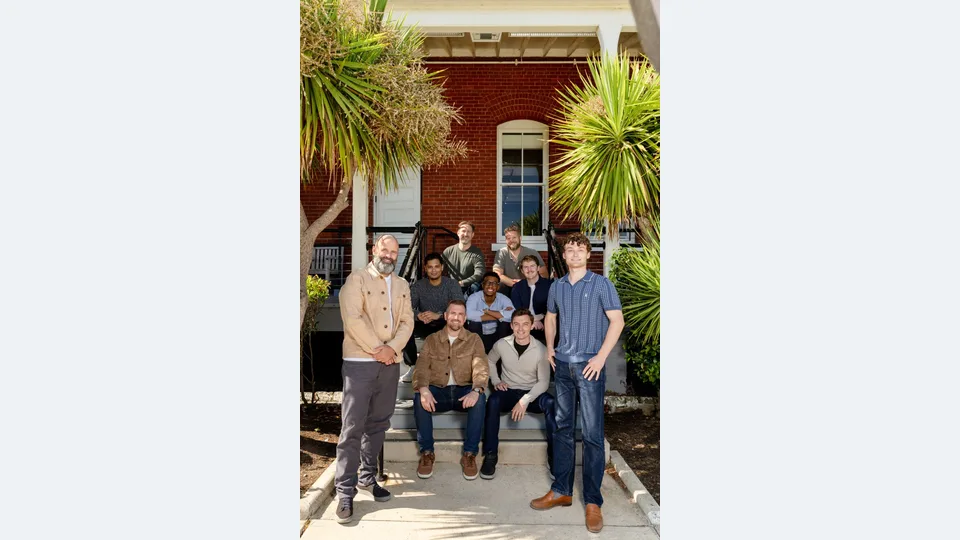
Edge Sound Research Inc. today announced it has raised $2 million in new funding to build audio infrastructure that isolates useful sounds and combines them with other sensor data to help physical AI systems understand what’s happening in real time. Stormbreaker Ventures led the round, bringing the company’s total funding to $9 million. When the […] The post Edge Sound raises $2M to help physical AI make sense of audio appeared first on SiliconANGLE.

Timeline and related coverage

Manus has just quietly released its 2.0 manifesto.

On October 26, Zhang Tao (online alias HideCloud), co-founder and product partner at Manus, recently published a lengthy article on his WeChat public account “Qianyun Sisi,” titled “Transforming Manus with Manus.” The piece opens with an image that left a deep impression on him. He had submitted several requirements and bug reports to an engineer; when he checked back later, he found that the engineer’s computer had multiple Codex and Manus sessions open. Clicking on any one of them, he saw that the input was precisely the original requirement he’d just posted on Slack—without a single word changed. Even more surprising to him was that this engineer was simultaneously working on over ten or twenty tasks. At Manus today, this has become the norm. The article is packed with information, but a few key points are especially worth noting. Internally, Manus has created a unified code entry point called Manus-mono, accompanied by a manual designed for AI, enabling the AI system to view the entire project landscape across repositories. With a single request, one person can complete all client-side development. The mobile team has consistently consisted of only seven members, yet they manage two products and four apps, keeping their progress largely in sync with the web version. All product managers have submitted code to Manus, and roughly half of them can independently bring their requirements to production. Some product managers even turn their written requirements into video presentations. Meanwhile, the marketing team now has a “digital colleague” that schedules its own tasks, proactively reminds everyone of project deadlines, and even reaches out across teams to clarify feature details. In September, the company’s per-capita AI spending exceeded $10,000, with a small number of individuals consuming as much as $70,000 to $80,000 in a single month. Zhang Tao dedicated an entire section to addressing external skepticism. The timing of the article’s release is also noteworthy. At the end of September, Manus launched version 2.0 along with its personal AI agent app, Cue; in early October, the parent company Butterfly Effect announced the completion of a new round of financing exceeding $500 million, while simultaneously opening 17 positions in Beijing. Seen against this backdrop, the article reads less like a routine update and more like a manifesto marking the Manus team’s entry into the 2.0 era. It discusses how the organization leverages AI to evolve, while revealing the company’s product roadmap, cost structure, and hiring standards. 01 Manus itself serves as a showcase for 2.0 If you compare the internal practices described in the article with the feature list of Manus 2.0, you’ll find…

Timeline and related coverage

Neocloud: This wall on the verge of collapse—Jensen Huang is propping it up, while Musk is pushing it down.

Jensen Huang is still struggling to prop up the Neocloud wall, while Musk has already predicted its collapse. The first domino in the AI bubble may well be among these companies. On October 25, Musk issued a warning on X: in recent weeks, the debt markets have virtually stopped extending financing to firms that lack substantial revenue streams beyond their AI data centers. He forecast that more than 200 Neocloud players will face “guppy‑level” deaths and consolidation, with only a handful ultimately surviving. Yet just three days earlier, NVIDIA CEO Jensen Huang offered a nearly opposite assessment. On October 22, during an interview with CNBC, Huang insisted that demand for Neocloud computing power remains extremely robust; the real bottleneck is insufficient working capital, and funding challenges will eventually be resolved. Both men remain optimistic about the demand for AI compute, but they differ sharply on how to manage the business of renting out computing power...

Neocloud这堵快塌的墙,黄仁勋扶,马斯克推
Timeline and related coverage

Apollo analysis shows that no one apart from the biggest tech giants is seeing any real benefits from AI

Despite all of the hype and the multiple millions of dollars invested in artificial intelligence, most of corporate America outside of its biggest technology firms is yet to see any financial payoff, according to an analysis by one of the world’s largest investment firms. In the analysis published on Saturday, Apollo Global Management Inc. said […] The post Apollo analysis shows that no one apart from the biggest tech giants is seeing any real benefits from AI appeared first on SiliconANGLE.

Timeline and related coverage

AI-driven market trends don’t undermine earnings—only valuations: Q3 reports confirm order visibility, and investors are bucking the trend by increasing positions.

From September 22 to October 22, 2026, the A-share AI sector continued to adjust, with the ChiNext Index falling 24.20% and the STAR 50 PE-TTM dropping nearly 60%, from 264 times to above 110 times. Meanwhile, corporate earnings collectively exceeded expectations during the same period—CATL reported a quarterly net profit of RMB 21.2 billion, Yuanjie Technology forecast a nearly sixfold increase, and Lianxun Instruments posted a net profit surge of over 18 times—while equity ETFs saw net inflows of nearly RMB 70 billion. The core driver of this correction was valuation compression, rather than deteriorating fundamentals.

Why it matters:The material explicitly states that the primary drivers of this round of decline are the rising discount rate (affecting the denominator) and weakening overseas regulatory expectations (eroding confidence on the numerator), which together have weighed on valuations—while industry conditions, order visibility, primary-market pricing, and policy‑exemption arrangements have all remained stable. Meanwhile, continued net ETF subscriptions and a spate of announcements from optical‑module companies indicating order backlogs extending through 2027 further confirm that the market is actively stepping in at low valuation levels, with a clear rationale and a fully substantiated chain of evidence.

Timeline and related coverage

Moshi launches a real-time AI trading recommendation engine, focusing on workflow integration and trustworthy modeling of high-noise data.

Moshi, a startup founded by Anekha Sokhal, a former JPMorgan energy derivatives trader, has launched a real-time AI recommendation engine for commodity and macro traders. The platform integrates multi-source structured and unstructured market data, emphasizing deep workflow coupling, private model building, and trustworthy signal extraction. Currently in its early stages, the company has no publicly disclosed funding, revenue, or user data.

Timeline and related coverage

TechCrunch Founder Summit 2026: Boston’s annual hands-on summit for founders will be held on November 4.

TechCrunch Founder Summit 2026 is a full-day, hands-on event focused on founder development, scheduled for Wednesday, November 4, 2026, at the SoWa Power Station in Boston. It covers key topics such as fundraising strategies, building AI-native products, and enhancing leadership skills, and features in-depth interactive formats including a pitch competition, small-group discussions, and Braindate smart matchmaking.

Timeline and related coverage

Blacksmith has closed a $66 million Series C funding round, achieving a $1 billion valuation and joining the ranks of unicorns.

AI-powered continuous integration (CI) platform Blacksmith announced a $66 million Series C funding round led by Sequoia Capital, bringing the company’s valuation to $1 billion; within two years of its founding, its valuation has grown by more than 16 times, its ARR has increased 17-fold, and it has executed over 90 million CI jobs.

Timeline and related coverage

OpenEvidence, an ad-driven AI healthcare startup valued at $15 billion, is reportedly used by nearly two-thirds of physicians across the United States.

Miami-based AI-powered medical search platform OpenEvidence, founded in 2022, claims that nearly two-thirds of U.S. physicians use its ad-supported AI chat tool to retrieve medical literature and clinical guidelines, processing over 42 million medical queries per month. The company is currently valued at $15 billion, though its accuracy and advertising model have sparked controversy regarding the safety of clinical decision-making.

Timeline and related coverage