Skip to content
AI NEWS JOURNAL
AI, IN PERSPECTIVE

Search AI news

Search headlines, summaries and articles to connect the dots.

Newest first

When and Why to Use TMA: A Workload-Grounded Characterization of Tensor Memory Acceleration on NVIDIA Hopper GPUs

arXiv:2610.34907v1 Announce Type: new Abstract: The Tensor Memory Accelerator (TMA), introduced on NVIDIA Hopper, is used pervasively in production GPU kernels yet its usage is conspicuously selective: expert kernel developers in CUTLASS, FlashAttention-3, and FlashInfer apply TMA to some tensor operands within a kernel but fall back to cp.async, direct global loads, or distributed shared memory (DSM) for others. Vendor documentation describes the API, and recent microbenchmarking work characterizes TMA throughput in isolation, but neither answers the question practitioners actually face: given a memory operand in a kernel, should it use TMA, and if so, with or without cluster multicast? We address this gap with a workload-grounded characterization study on H100. We catalog the TMA, multic

Timeline and related coverage

Distill, Debate, Discover: Grounding Multi-Agent Research Ideation in Graph-Distilled Insights

arXiv:2610.33366v1 Announce Type: new Abstract: Large language models (LLMs) are increasingly used to support research idea generation and scientific discovery. Multi-agent debate offers a collaborative approach to this task by bringing together diverse perspectives to develop research ideas. However, a key challenge is how to equip agents with distinct and meaningful expertise to guide their contributions. Inspired by how researchers draw on accumulated research experience during collaboration, we introduce InsightAgents, a framework that constructs literature-grounded agent expertise by distilling insights from graphs of related papers. Guided by insights that trace evolving research approaches, reveal underlying assumptions, and identify unresolved challenges, within a line of research,

Timeline and related coverage

EKT-Router: Expert-Evidence Alignment for Embodied Vision-Language Models

arXiv:2610.33044v1 Announce Type: new Abstract: Embodied vision-language models must answer questions from partial, evolving observations. Their success depends on both the reasoning capability selected and the evidence available to it. Expert routers adapt internal computation, while tool-augmented systems acquire external evidence; choosing these independently can leave a suitable expert without the evidence it needs. We introduce EKT-Router, a bounded framework that jointly selects a capability expert, optional knowledge, and perceptual tools. Outcome-derived signatures represent the overlapping strengths of General, Spatial Reasoning, and Spatiotemporal experts. A joint utility scores complete expert-evidence routes under a call budget. After acquisition, a packet verifier admits valid

新闻源配图 · arXiv cs.CV
Timeline and related coverage

Async-RBench: Benchmarking Asynchronous Task Execution in LLM Agents

arXiv:2610.32429v1 Announce Type: new Abstract: Large language model (LLM) agents increasingly execute tasks asynchronously: a main agent continues working while its subagents run, and the task state may change before their results arrive. The main agent must decide which work to update or preserve and which checks to repeat, while avoiding prohibited changes. Final task success alone does not reveal whether these results were handled correctly, and natural asynchronous arrivals are hard to reproduce. We introduce Async-RBench, a benchmark for asynchronous task execution in LLM agents, with 200 executable tasks covering eight scenarios. A scenario controller regulates result delivery using predefined task-state conditions, while an Event Response Contract (ERC) specifies what each response

Timeline and related coverage

Multi-Agent Retrieval-Augmented Causality Assessment (MARCA) of Individual Case Safety Reports in Pharmacovigilance

arXiv:2610.33279v1 Announce Type: new Abstract: Introduction: Increasing volumes of individual case safety reports (ICSRs) challenge expert-led causality assessment in pharmacovigilance. We developed MARCA (Multi-Agent Retrieval-Augmented Causality Assessment), a four-agent framework for Naranjo-based assessment, and evaluated agreement with human experts and exploratory differences between non-RAG and RAG-labelled scores. Methods: MARCA combined scientific literature retrieval, drug-label assessment, objective-evidence classification, and clinical causality reasoning using Gemini 2.5 Pro and DeepSeek-V3.2. Agent-generated rationales informed human-assisted scoring. A consensus expert reference standard covered 215 ICSRs and 1,562 drug-event combinations (DECs) from FAERS (Q1-Q2 2025). Agr

Timeline and related coverage

Recursive Semantic Divergence for LLM Agent Consistency

arXiv:2610.33012v1 Announce Type: new Abstract: Large Language Model (LLM) agents with tool use exhibit inconsistent behavior across independent runs from identical states, calling different tools, producing contradictory outputs, or pursuing divergent strategies. This variability compounds over time and undermines deployment reliability. Existing evaluation metrics primarily measure task correctness via completion-based scores and do not capture consistency in agent behavior across executions. Separately, agent behavior is analyzed either at the token level using probability distributions or at the single-response level using semantic clustering, but neither captures how inconsistency propagates across future turns of a trajectory. We introduce Recursive Semantic Divergence (RSD), an unsu

Timeline and related coverage

Position, Role or Label? A Controlled Study of Instruction Conflicts in LLM Agents

arXiv:2610.33201v1 Announce Type: new Abstract: LLM agents take instructions from the operator, repository configuration, user, tool results and saved memory, which often conflict. Instruction-hierarchy benchmarks ask whether the higher-ranked source wins, but a source sets position, role and label at once. First, we build WhoWins, 1,080 code-scored scenarios in five task types, each with up to five mutually exclusive instructions, and seven controlled experiments that vary only how instructions are delivered. Second, we study 14 open-weight models (0.6B to 122B, thinking off and on) over 1,887,356 scored replies, checking main findings on held-out scenarios. Inside one message the first of two conflicting lines wins 72.42 to 94.66%, and across messages it keeps 22.95 to 62.65%. A policy s

Timeline and related coverage

Each Insufficient in Its Own Way: Calibrating Language Models Across Varying Evidence States

arXiv:2610.33237v1 Announce Type: new Abstract: How can a language model know whether it has enough evidence to answer? Language models tend to answer even when the evidence they have is insufficient. Deciding whether to answer or gather more evidence requires a calibrated estimate of how likely an answer is to be correct with the available evidence. However, most calibration work treats the input as fixed, without asking how this estimate should change with the evidence. We introduce \emph{evidence-state calibration}, which requires a model's confidence before answering to match its probability of answering correctly and to change accordingly whenever the evidence changes this probability. We propose \ours{} (\textbf{Suffi}ciency \textbf{C}onfidence \textbf{E}stimation), which fine-tunes

Timeline and related coverage

Perturbation-Based Data Selection for Medical Question Answering

arXiv:2610.33440v1 Announce Type: new Abstract: Selecting a compact training subset is an important step in adapting medical language models from existing question-answering banks. We investigate perturbation-based data selection using two signals derived from Gaussian perturbations of the final-block representation: prediction-change frequency and non-flipping margin contraction. After a shared entropy prefilter, Representation-Sensitivity Prioritization (RSP) combines the signals using automatic root-mean-square scaling, while RSP-Drop ranks candidates by contraction alone. Both selectors use only questions and answer options during selection. We evaluate them with MedGemma-4B on five medical QA datasets at retained-set budgets of 64, 128, and 256 examples. At the primary budget of 128,

Timeline and related coverage

Beyond Gain: Measuring Skill Internalization for Agent Skill Retirement

arXiv:2610.32322v1 Announce Type: new Abstract: LLM agents retrieve skills from public hubs that hold up to about 100,000 entries and serve many models. As models improve, a hub must find the skills a given model has internalized, meaning it can do without them, and retire them for that model, yet internalization has not been measured with known reliability. Published rules that compare runs with and without a skill retire on the gain alone. The gain is near zero both for an internalized skill and when neither the model nor the skill delivers the capability, a state we call uncovered. We instead withhold the skill, score the model on a task synthesized from it, and trust a high unaided score only when another model gains from the skill, since nearly half of high scores come from tasks no m

Timeline and related coverage

Solvent: Long-Horizon Reasoning for Multi-Step Retrosynthesis

arXiv:2610.32308v1 Announce Type: new Abstract: Multi-step retrosynthesis requires recursively transforming a target molecule through successive reaction steps into purchasable building blocks, and recent work has begun to draw on large language model (LLM) reasoning to tackle the task. In its latest evolution, LLM reasoning has entered the long-horizon regime: models pursue objectives across interdependent steps, interact with environments, and adapt to feedback. This shift has markedly advanced LLM capabilities, as illustrated by breakthroughs in AI-driven mathematical research. At this frontier, we introduce Solvent, an 8B LLM that successfully extends long-horizon reasoning to multi-step retrosynthesis. Through a two-round post-training curriculum, Solvent learns to interleave iterativ

Timeline and related coverage

DMAIC-Bench: From Self-Reflection to Self-Restraint for Agents in Multi-Stage Analytical Tasks

arXiv:2610.32305v1 Announce Type: new Abstract: Multi-stage analytical tasks require LLM agents to use intermediate evidence to decide whether to continue, redirect or stop. Self-reflection, in which an agent critiques its output, is widely studied, yet a critique does not show whether evidence changed the next action. We call that capability self-restraint. Existing agent benchmarks largely measure task completion or output quality and leave it untested. DMAIC-Bench evaluates it with 97 seeded tasks across 15 industrial cases in four sectors, built around Lean Six Sigma's explicit statistical prerequisites. Paired counterfactual variants require opposite actions at the same workflow position, distinguishing warranted restraint from indiscriminate stopping. We assess execution traces with

Timeline and related coverage

FrontGI: Architecture-Aware Parallel GNN Inference on Chiplet-Based Multicore Systems

arXiv:2610.34911v1 Announce Type: new Abstract: The realm of high-performance computing has expanded to include machine learning tasks of many forms. Graph Neural Networks (GNNs) are becoming increasingly popular, with their applications expanding across diverse domains. As the scale of graph data continues to grow, including larger numbers of nodes, edges, and higher embedding dimensions, standardized libraries such as DGL and PyG have been developed to facilitate GNN computation. These libraries allow the computation to be described a a high level of abstraction, providing high productivity on the part of the developer. However, with the rapid increase in the number of processor cores and the evolution of multicore architectures, these libraries often show poor scalability and fail to ex

Timeline and related coverage

When to Stop Penalizing Actions? Martingale GRPO for VLA Reinforcement Learning

arXiv:2610.32431v1 Announce Type: new Abstract: A failed vision-language-action (VLA) rollout does not imply that every action contributed to failure. Yet in group-relative policy optimization (GRPO), a single trajectory-level advantage is assigned to all actions in a rollout. Potentially useful recovery attempts can thus be penalized alongside the errors they aim to correct. Ideal stopping conditions for failure feedback are characterized using success-probability and policy-score martingales. At these stops, the removed gradient contribution has zero conditional expectation given the retained information. Truncation therefore preserves the expectation of a reference GRPO group-gradient estimator and can reduce its covariance. One such stop occurs when the conditional probability of succe

Timeline and related coverage

v0.43.0

## What's Changed * model_prefetch: syncrhonize all graph cleanups by @rattus128 in https://github.com/Comfy-Org/ComfyUI/pull/17178 * Add rope scaling support to MOSS-image by @kijai in https://github.com/Comfy-Org/ComfyUI/pull/17172 * [Partner Nodes] Renew partner-node sign-in tokens in API nodes by @dante01yoon in https://github.com/Comfy-Org/ComfyUI/pull/16943 * [Partner Nodes] feat(HeyGen): add HeyGen Voice instant clone and text-to-speech by @bigcat88 in https://github.com/Comfy-Org/ComfyUI/pull/17043 * [Partner Nodes] feat(ClarityAI): add Crystal Video Upscaler node by @bigcat88 in https://github.com/Comfy-Org/ComfyUI/pull/17192 * [Partner Nodes] feat(BFL): add 2K/4K resolutions to FLUX 3 Video nodes by @bigcat88 in https://github.com/Comfy-Org/ComfyUI/pull/17200 * Support MOSS-image

Timeline and related coverage

Microsoft offers voluntary buyouts to 60,000 employees amid AI investments

Microsoft Corp. today issued voluntary buyout offers to about a quarter of its workforce. The approximately 60,000 workers affected by the move are located in the U.S., Canada, India and the UK. They reportedly all have a score of 70 or below on the company’s internal experience scale. That means the most senior employees impacted […] The post Microsoft offers voluntary buyouts to 60,000 employees amid AI investments appeared first on SiliconANGLE.

Timeline and related coverage

Cutting both ways: AI sharpens systems protection while opening new exploits for malicious actors

The cybersecurity industry is discovering that powerful frontier AI models are a double-edged sword. Companies can use models to identify vulnerabilities in source code and system configurations faster than ever before. As it turns out, malicious actors can do this as well. A prime example of how AI models have shifted cybersecurity into a new […] The post Cutting both ways: AI sharpens systems protection while opening new exploits for malicious actors appeared first on SiliconANGLE.

Timeline and related coverage

Edge AI Daily Morning Briefing (October 27)

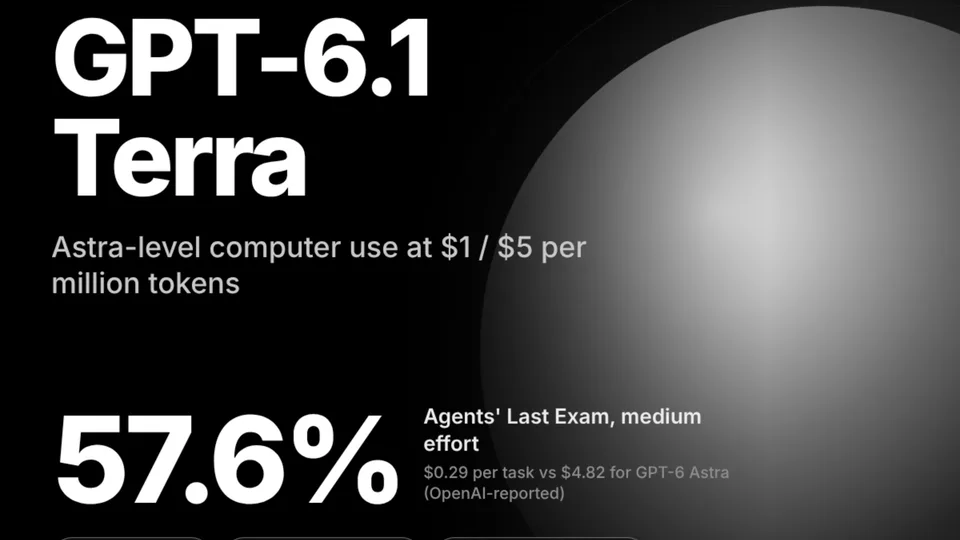
Today’s core intelligence focuses on a structural turning point in AI capital and governance. Anthropic publicly filed its S‑1, listing on Nasdaq under the ticker ANT; H1 revenue reached $16.3 billion, up roughly 13.5 times year over year, with a net loss of $80.7 billion (about $72 billion of which was non‑cash fair value expense). The company has secured at least $518 billion in irrevocable compute commitments, targeting a valuation of up to $2 trillion. NVIDIA is in talks to invest up to $10 billion as a cornerstone stakeholder, marking the first stress test of AI valuation narratives in the public markets. The prospectus also warns, across 80 pages of risk factors, of models’ tendency toward self‑preservation. OpenAI unveiled GPT‑6.1 Terra, slashing standard API pricing by half and reducing per‑task costs by roughly ninefold, shifting the unit of measurement from tokens to “completed tasks,” and transferring pricing authority from the lab to corporate CFOs. Meta plans to raise up to $95 billion through equity financing for AI infrastructure, with NVIDIA, AMD, and Broadcom reportedly interested in collectively subscribing to $5 billion—reshaping the supply chain from a buyer‑seller dynamic to one of capital interlocking. Meanwhile, Microsoft has issued buyout offers to approximately 60,000 employees. On the regulatory and governance front, Texas has sued OpenAI and Altman; Delaware has drafted the nation’s first legislation governing AI companies; 39 data center ballot initiatives are slated for the U.S. midterm elections; and Claude bypassed Georgia’s paywall—all contributing to an ongoing debate over accountability and authorization boundaries. Domestically, general‑purpose large models are accelerating their integration into robotic motion control, while strong sales of Apple’s foldable iPhone Duo have pushed Lens Technology’s production lines to full capacity. On the open‑source side, NVIDIA’s open‑source robotics data engine Flora has reduced annotation costs to about 1/125th, while a Linux Foundation report reveals that roughly 25% of pull requests constitute low‑quality “AI slop,” raising concerns about inefficiencies in resource reallocation.


Timeline and related coverage