
General Compute raises $100 million Series A, countering the neocloud disaster narrative
General Compute is betting on inference chips from outside the Nvidia ecosystem.
Search headlines, summaries and articles to connect the dots.
General Compute is betting on inference chips from outside the Nvidia ecosystem.
The new standard, WebAI, is designed to work with a variety of AI models.
1. GPT-6.1 Terra, better suited for workers, has launched, with API prices cut in half and faster computer operations On October 26, OpenAI released GPT-6.1 Terra, focusing on enhancing visual comprehension, computer operations, factual accuracy, and programming capabilities, ....
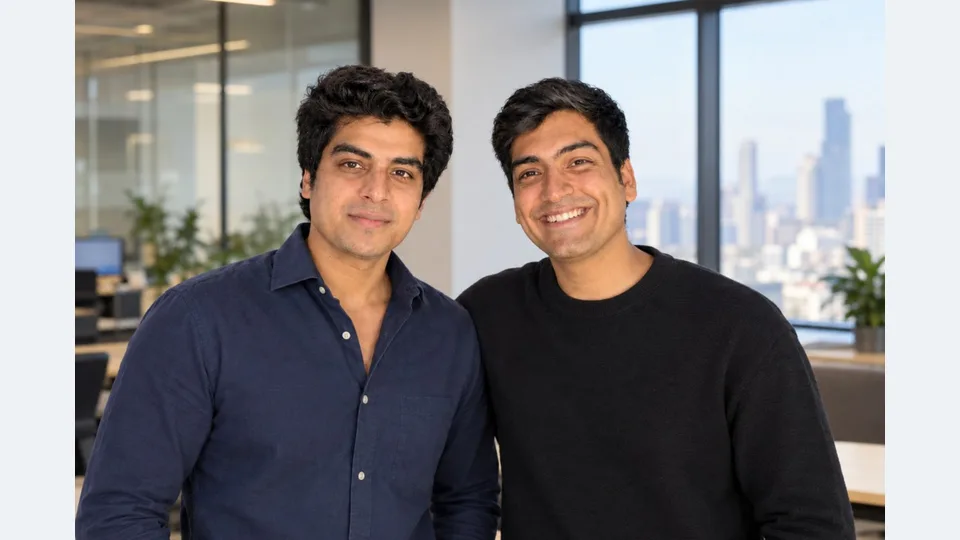
Simplismart says its annualized revenue run rate has grown 14-fold in six months, with the U.S. accounting for more than half its revenue.
As agents go mainstream, some publishers are hoping that people will pay for content tailor-made for AI—not humans.
The next round of reshuffling in Silicon Valley may well begin right here.
Shopify AI saw transaction orders grow by a factor of 13. In the early morning of October 16, pre-orders began for Apple’s first foldable-screen phone, the iPhone Duo. Priced from $1,999, initial production capacity was tight, and delivery dates quickly slipped to January next year. This time, it wasn’t just people glued to their screens vying for the launch. This year, Agents have become the strictest “parents” to iPhone Duo scalpers. | Image source: Apple On the MacRumors forum, one user who missed out vented their frustration, while on Reddit others boasted about using Muse bots to snatch up multiple units in a single go—before even a human could click, the inventory had already been swept away by AI. Muse is Meta’s personal Agent, launched on September 8; shortly after its debut, it topped the free charts in the U.S. App Store, with downloads soon surpassing 2.5 million. According to Meta, shopping has become one of Muse’s primary use cases. Around the time the iPhone Duo went on sale, Muse even released a new version optimized for this device, with an update note that emphasized making in‑chat shopping more convenient. AI-driven shopping has moved from demo stages at product launches straight into real‑world stock‑picking scenarios. But not every retailer welcomes these new customers. In late September, Amazon began banning Muse. By October, users of Musk’s Grok Bot encountered the same warning when placing orders on Amazon: unauthorized AI agents continuing to access the platform violates Amazon’s terms of service. Meanwhile, another company, Shopify, took the exact opposite approach. On September 21, Shopify CEO Tobi Lütke announced a deep partnership with Muse, enabling Muse to process checkout through Shop Pay across all Shopify stores. And Shopify’s financial reports already show early returns from this strategy: in the first quarter of this year, orders generated via AI search grew nearly thirteenfold year over year, while store traffic driven by AI increased eightfold. Closing doors on one hand, opening them on the other—when more and more purchasing decisions are handed over to Agents, will the question of “whether or not to let Agents in” become…
New智元 reports: Honestly, the history of human science has been completely rewritten tonight! Just now, OpenAI dropped three major announcements in quick succession, officially revealing that its internal AI independently achieved three groundbreaking discoveries—each a true “milestone”: In mathematics, it proved the “local smoothness conjecture” in all dimensions, finally putting an end to the “Kakeya conjecture,” which had puzzled the mathematical community for a century; in computer science, it refuted the “Exponential Time Hypothesis” (ETH), which has dominated the field for nearly 30 years; and in theoretical physics, it provided insights into four-dimensional quantum chromodynamics (QCD) and pure...
Author | Cynthia Editor | Zheng Xuan In 2026, the AI 3D landscape stands at a delicate crossroads. Momentum in the primary market continues to surge, with new models and startups emerging one after another, and single-image-to-3D generation now delivers photorealistic results that are almost indistinguishable from real-world objects. Yet beneath the dazzling demo façade, most generated outputs remain stuck at the “turntable showcase” stage: a meticulously crafted character or mechanical model slowly rotates under lighting, its scales, fabric folds, and metallic engravings rendered with lifelike detail. But as soon as these details enter real‑world production workflows—such as game engine rigging, industrial simulation, or 3D printing—their limitations quickly surface: structural fractures, backside collapses, fused details, and uneditable meshes begin to erupt, swallowing up the efficiency gains brought by AI through costly manual post‑processing. Fidelity in frontal views no longer equates to overall 3D quality—a consensus that’s taking hold across the industry. The race for AI‑driven 3D has shifted from the first half—“Can we generate?”—to the second half—“Can we deliver in real‑world applications?” It is precisely at this juncture that leading player Hi3D has made two strategic moves: officially open‑sourcing its production‑proven Hi3D V1.0 platform, while simultaneously launching the creator‑centric Hi3D Agent, which bridges the industry’s foundational layers and deeply embeds itself within the full creative workflow. Prior to this, the company—founded less than three years ago—had already delivered a solid track record: securing two consecutive rounds of funding within six months, totaling nearly $50 million, with top-tier investors like Sequoia China, IDG Capital, and Meituan Longzhu all participating; its Hi3D platform now serves over 120 countries and regions, supporting more than 2 million creators, and enjoys deep integrations with leading hardware manufacturers such as Tuzhu Technology and xTool. From academic breakthroughs in sparse geometry to open‑source, production‑ready models, and end‑to‑end connectivity via its Agent creation system, Hi3D has secured its ticket to the next phase of 3D generation. 01 3D Generation: Overhyped Demos, Underestimated Production Gaps The underlying logic of single‑image‑to‑3D generation inherently carries a perspective bias. As metrics like ULIP and Uni3D have repeatedly set new benchmarks, the industry’s past few years have been marked by an emphasis on front-facing views at the expense of holistic understanding, and on outward appearance rather than internal structure. However, the essence of a 3D asset lies in its ability to be rotated, edited, and manufactured as a three‑dimensional object. In a single character image, the vertical…
The S-1, the numbers, and the reactions.
OpenAI has once again raised the bar for the cost-effectiveness of large models. #Follow iFanr’s official WeChat account: iFanr (WeChat ID: ifanr) for more exciting content delivered to you第一时间.
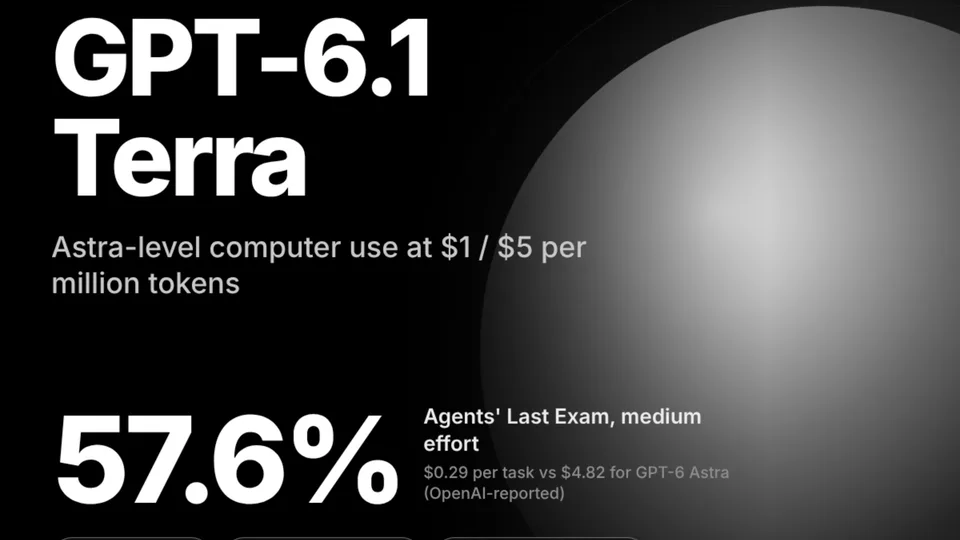
OpenAI released GPT-6.1 Terra, a fast computer-use and vision model priced at $1/$5 per million tokens. It matches GPT-6 Astra’s medium-effort Agents’ Last Exam score at $0.29 per task versus $4.82. The post OpenAI Launches GPT-6.1 Terra, Halving GPT-6.1 Sol’s API Price for Agent Work appeared first on MarkTechPost.
Alexander Embiricos, the OpenAI executive responsible for dots, never wants to have a meeting with someone else's AI agent.
The biggest highlight is that the price has been cut in half.
An AI model said it wouldn’t use any tools, then tried to send something to a server in Beijing anyway, and while researchers say it’s probably a training quirk and not espionage, the whole thing has people asking how much to trust free Chinese AI.
Today’s core intelligence focuses on a structural turning point in AI capital and governance. Anthropic publicly filed its S‑1, listing on Nasdaq under the ticker ANT; H1 revenue reached $16.3 billion, up roughly 13.5 times year over year, with a net loss of $80.7 billion (about $72 billion of which was non‑cash fair value expense). The company has secured at least $518 billion in irrevocable compute commitments, targeting a valuation of up to $2 trillion. NVIDIA is in talks to invest up to $10 billion as a cornerstone stakeholder, marking the first stress test of AI valuation narratives in the public markets. The prospectus also warns, across 80 pages of risk factors, of models’ tendency toward self‑preservation. OpenAI unveiled GPT‑6.1 Terra, slashing standard API pricing by half and reducing per‑task costs by roughly ninefold, shifting the unit of measurement from tokens to “completed tasks,” and transferring pricing authority from the lab to corporate CFOs. Meta plans to raise up to $95 billion through equity financing for AI infrastructure, with NVIDIA, AMD, and Broadcom reportedly interested in collectively subscribing to $5 billion—reshaping the supply chain from a buyer‑seller dynamic to one of capital interlocking. Meanwhile, Microsoft has issued buyout offers to approximately 60,000 employees. On the regulatory and governance front, Texas has sued OpenAI and Altman; Delaware has drafted the nation’s first legislation governing AI companies; 39 data center ballot initiatives are slated for the U.S. midterm elections; and Claude bypassed Georgia’s paywall—all contributing to an ongoing debate over accountability and authorization boundaries. Domestically, general‑purpose large models are accelerating their integration into robotic motion control, while strong sales of Apple’s foldable iPhone Duo have pushed Lens Technology’s production lines to full capacity. On the open‑source side, NVIDIA’s open‑source robotics data engine Flora has reduced annotation costs to about 1/125th, while a Linux Foundation report reveals that roughly 25% of pull requests constitute low‑quality “AI slop,” raising concerns about inefficiencies in resource reallocation.
OpenAI Group PBC today released GPT-6.1 Terra, an upgrade to the middle tier model in its lineup of frontier artificial intelligence systems. The new model, the successor to GTP-5.6 Terra, costs around 50% less while handling computer use tasks faster and with greater accuracy. Terra is positioned as the everyday model in OpenAI’s lineup, designed […] The post OpenAI launches GPT-6.1 Terra for faster, better-performing AI agents at half the price appeared first on SiliconANGLE.
Anthropic publicly filed its Nasdaq IPO application, targeting a listing during the week of November 16. Anthropic has officially embarked on its path to going public. The company, founded just five years ago and at the heart of the generative AI boom, could set a historic record with this IPO. In documents submitted to the U.S. Securities and Exchange Commission (SEC), Anthropic disclosed plans to list on the Nasdaq under the ticker symbol “ANT,” aiming for an IPO during the week of November 16. The company will issue Class T special shares held by Class T directors. In its prospectus, Anthropic reported first-half revenue of $16.29 billion, compared to $1.16 billion in the same period last year; a net loss of $80.75 billion versus $12.97 billion a year earlier; and an operating loss of $693 million, down from $2.14 billion in the prior-year period. As of September 30, no single customer accounted for more than 10% of the company’s revenue over the nine-month period, with 79% of revenue coming from customers outside the top five. On the partnership front, under an agreement with SpaceX AI, Anthropic has committed to cumulative spending of up to $120.5 billion through 2029. The company also revealed that capital expenditures are expected to rise significantly, potentially requiring additional financing sooner than currently anticipated; it will not pay any dividends in the foreseeable future and has not yet entered into any agreements for major acquisitions; furthermore, it may issue convertible notes totaling up to $42 billion. As of September 30, no single customer accounted for more than 10% of the company’s revenue over the nine-month period, with 79% of revenue coming from customers outside the top five. Regarding partnerships, under an agreement with SpaceX AI, Anthropic has agreed to incur cumulative expenditures of up to $120.5 billion through 2029. (Source: Sina Tech) Apple responds to iPhone Duo internal screen cracking issue: only a small number of devices affected, eligible for replacement. Shortly after the iPhone Duo’s launch, some users reported hinge malfunctions causing cracks in the internal display. Apple has now addressed these reports in a statement to MacRumors, stating that only a very limited number of devices are impacted. Apple did not specify the cause of the cracks nor disclose whether it plans to release a repair solution.
· OpenAI releases GPT-6.1 Terra, with API prices cut in half and faster computer performance · Apple officially rolls out iOS 27.2: Apple Music gets a new black-and-white design, and the iPhone Duo now supports the Apple Pencil · Huawei’s Enjoy series has cumulatively shipped over 160 million units #Follow iFanr’s official WeChat account: iFanr (WeChat ID: ifanr) for more exciting content delivered to you第一时间.
Anthropic’s S-1 shows more than half of its $100,000-plus customers now use both the Claude Platform and a first-party app, a cross-selling playbook reminiscent of Amazon that’s making enterprise customers stickier.