
Show HN: I built a hosting for small AI-generated software
Article URL: https://host0.ai Comments URL: https://news.ycombinator.com/item?id=50372176 Points: 2 # Comments: 1
Search headlines, summaries and articles to connect the dots.
Article URL: https://host0.ai Comments URL: https://news.ycombinator.com/item?id=50372176 Points: 2 # Comments: 1
Hey HN, if you want to be new prime gap hero here is the code that runs and gets you biggest merits (everyone knows what that is in prime world). I spent months to tune it, and in the last few days got couple of top 10 records just by testing. So get you precious GPU time, run the code and become world no 1 in prime merits because it will make you cool, just not to your friends, girlfriend or family. Help the geek cause! Comments URL: https://news.ycombinator.com/item?id=50372526 Points: 1 # Comments: 1
Article URL: https://github.com/ndrean/ZeBridge Comments URL: https://news.ycombinator.com/item?id=50376801 Points: 1 # Comments: 0
arXiv:2611.04087v1 Announce Type: new Abstract: Scientific discovery builds on accurate observations interpreted through domain knowledge and reasoning. For scientific 3D data, this requires understanding structures and spatial relationships, from protein contacts to anatomical organization. Existing multimodal benchmarks largely evaluate text and 2D images, while scientific 3D evaluations vary in representations and protocols across disciplines, limiting cross-disciplinary comparison. To assess these foundational capabilities, we introduce ScienceVision, a cross-domain benchmark for scientific 3D understanding and reasoning through expert-level visual question answering (VQA). We construct 250 questions, with 50 each from Biology, Chemistry, Medical Imaging, Mechanical CAD, and Architecture, through a pipeline combining synthetic question generation with domain-expert review and annotation. Each task pairs a native 3D artifact with a scientific question, a specified response format, and a task-specific reference answer, requiring domain knowledge to be applied to geometric or topological evidence. We evaluate 12 models on the same questions in three settings: visual question answering with native 3D artifacts accessed through an agent harness's file and code-execution tools; the same workflow augmented with expert-inspired viewer inspection and measurement tools exposed through the Model Context Protocol (MCP); and visual question answering from prescribed rendered 2D images using an agent harness. All settings use the same task-specific deterministic final-answer scoring. The inspection environment supports view changes, target isolation, and slice inspection. In this main comparison, the best mean answer score is 0.53 out of 1. Mean scores in the native-artifact workflow without additional MCP tools exceed those in the rendered-image workflow for every model, by 17.2 percentage points on average.
arXiv:2610.37679v1 Announce Type: new Abstract: Tool-using language agents are vulnerable to indirect prompt injection, and a growing literature probes model internals to catch unsafe actions before they execute, with sharply conflicting results. We argue much of the conflict is an evaluation artifact, and propose a double-stratification protocol: separate injection exposure from behavioral commitment, in both the evaluation and the training population. On the primary Qwen AgentDojo grid, monitors trained on the naive mixed unsafe-versus-rest contrast mostly learn exposure: they flag exposed trajectories whether or not the agent complies, and barely predict which cases turn unsafe. Retrained on exposed cases only, the same probe families predict the model's own unsafe tool call up to two s
arXiv:2610.37680v1 Announce Type: new Abstract: Closing the gap between frontier and smaller language models is usually approached by distillation: fine-tuning the small model (student) on a frontier model's (teacher) outputs, which binds transfer to training compute and leaves the transferred knowledge largely opaque. We propose Artifact Distillation: a teacher solves training instances and externalizes its problem-solving procedure into an artifact bank that a student queries at inference time, with no gradient updates. Across four LiveBench tasks, a bank written by Claude Opus 4.5 lets Claude Haiku 4.5 outperform unaided Claude Sonnet 4.5 on spatial reasoning (0.707 vs. 0.647) at 60% of its cost, and reach Sonnet 4.5's level on table joining at 89% of its cost. The same raw bank raises
arXiv:2610.39981v1 Announce Type: new Abstract: Large-scale scientific workflows run on distributed HPC resources, making it hard to explain how scientific data products are generated and why similar workflow executions can yield very different results. Existing systems usually focus on either distributed workflow execution or provenance management and rarely treat fine-grained provenance as an intrinsic property of distributed scientific data artifacts. We present TRACEs (Traceable Runtime for Advanced Containerized Executions), a provenance architecture for distributed containerized scientific workflows that embeds data lineage and execution context directly in every generated data artifact. By decoupling provenance from workflow orchestration, TRACEs generalizes artifact-centric provena
Since coding is solved, why code for the job?

Jev ranks warehouse tables and labels agent failures in under a second, but adding retrieval hints leaves accuracy flat across 20 models on the Agentic Analytics Benchmark.
Seekable OCI (SOCI) indexing for Amazon SageMaker AI training and processing jobs takes full container image download off the critical path. SageMaker AI lazy-loads your image to start containers in seconds instead of minutes, with no changes to your job definition. See the benchmarks and how to adopt it.
In this post, we show how Exowatt used Amazon SageMaker AI serverless model customization to build a repeatable AI pipeline that produces task-specific fine-tuned models for two deployment targets, edge and cloud, achieving higher accuracy than frontier models at up to 49x lower cost.
# [3.0.0](https://github.com/n8n-io/n8n/compare/n8n@2.45.0...n8n@3.0.0) (2026-10-27) ### Bug Fixes * Add file-type tooltip to artifact download button ([#41490](https://github.com/n8n-io/n8n/issues/41490)) ([4a74f02](https://github.com/n8n-io/n8n/commit/4a74f027e612f31098b354dd3a77b2c2ab98281c)) * **ai-builder:** Check execution:read in Assistant execution reads ([#41863](https://github.com/n8n-io/n8n/issues/41863)) ([a967486](https://github.com/n8n-io/n8n/commit/a9674866d075e989a5ce896432262c9a7dc8b0c7)) * **ai-builder:** Send Assistant model calls through the configured AI transport ([#41948](https://github.com/n8n-io/n8n/issues/41948)) ([9b63561](https://github.com/n8n-io/n8n/commit/9b63561cbb48f06d216f27be3b77722d97e4e74a)) * Allow custom OAuth2 scopes ([#41249](https://github.com/n8n-
# [2.46.0](https://github.com/n8n-io/n8n/compare/n8n@2.45.0...n8n@2.46.0) (2026-10-27) ### Bug Fixes * Add file-type tooltip to artifact download button ([#41490](https://github.com/n8n-io/n8n/issues/41490)) ([4a74f02](https://github.com/n8n-io/n8n/commit/4a74f027e612f31098b354dd3a77b2c2ab98281c)) * **ai-builder:** Check execution:read in Assistant execution reads ([#41863](https://github.com/n8n-io/n8n/issues/41863)) ([a967486](https://github.com/n8n-io/n8n/commit/a9674866d075e989a5ce896432262c9a7dc8b0c7)) * **ai-builder:** Send Assistant model calls through the configured AI transport ([#41948](https://github.com/n8n-io/n8n/issues/41948)) ([9b63561](https://github.com/n8n-io/n8n/commit/9b63561cbb48f06d216f27be3b77722d97e4e74a)) * Allow custom OAuth2 scopes ([#41249](https://github.com/n8
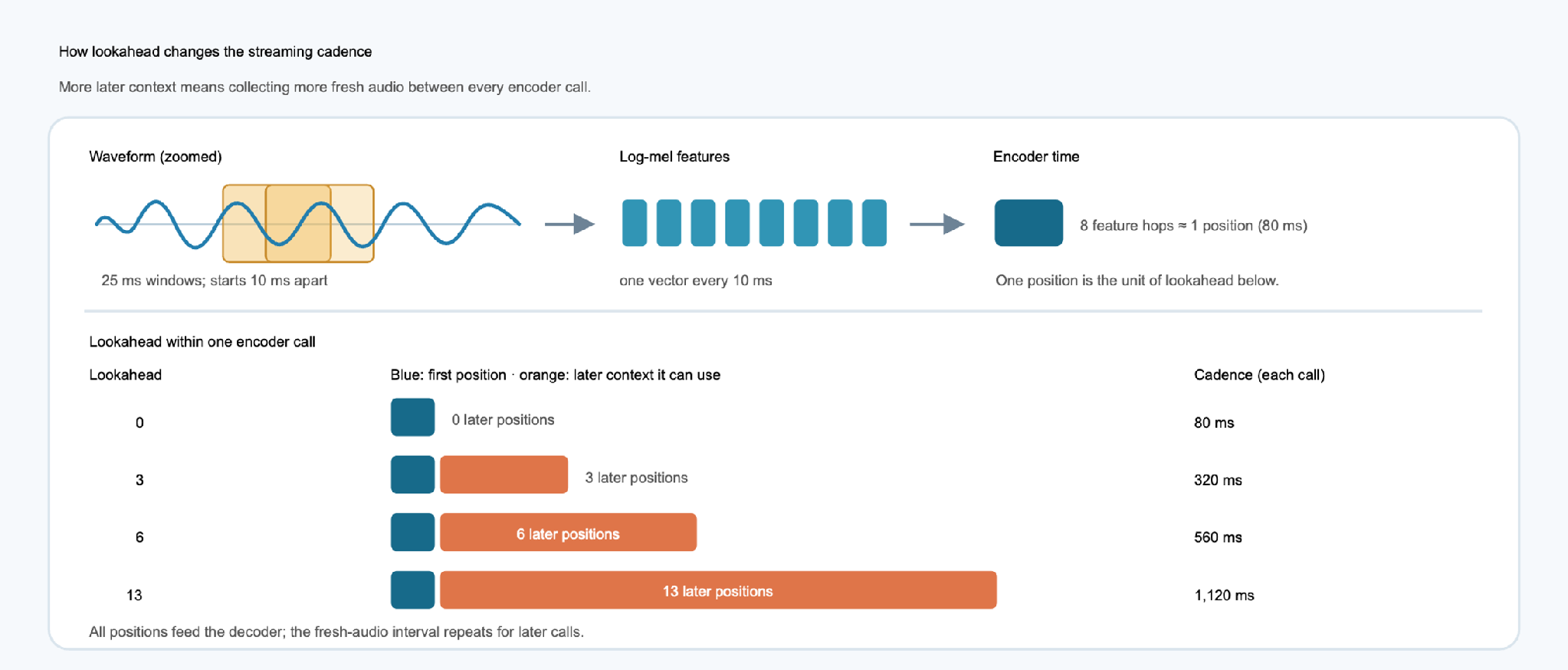
When you’re speaking to a device, you expect text to appear as you talk. That makes streaming automatic speech recognition (ASR) a different challenge from batch transcription, where the model... The post Optimizing Streaming Speech Recognition on Arm® Edge Devices with ExecuTorch appeared first on PyTorch.

Fleet-wide computer vision needs a model per camera, not one model for the whole fleet. This post presents a working Amazon SageMaker SDK v3 reference architecture that trains, quality-gates, compiles per-camera models with SageMaker Neo, and versions thousands of them, with an AWS Step Functions layer pacing fleet-scale retraining within account quotas.
Today, I’m talking to Kevin Roose, journalist and author of the new book The AGI Chronicles, which details the recent and explosive transformation of the AI industry. Kevin was a longtime New York Times reporter and host of the popular podcast Hard Fork, but he and friend of the show Casey Newton just left the […]


arXiv:2610.32122v1 Announce Type: new Abstract: We report a systematic dissociation in modern text embedders: sentiment is almost perfectly decodable from their embeddings, yet almost entirely absent from their metric. Across eleven frozen encoders spanning 2021 to 2026, including 2026-generation models and the 4B-parameter LLM embedder Qwen3-Embedding-4B, a linear probe recovers sentence polarity at up to 91.3% accuracy while cosine similarity separates polarity by a margin of only 0.003-0.064. Qwen3-Embedding-4B, the strongest probe in the panel, reaches 91.3% probe accuracy but only 64.3 retrieval MAP. Because retrieval, clustering, deduplication, and retrieval-augmented generation operate on the metric rather than on a trained probe, these systems are effectively blind to information t
Tool: Quick Study Prompt to Claude Opus 5.5 High: Build an artifact where you open a photo and it rapidly (in a few seconds) paints a version of that photo using a canvas element and simulated paintbrush See also my previous experiment getting Claude Fable to simulate a watercolor illustration with P5.js. Quick Study uses Sobel edge detection, with no external libraries beyond Google Fonts. Tags: tools
Amazon Quick is an HIPAA‑compliant service offered by AWS that enables healthcare organizations to process Protected Health Information (PHI) upon signing a Business Associate Agreement (BAA); however, compliance with HIPAA does not equate to full regulatory compliance. Customers must rigorously manage its PHI processing workflows, encryption mechanisms, logging policies, and irreversible configuration requirements.
The Allen Institute for AI has released OlmoEarth v1.3, offering planet-wide satellite embedding vectors at 10-meter resolution in both 64-dimensional and 128-dimensional formats, along with the interactive exploration tool Embeddings Explorer. It supports zero-code change detection, similar-region retrieval, and lightweight classification modeling.