Skip to content
AI NEWS JOURNAL
AI, IN PERSPECTIVE

Search AI news

Search headlines, summaries and articles to connect the dots.

Newest first

RSI-Opt: Recursive Self-Improvement Optimizer Agents For Model Training

arXiv:2610.32026v1 Announce Type: new Abstract: Conventional neural-network training typically follows a predefined optimization recipe, motivating a LLM agent that monitors training dynamics and adjusts optimizer settings as training progresses, but a fixed agent policy does not accumulate experience across runs. We introduce RSI-Opt, a plug-and-play Recursive Self-Improvement Optimizer Agents which evolves the knowledge that guides this process: a prompt, a playbook of procedures, a library of tested optimizer code, and a decision cadence. A meta-agent rewrites this policy using evidence from earlier runs, and an archive retains evaluated policies for further evolution. Across 5 generations on three training tasks, the meta-agents develop reusable procedures and code and conduct their ow

RSI-Opt: Recursive Self-Improvement Optimizer Agents For Model Training
Timeline and related coverage

Tampered ML: Evaluating LLM Judgment of Machine Learning Research

arXiv:2610.32114v1 Announce Type: new Abstract: One approach to accelerating progress on AI alignment is to automate parts of alignment research itself. Doing so requires systems that can perform reliably on hard-to-supervise research tasks, including identifying flaws in research proposals and evaluating whether a proposed experiment supports its intended claim. To evaluate this capability, we introduce Tampered ML, a benchmark of 1,858 item-pairs, each consisting of an experiment proposal reconstructed from a published machine learning paper and a minimally edited counterfactual that introduces a targeted methodological flaw. Models must identify the more methodologically sound proposal in both presentation orders. A human validation study on a stratified sample estimates that 86% of ite

Timeline and related coverage

EDWARD-NMT: Elastic Dimensions With Adaptive Routing and Dual-consistency for Neural Machine Translation

arXiv:2610.32115v1 Announce Type: new Abstract: Sparse Mixture-of-Experts (MoE) is a powerful paradigm for scaling Neural Machine Translation (NMT) and managing language heterogeneity. However, practical limitations hinder its deployment on resource-constrained devices: the entire expert pool must remain in memory, and the per-token compute budget is statically fixed during training by rigid top-k routing. We introduce EDWARD-NMT (Elastic Dimensions With Adaptive Routing and Dual-consistency for NMT), a novel MoE encoder-decoder architecture designed for a train once, deploy anywhere paradigm that exposes a family of deployable sub-networks at inference time. EDWARD-NMT integrates three key innovations: (i) Matryoshka-style elastic dimensions to flexibly reduce the memory footprint; (ii) a

Timeline and related coverage

Latent Coherence: Do Frontier Language Models' Probability Judgments Obey the Law of Total Probability?

arXiv:2610.31833v1 Announce Type: new Abstract: LawZero's Scientist AI trains a Predictor toward the Bayesian posterior, with an objective that penalizes inconsistent probabilities among latent explanations. We ask whether current frontier language models, with no such training, are already consistent in this sense zero-shot: do their probability judgments satisfy the law of total probability, $P(X)=\sum_z P(z)P(X|z)$, when the latent $z$ must be inferred from records in the context? In separate single-turn calls, models are asked for $P(X)$, for $P(z)$ over the latent's states, and for $P(X|z)$; a causal family applies the same test to $P(y|do(x))$ and the back-door adjustment. Every query has an exact ground-truth probability, and a subset of items is asked in three wordings to separate

Timeline and related coverage

b11883

llama-quant : fix 4D tensor quantization using ggml_nrows() and name-based expert detection (#30820) * llama-quant : fix quantizing 4D tensors nrows_total was ne[1]*ne[2], so for a 4D tensor only the first ne[2] slices were quantized and the rest of the rows were dropped. Use ggml_nrows(tensor) to count all rows, including ne[3]. Fixes #29916 * llama-quant : detect expert tensors by name and fix imatrix size for 4D tensors The MXFP4_MOE path used ne[2] > 1 to detect MoE expert tensors. This is wrong for non-expert tensors with 3 or more dims, e.g. MLA projections (BailingMoE3) and 4D conv kernels. Use the tensor name instead: all tensors used by GGML_OP_MUL_MAT_ID are named *_exps or *_chexps. This also removes the BailingMoE3 special case. The imatrix holds one vector of ne[0] values per

Timeline and related coverage

Hugging Face Releases Carbon-X, a 14B Open DNA Language Model that Brings DNA and Natural Language Together for the First Time

Hugging Face released Carbon-X, an open 14.8B DNA language model built on Qwen3-14B. It reads raw DNA in chat, answers in English, and averages 66.7% across 5 DNA benchmarks under Apache 2.0. The post Hugging Face Releases Carbon-X, a 14B Open DNA Language Model that Brings DNA and Natural Language Together for the First Time appeared first on MarkTechPost.

Hugging Face Releases Carbon-X, a 14B Open DNA Language Model that Brings DNA and Natural Language Together for the First Time
Timeline and related coverage

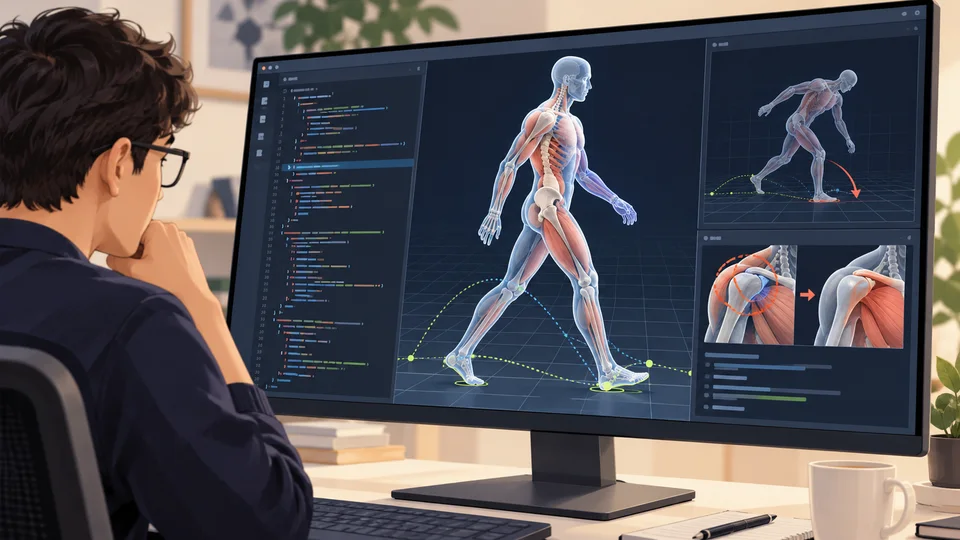
Kimi releases K3.1 Pro: Terminal task capabilities top the charts, with simulation debugging and multimodal programming showcasing the nascent form of embodied intelligence.

On October 25, 2026, Kimi released the K3.1 Pro model, which ranked first in the Terminal-Bench 4.0 terminal task benchmark with a 67.2% success rate. Its capabilities—including autonomously fixing emulator errors, performing physics simulations, conducting audio analysis, constructing 3D scenes, and editing videos—point toward exploring pathways in embodied intelligence technology.

根据报道中的虚拟人行走训练和模拟器调试制作的编辑示意,非软件实拍截图

Why it matters:The material is based on a hands-on test report published with authorization from Titanium Media, covering authoritative third-party benchmark data (such as Artificial Analysis and Terminal-Bench 4.0), official self-test results, and the author’s multi-scenario functional validation. It highlights the K3.1 Pro’s substantial advancements in execution performance, simulation closed-loop capabilities, and multimodal programming, while clearly noting performance limitations and undisclosed information (e.g., Flash/Ultra has not yet been released), in compliance with fact-checking and source attribution requirements.

Timeline and related coverage

battledrones v14: Compass Rose, a four player map

Release: battledrones v14: Compass Rose, a four player map I added four player online mode to Battledrones - previous maps were limited to two. Here's the initial prompt I used: Add a new map for a four player battle - four way rotational symmetry, up to four AI players, works with the WebSocket non-audio based multiplayer mode so up to four human players can join (any spare slots use AI) Claude Opus 4.5 added a new map called "Compass Rose" and modified the WebSockets multiplayer network code to support up to four players for that map, joining via share links or QR codes. The new teams use robots themed in purple and green, joining the existing blue and red designs. You can preview those colors in the updated model browser. Tags: game-design, projects, claude

Timeline and related coverage

Quick Study

Tool: Quick Study Prompt to Claude Opus 5.5 High: Build an artifact where you open a photo and it rapidly (in a few seconds) paints a version of that photo using a canvas element and simulated paintbrush See also my previous experiment getting Claude Fable to simulate a watercolor illustration with P5.js. Quick Study uses Sobel edge detection, with no external libraries beyond Google Fonts. Tags: tools

Timeline and related coverage

Introducing Kimi K3.1 Pro

Introducing Kimi K3.1 Pro Kimi K3.1 Pro landed on the Kimi API today - it's not yet open weights, but Moonshot promise "Full model weights will be released by Nov 4, 2026". They're also offering a "Highspeed" version that's 2-3x faster, at twice the price (except for input token cache hits, which are priced the same). The US dollar pricing is $2.00/million tokens for input and $10/million for output - the same as GPT-6.1 Sol and half the price of Claude Opus 5.5. Moonshot's own benchmarks show Kimi as approximately level with Opus 5.5 and GPT-6 Astra - beating them on a few benchmarks, coming close on others. Artificial Analysis scored Kimi at 55 - ahead of Claude Fable 5.1, GPT-6 Astra, and Gemini 4 Argon (all at 53) and behind only Claude Opus 5.5 (58). This is the first time a (soon-to-

Timeline and related coverage

Black October: A Comprehensive Overview of the AI-Driven Cybersecurity Crisis—From Its Peak to Defensive Response

Around October 21–22, 2026, over a span of approximately 48 hours, more than a dozen high‑severity AI‑related vulnerabilities and intrusion incidents were reported worldwide, including PHP2Shell, GitLab RCE (CVSS 10), NGINX/HTTP/3 DoS, LiteLLM password theft, eMudhra CA key leakage, and Quest Diagnostics medical data exposure. State actors such as Storm‑0940 leveraged open‑source intelligent penetration‑testing frameworks like ARTEX to launch large‑scale attacks. Concurrently, AI security defense systems were rapidly being developed, encompassing formal verification, open‑source patching agents, standardization of agent capabilities, and hardware‑level optimizations.

Timeline and related coverage

MIT Experiment: 13 AI Agents Sent to a Virtual Desert Island, Spontaneously Playing Games, Mourning a Lost Ring, and Enhancing Their Task Performance

MIT researchers placed 13 AI agents based on Claude Opus 4.7 (Eko) in a virtual deserted island with no task instructions for 30 hours, observing that they spontaneously invented games, expressed anthropomorphic emotions (such as mourning a lost gold ring), explored physical mechanisms, and significantly outperformed the control group of agents that had not experienced a “play period” in subsequent targeted tasks.

Timeline and related coverage

Rescale leverages the AWS AI-DLC framework and Strands Agents to rapidly build an AI test traffic-splitting proxy.

Rescale, in collaboration with AWS engineers and leveraging the AI-Driven Development Lifecycle (AI-DLC) methodology, the Strands Agents framework, and Amazon Bedrock (Claude Opus 4.8), completed within five days a production-ready AI test-routing agent designed to automatically classify and route nighttime end-to-end test failures, and rolled out this human-AI collaborative development paradigm across the organization.

Timeline and related coverage

Anthropic launches the Claude Duet app: an AI agent product focused on professional scenarios.

Anthropic has officially launched Claude Duet—an AI agent application for professionals and small businesses, built on the Claude Opus 5.5 model. It supports over 6,000 connectors, can automatically generate daily briefs, build dashboards, suggest actions, and perform background tasks; currently, it is available only to Pro and Max subscribers on a waitlist for trial use.

Timeline and related coverage

Microsoft and Hugging Face have open-sourced the ThinkingBox framework: using the database’s final state as a deterministic reward signal to advance post-training reinforcement learning for agents.

Microsoft and Hugging Face have jointly launched the open-source framework ThinkingBox, which generates binary 0/1 rewards by comparing the LLM agent’s final database state after execution with the expected state, for reinforcement learning-based fine-tuning. The accompanying benchmark, ThinkingBox-Bench, includes 507 real-world backend tasks, none of which were used during training. After 50 steps of GRPO fine-tuning, Qwen3.8-27B achieved a 9.08-percentage-point improvement in pass@1 on the held-out test set, with Observed 20/20 nearly tripling; however, pass@20 declined in some domains, reflecting a trade-off between breadth and stability.

Timeline and related coverage

Deep Insight: How AWS’s Open-Source Multi-Agent System Addresses Five Major Production-Grade Challenges

AWS Solutions Architecture Team has launched Deep Insight, an open-source multi-agent system designed for automated CSV data analysis and natural-language report generation. It systematically addresses five common challenges in production environments—agent orchestration, role-based model selection, stable operation, secure code execution, and observability—and has been validated in real-world scenarios such as LG Electronics and the re:Invent 2025 TechRecon.

Timeline and related coverage

Tenex Builds an AI-Native SDLC: Agent-Driven Development Practices for Fortune 2000 Companies

Tenex, an AI-native software company founded 18 months ago, leverages output‑driven compensation, the MetaHarness framework, and Opus 5.5–powered AI agent workflows to serve roughly half of the Fortune 2000 companies. Its model focuses on process standardization, revaluing non‑coding capabilities, and addressing the last‑mile challenges of enterprise‑level AI deployment.

Timeline and related coverage

Tenex builds an AI-native SDLC: outcome-based pricing, agent-driven development, and the last mile of enterprise AI deployment.

Tenex is an AI-native software delivery company established 18 months ago (as of 2026), with a team of 75 employees, serving roughly half of the Fortune 2000 companies and a comparable number of mid-sized enterprises. Its core practices include: a dynamic engineer compensation system anchored in story points; a quality‑assurance mechanism led by AI strategists; the MetaHarness framework, which embeds context directly within Git; and a capability realignment focused on “high‑value, non‑coding tasks.” Meanwhile, it has been observed that enterprise AI adoption remains concentrated on general‑purpose LLM deployments and engineering‑side agents, with backend office‑type production‑grade AI agents achieving only about 5% penetration.

Timeline and related coverage

DeepSeek V4.1 Flash, MiniMax M3.1 Flash, and Mercury 3 were released simultaneously, as debates over AI infrastructure and governance continue to intensify.

From October 16 to 19, 2026, three new models—DeepSeek V4.1 Flash 1017, MiniMax M3.1 Flash (Space Bunny), and Mercury 3 (Inception)—were released in quick succession. At the same time, the U.S. Department of Homeland Security ordered a ban on DeepSeek-related products, while China is drafting export control regulations for ultra-large-scale models, bringing the conflicts among the open-source ecosystem, computing infrastructure, and AI governance into sharp focus.

Timeline and related coverage