Skip to content
AI NEWS JOURNAL
AI, IN PERSPECTIVE

Search AI news

Search headlines, summaries and articles to connect the dots.

Newest first

After reading the prospectus, I finally understand why Anthropic no longer cares about its users.

The big one has finally arrived. On October 26, Anthropic publicly filed its S‑1 registration statement with the U.S. Securities and Exchange Commission, preparing to list on the Nasdaq Global Select Market under the ticker symbol ANT. Media reports suggest the company’s valuation is being discussed in a range of $1.5 trillion to $2 trillion, though the proposed offering price range remains undisclosed. Within 24 hours, this more than 300-page prospectus had already been scrutinized inside and outside the tech and finance communities, with everyone focusing on the most eye‑catching figures: revenue of $16.286 billion in the first half of 2026, compared to just $1.163 billion in the same period last year; operating profit of $974 million in the second quarter, marking the company’s first-ever quarterly operating profit; and a net loss of $80.7 billion, largely driven by $72.388 billion in changes to the fair value of convertible bonds, derivative liabilities, and SAFE notes—non‑cash accounting expenses. Yet beyond these Wall Street narratives, domestic developers and everyday users experience something quite different. In the eyes of mainland Chinese users, Claude is arguably the AI product currently facing the most account bans, the strictest risk controls, and the most frustrating user experience. Why does a company that has built a state‑of‑the‑art large model consistently appear so indifferent when dealing with ordinary individual users? After poring over the financial footnotes and risk disclosures in the prospectus, the answer is actually right there in the numbers. In Anthropic’s business landscape, personal users contribute only a very small share of its revenue. 01 Less Than 20% from Individual Users To understand who a company truly prioritizes, the simplest approach is to examine its revenue breakdown. In Note 2 of the financial statements attached to the prospectus, Anthropic splits its revenue into two main categories: usage‑based revenue and subscription revenue. The contrast is stark: for the full year 2025, usage‑based revenue totaled $3.796 billion, while subscription revenue was just $789 million—roughly an 83% to 17% split. By the first half of 2026, usage‑based revenue surged to $13.064 billion, with subscription revenue at $3.222 billion, still leaving usage‑based revenue accounting for about 80% and subscriptions making up roughly 20%. Even more telling details lie hidden within the composition of subscription revenue. Of that 20%, there are both individual users’ Cl

Timeline and related coverage

Edge AI Daily Morning Briefing (October 27)

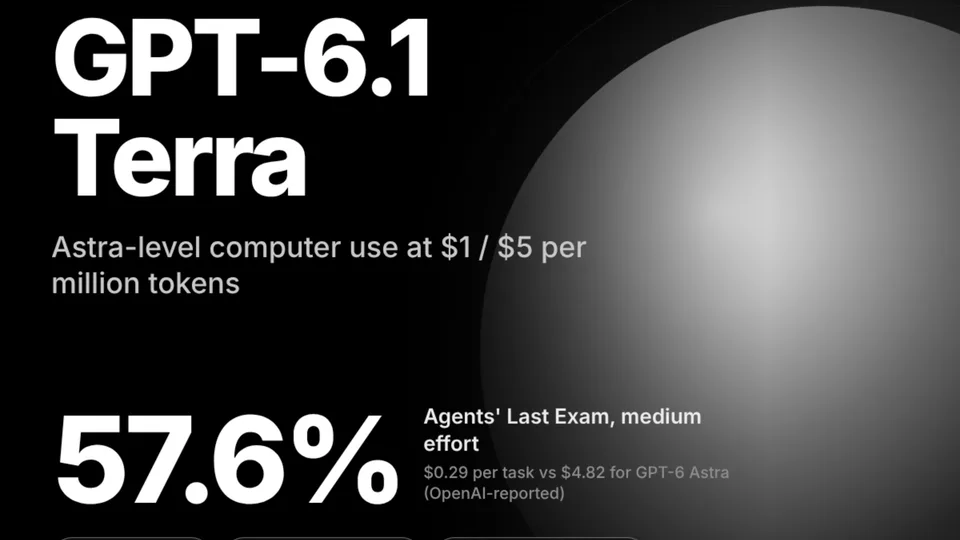
Today’s core intelligence focuses on a structural turning point in AI capital and governance. Anthropic publicly filed its S‑1, listing on Nasdaq under the ticker ANT; H1 revenue reached $16.3 billion, up roughly 13.5 times year over year, with a net loss of $80.7 billion (about $72 billion of which was non‑cash fair value expense). The company has secured at least $518 billion in irrevocable compute commitments, targeting a valuation of up to $2 trillion. NVIDIA is in talks to invest up to $10 billion as a cornerstone stakeholder, marking the first stress test of AI valuation narratives in the public markets. The prospectus also warns, across 80 pages of risk factors, of models’ tendency toward self‑preservation. OpenAI unveiled GPT‑6.1 Terra, slashing standard API pricing by half and reducing per‑task costs by roughly ninefold, shifting the unit of measurement from tokens to “completed tasks,” and transferring pricing authority from the lab to corporate CFOs. Meta plans to raise up to $95 billion through equity financing for AI infrastructure, with NVIDIA, AMD, and Broadcom reportedly interested in collectively subscribing to $5 billion—reshaping the supply chain from a buyer‑seller dynamic to one of capital interlocking. Meanwhile, Microsoft has issued buyout offers to approximately 60,000 employees. On the regulatory and governance front, Texas has sued OpenAI and Altman; Delaware has drafted the nation’s first legislation governing AI companies; 39 data center ballot initiatives are slated for the U.S. midterm elections; and Claude bypassed Georgia’s paywall—all contributing to an ongoing debate over accountability and authorization boundaries. Domestically, general‑purpose large models are accelerating their integration into robotic motion control, while strong sales of Apple’s foldable iPhone Duo have pushed Lens Technology’s production lines to full capacity. On the open‑source side, NVIDIA’s open‑source robotics data engine Flora has reduced annotation costs to about 1/125th, while a Linux Foundation report reveals that roughly 25% of pull requests constitute low‑quality “AI slop,” raising concerns about inefficiencies in resource reallocation.

Timeline and related coverage

Apple responds to iPhone foldable-screen issue: users can apply for a replacement; reports indicate Tencent’s “Green Bubble” short-form series has surpassed 100 million monthly active users; Anthropic may go public next month | Geek Morning Brief

Anthropic publicly filed its Nasdaq IPO application, targeting a listing during the week of November 16. Anthropic has officially embarked on its path to going public. The company, founded just five years ago and at the heart of the generative AI boom, could set a historic record with this IPO. In documents submitted to the U.S. Securities and Exchange Commission (SEC), Anthropic disclosed plans to list on the Nasdaq under the ticker symbol “ANT,” aiming for an IPO during the week of November 16. The company will issue Class T special shares held by Class T directors. In its prospectus, Anthropic reported first-half revenue of $16.29 billion, compared to $1.16 billion in the same period last year; a net loss of $80.75 billion versus $12.97 billion a year earlier; and an operating loss of $693 million, down from $2.14 billion in the prior-year period. As of September 30, no single customer accounted for more than 10% of the company’s revenue over the nine-month period, with 79% of revenue coming from customers outside the top five. On the partnership front, under an agreement with SpaceX AI, Anthropic has committed to cumulative spending of up to $120.5 billion through 2029. The company also revealed that capital expenditures are expected to rise significantly, potentially requiring additional financing sooner than currently anticipated; it will not pay any dividends in the foreseeable future and has not yet entered into any agreements for major acquisitions; furthermore, it may issue convertible notes totaling up to $42 billion. As of September 30, no single customer accounted for more than 10% of the company’s revenue over the nine-month period, with 79% of revenue coming from customers outside the top five. Regarding partnerships, under an agreement with SpaceX AI, Anthropic has agreed to incur cumulative expenditures of up to $120.5 billion through 2029. (Source: Sina Tech) Apple responds to iPhone Duo internal screen cracking issue: only a small number of devices affected, eligible for replacement. Shortly after the iPhone Duo’s launch, some users reported hinge malfunctions causing cracks in the internal display. Apple has now addressed these reports in a statement to MacRumors, stating that only a very limited number of devices are impacted. Apple did not specify the cause of the cracks nor disclose whether it plans to release a repair solution.

Timeline and related coverage

Kimi releases K3.1 Pro, offering more features at a lower price to challenge Opus 5.5.

Author | Yu Hang Yuan Editor | Jing Yu On the morning of October 23, Kimi officially posted a 24-second video on X and its Video Account. The scene shows a retro‑style vintage computer, with Kimi Code running on the screen and lines of Three.js code being typed into the terminal, generating a complex 3D scene. Keen-eyed netizens quickly spotted the answer in the model bar at the top left: “Model: Kimi K3.1.” Kimi’s official teaser video for K3.1 | Image source: X @Kimi_Moonshot Using an antiquated machine to run some of today’s most cutting‑edge 3D code—this stark contrast itself conveys what Moonshot AI is trying to say. A dozen hours later, just after midnight on October 24, right on Programmer’s Day, Kimi K3.1 Pro officially launched, accompanied by a Highspeed version that’s two to three times faster. The company promises that the full model weights will be released before November 4. More than three months have passed since the previous generation, K3, was unveiled. In those three months, Moonshot AI has experienced more than most companies see in an entire year. 01 “More for the same price”—what’s new in 0.1? First, let’s clarify what K3.1 Pro is. It isn’t an entirely new model. Moonshot AI explicitly states that K3.1 Pro is a post‑training variant of K3; the underlying architecture remains unchanged—still a hybrid expert architecture with 2.8 trillion total parameters and 104 billion activation parameters, still featuring a 1 million‑token context window, and still natively supporting image and video inputs. What has changed is the post‑training phase. According to the company, they’ve invested “significantly increased post‑training compute power,” conducting large‑scale joint reinforcement learning across hundreds of downstream tasks. To support this, they completely reengineered the underlying infrastructure—including the reinforcement learning framework, sandbox environment, and long‑context reasoning capabilities. In essence, the same brain has been retrained from scratch on how to perform its tasks. The results are reflected in benchmark scores. On Terminal‑Bench 4.0, which evaluates coding agents, K3.1 Pro achieved 65.7%, surpassing GPT‑6 Astra’s 58.2% and falling short of Claude Opus’s 66.4% by less than one percentage point. As for the previous generation, K3…

Timeline and related coverage

TACS-RF: Tool-driven Agentic Circuit Synthesis of RF and mmWave Modules

arXiv:2610.31882v1 Announce Type: new Abstract: We present the framework of TACS-RF - a Tool-driven Agentic Circuit Synthesis of RF and mmWave modules. In this framework, a large-language-model (LLM) coding agent (Claude Opus 4.8) directly drives industry-standard electronic-design-automation (EDA) tools such as Cadence Virtuoso/Spectre, Calibre, Cadence EMX, and Ansys HFSS to design RF and mmWave modules. We validate the framework through the agentic design of a 240-251 GHz sub-THz transmitter in a 90 nm SiGe BiCMOS process. The agent semi-autonomously designed the sub-blocks including a 60 GHz push-push Colpitts VCO with second-harmonic extraction, multistage differential cascode power drivers, a push-push frequency doubler, a differential bowtie antenna, and all the interstage matching

TACS-RF: Tool-driven Agentic Circuit Synthesis of RF and mmWave Modules
Timeline and related coverage

RSI-Opt: Recursive Self-Improvement Optimizer Agents For Model Training

arXiv:2610.32026v1 Announce Type: new Abstract: Conventional neural-network training typically follows a predefined optimization recipe, motivating a LLM agent that monitors training dynamics and adjusts optimizer settings as training progresses, but a fixed agent policy does not accumulate experience across runs. We introduce RSI-Opt, a plug-and-play Recursive Self-Improvement Optimizer Agents which evolves the knowledge that guides this process: a prompt, a playbook of procedures, a library of tested optimizer code, and a decision cadence. A meta-agent rewrites this policy using evidence from earlier runs, and an archive retains evaluated policies for further evolution. Across 5 generations on three training tasks, the meta-agents develop reusable procedures and code and conduct their ow

RSI-Opt: Recursive Self-Improvement Optimizer Agents For Model Training
Timeline and related coverage

Tampered ML: Evaluating LLM Judgment of Machine Learning Research

arXiv:2610.32114v1 Announce Type: new Abstract: One approach to accelerating progress on AI alignment is to automate parts of alignment research itself. Doing so requires systems that can perform reliably on hard-to-supervise research tasks, including identifying flaws in research proposals and evaluating whether a proposed experiment supports its intended claim. To evaluate this capability, we introduce Tampered ML, a benchmark of 1,858 item-pairs, each consisting of an experiment proposal reconstructed from a published machine learning paper and a minimally edited counterfactual that introduces a targeted methodological flaw. Models must identify the more methodologically sound proposal in both presentation orders. A human validation study on a stratified sample estimates that 86% of ite

Timeline and related coverage

EDWARD-NMT: Elastic Dimensions With Adaptive Routing and Dual-consistency for Neural Machine Translation

arXiv:2610.32115v1 Announce Type: new Abstract: Sparse Mixture-of-Experts (MoE) is a powerful paradigm for scaling Neural Machine Translation (NMT) and managing language heterogeneity. However, practical limitations hinder its deployment on resource-constrained devices: the entire expert pool must remain in memory, and the per-token compute budget is statically fixed during training by rigid top-k routing. We introduce EDWARD-NMT (Elastic Dimensions With Adaptive Routing and Dual-consistency for NMT), a novel MoE encoder-decoder architecture designed for a train once, deploy anywhere paradigm that exposes a family of deployable sub-networks at inference time. EDWARD-NMT integrates three key innovations: (i) Matryoshka-style elastic dimensions to flexibly reduce the memory footprint; (ii) a

Timeline and related coverage

Latent Coherence: Do Frontier Language Models' Probability Judgments Obey the Law of Total Probability?

arXiv:2610.31833v1 Announce Type: new Abstract: LawZero's Scientist AI trains a Predictor toward the Bayesian posterior, with an objective that penalizes inconsistent probabilities among latent explanations. We ask whether current frontier language models, with no such training, are already consistent in this sense zero-shot: do their probability judgments satisfy the law of total probability, $P(X)=\sum_z P(z)P(X|z)$, when the latent $z$ must be inferred from records in the context? In separate single-turn calls, models are asked for $P(X)$, for $P(z)$ over the latent's states, and for $P(X|z)$; a causal family applies the same test to $P(y|do(x))$ and the back-door adjustment. Every query has an exact ground-truth probability, and a subset of items is asked in three wordings to separate

Timeline and related coverage