Show HN: Sunlith, an Android calendar you can control through MCP
Article URL: https://github.com/SunSinD/Sunlith Comments URL: https://news.ycombinator.com/item?id=50375585 Points: 1 # Comments: 0
Search headlines, summaries and articles to connect the dots.
Article URL: https://github.com/SunSinD/Sunlith Comments URL: https://news.ycombinator.com/item?id=50375585 Points: 1 # Comments: 0
OpenAI built an autonomous pipeline that found, validated, and generated patches for 948 local privilege-escalation vulnerabilities in the Linux kernel.
arXiv:2611.03832v1 Announce Type: new Abstract: Computational drug discovery offers a growing range of tools for proposing and evaluating molecules, but combining them and deciding what to do next still requires substantial expert effort. Here, we introduce El Agente F\'armaco, an AI scientist that uses modern large language model (LLM) technology to turn discovery goals expressed in everyday language into complex, scalable computational screening workflows. The agentic harness selects scientific tools, reviews their results, and adjusts subsequent steps to the target and the user's objectives. Our approach centers on a shared scientific memory: F\'armaco Atlas, which stores molecules, structures, and results together with their provenance -- a record of how they were obtained. The agent uses targeted database queries to retrieve the evidence needed for each decision. A single request can launch calculations for an entire collection of molecules, without requiring a separate LLM decision for every compound. This design limits the information the model must process as screening collections grow, while keeping the underlying results available for inspection and further analysis. The integrated tools support molecule generation, prediction of binding and molecular properties, and searches for compounds available for purchase. In a retrospective comparison with an expert-led campaign, the agent proposed chemically distinct candidates with competitive docking scores and higher calculated drug-likeness under explicitly imposed selection criteria. In a 22-task benchmark against plain tool calls and Codex, the agent achieved the highest observed mean model-judged score, with lower median cumulative token use and peak context. F\'armaco provides a foundation for flexible, scalable drug discovery workflows that connect scientific reasoning with an enduring, traceable record of computational work.
Images 2.6 brings faster image generation, GIF creation, more precise editing, and new API controls across ChatGPT, Codex, and the API.
After being criticized by users for a month, OpenAI has finally decided to stop tinkering with everyone’s usage limits. Just now, OpenAI’s head of product, Tibo, suddenly announced that he would significantly increase the usage limits for the ChatGPT Pro series and Business....

Wabi Inc., the developer of an artificial intelligence assistant for consumers, today announced that it has raised $55 million in funding. IVP led the seed round with contributions from Amazon Alexa Fund, Andreessen Horowitz and Forerunner. They were joined by a group of angel investors that included Salesforce Inc. CEO Marc Benioff and Shopify Inc. […] The post Wabi reels in $55M for its consumer-focused AI assistant appeared first on SiliconANGLE.
MiniMax has open-sourced MCode Stack, an MIT-licensed repo of 17 SKILL.md skills and 5 checklists that its MiniMax Code team uses daily for code review, subagent splits, context budgets and long-running commands. The post MiniMax Open-Sources MCode Stack: 15 Agent Skills Its Coding Team Uses Daily appeared first on MarkTechPost.

cuda : add top-k MoE fusion for 384 experts (#31288) Assisted-by: Codex **Website:** - **Attestations:** - **macOS/iOS:** - [macOS Apple Silicon (arm64)](https://github.com/ggml-org/llama.cpp/releases/download/b11953/llama-b11953-bin-macos-arm64.tar.gz) - macOS Apple Silicon (arm64, KleidiAI enabled) [DISABLED](https://github.com/ggml-org/llama.cpp/pull/23780) - [macOS Intel (x64)](https://github.com/ggml-org/llama.cpp/releases/download/b11953/llama-b11953-bin-macos-x64.tar.gz) - [iOS XCFramework](https://github.com/ggml-org/llama.cpp/releases/download/b11953/llama-b11953-xcframework.zip) **Linux:** - [Ubuntu x64 (CPU)](https://github.com/ggml-org/llama.cpp/releases/download/b11953/llama-b11953-bin-ubuntu-x64.tar.gz) - [Ubuntu arm64 (CPU)](https://github.com/ggml-org/llama.cpp/releases/dow
Since coding is solved, why code for the job?

Oracle Corp. today announced plans to make Google LLC’s TPU artificial intelligence accelerators available through its public cloud. The initiative marks the first time the search giant is supplying the chips to another hyperscaler. According to CNBC, Oracle will also add Cerebras Systems Inc.’s wafer-scale accelerators and OpenAI Group PBC’s Jalapeño inference processor. The latter […] The post Oracle brings Google’s TPUs to its cloud, adds ChatGPT integrations appeared first on SiliconANGLE.
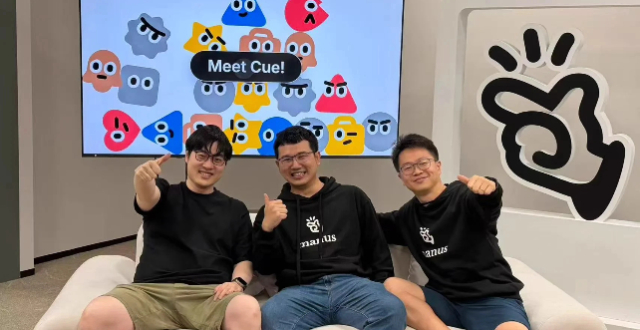
On October 26, Zhang Tao (online alias HideCloud), co-founder and product partner at Manus, recently published a lengthy article on his WeChat official account “Qianyun Sisi,” titled “Transforming Manus with Manus.” The piece opens with an image that left a deep impression on him. He had submitted several requirements and bug reports to an engineer; when he checked back a while later, he found that the engineer’s computer had multiple Codex and Manus sessions running side by side. Clicking on any one of them, he typed in what he had just been working on...
common : --model or -hf is required (#31242) Assisted-by: Codex **Website:** - **Attestations:** - **macOS/iOS:** - [macOS Apple Silicon (arm64)](https://github.com/ggml-org/llama.cpp/releases/download/b11929/llama-b11929-bin-macos-arm64.tar.gz) - macOS Apple Silicon (arm64, KleidiAI enabled) [DISABLED](https://github.com/ggml-org/llama.cpp/pull/23780) - [macOS Intel (x64)](https://github.com/ggml-org/llama.cpp/releases/download/b11929/llama-b11929-bin-macos-x64.tar.gz) - [iOS XCFramework](https://github.com/ggml-org/llama.cpp/releases/download/b11929/llama-b11929-xcframework.zip) **Linux:** - [Ubuntu x64 (CPU)](https://github.com/ggml-org/llama.cpp/releases/download/b11929/llama-b11929-bin-ubuntu-x64.tar.gz) - [Ubuntu arm64 (CPU)](https://github.com/ggml-org/llama.cpp/releases/download/b1
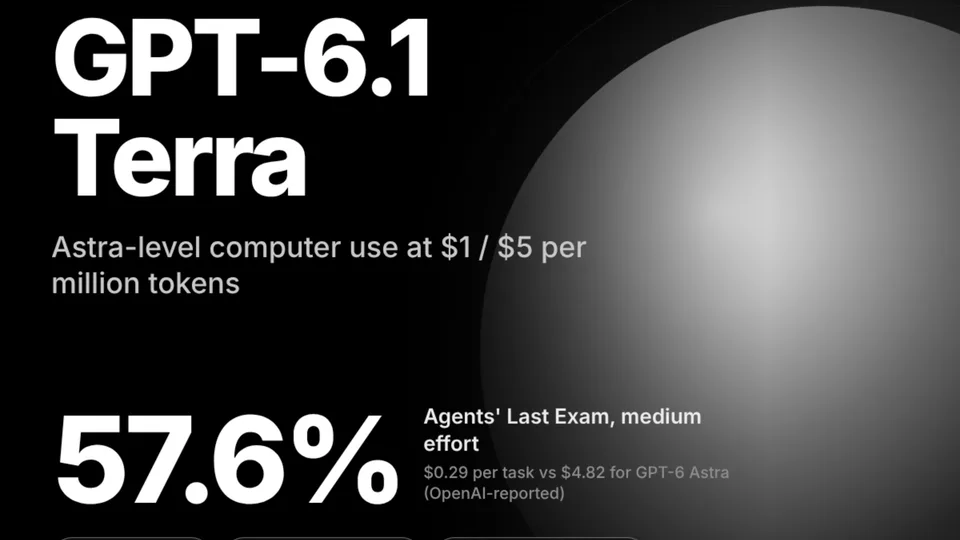
1. GPT-6.1 Terra, better suited for workers, has launched, with API prices cut in half and faster computer operations On October 26, OpenAI released GPT-6.1 Terra, focusing on enhancing visual comprehension, computer operations, factual accuracy, and programming capabilities, ....
As agents go mainstream, some publishers are hoping that people will pay for content tailor-made for AI—not humans.
Old benchmarks approach perfect scores, yet new benchmarks consistently fall short in real-world performance. As large-model evaluation itself has become a business, companies are shifting their selection criteria from ranking-based assessments to cost‑benefit analyses.
On October 26, Zhang Tao (online alias HideCloud), co-founder and product partner at Manus, recently published a lengthy article on his WeChat public account “Qianyun Sisi,” titled “Transforming Manus with Manus.” The piece opens with an image that left a deep impression on him. He had submitted several requirements and bug reports to an engineer; when he checked back later, he found that the engineer’s computer had multiple Codex and Manus sessions open. Clicking on any one of them, he saw that the input was precisely the original requirement he’d just posted on Slack—without a single word changed. Even more surprising to him was that this engineer was simultaneously working on over ten or twenty tasks. At Manus today, this has become the norm. The article is packed with information, but a few key points are especially worth noting. Internally, Manus has created a unified code entry point called Manus-mono, accompanied by a manual designed for AI, enabling the AI system to view the entire project landscape across repositories. With a single request, one person can complete all client-side development. The mobile team has consistently consisted of only seven members, yet they manage two products and four apps, keeping their progress largely in sync with the web version. All product managers have submitted code to Manus, and roughly half of them can independently bring their requirements to production. Some product managers even turn their written requirements into video presentations. Meanwhile, the marketing team now has a “digital colleague” that schedules its own tasks, proactively reminds everyone of project deadlines, and even reaches out across teams to clarify feature details. In September, the company’s per-capita AI spending exceeded $10,000, with a small number of individuals consuming as much as $70,000 to $80,000 in a single month. Zhang Tao dedicated an entire section to addressing external skepticism. The timing of the article’s release is also noteworthy. At the end of September, Manus launched version 2.0 along with its personal AI agent app, Cue; in early October, the parent company Butterfly Effect announced the completion of a new round of financing exceeding $500 million, while simultaneously opening 17 positions in Beijing. Seen against this backdrop, the article reads less like a routine update and more like a manifesto marking the Manus team’s entry into the 2.0 era. It discusses how the organization leverages AI to evolve, while revealing the company’s product roadmap, cost structure, and hiring standards. 01 Manus itself serves as a showcase for 2.0 If you compare the internal practices described in the article with the feature list of Manus 2.0, you’ll find…
opencl: refine mul mat id -1 index (#31170) Assisted-by: Codex **Website:** - **Attestations:** - **macOS/iOS:** - [macOS Apple Silicon (arm64)](https://github.com/ggml-org/llama.cpp/releases/download/b11919/llama-b11919-bin-macos-arm64.tar.gz) - macOS Apple Silicon (arm64, KleidiAI enabled) [DISABLED](https://github.com/ggml-org/llama.cpp/pull/23780) - [macOS Intel (x64)](https://github.com/ggml-org/llama.cpp/releases/download/b11919/llama-b11919-bin-macos-x64.tar.gz) - [iOS XCFramework](https://github.com/ggml-org/llama.cpp/releases/download/b11919/llama-b11919-xcframework.zip) **Linux:** - [Ubuntu x64 (CPU)](https://github.com/ggml-org/llama.cpp/releases/download/b11919/llama-b11919-bin-ubuntu-x64.tar.gz) - [Ubuntu arm64 (CPU)](https://github.com/ggml-org/llama.cpp/releases/download/b11
The S-1, the numbers, and the reactions.
OpenAI has once again raised the bar for the cost-effectiveness of large models. #Follow iFanr’s official WeChat account: iFanr (WeChat ID: ifanr) for more exciting content delivered to you第一时间.
OpenAI released GPT-6.1 Terra, a fast computer-use and vision model priced at $1/$5 per million tokens. It matches GPT-6 Astra’s medium-effort Agents’ Last Exam score at $0.29 per task versus $4.82. The post OpenAI Launches GPT-6.1 Terra, Halving GPT-6.1 Sol’s API Price for Agent Work appeared first on MarkTechPost.