Skip to content
AI NEWS JOURNAL
AI, IN PERSPECTIVE

Search AI news

Search headlines, summaries and articles to connect the dots.

Newest first

University of Utah retains operational sovereignty as Redtail expands research access

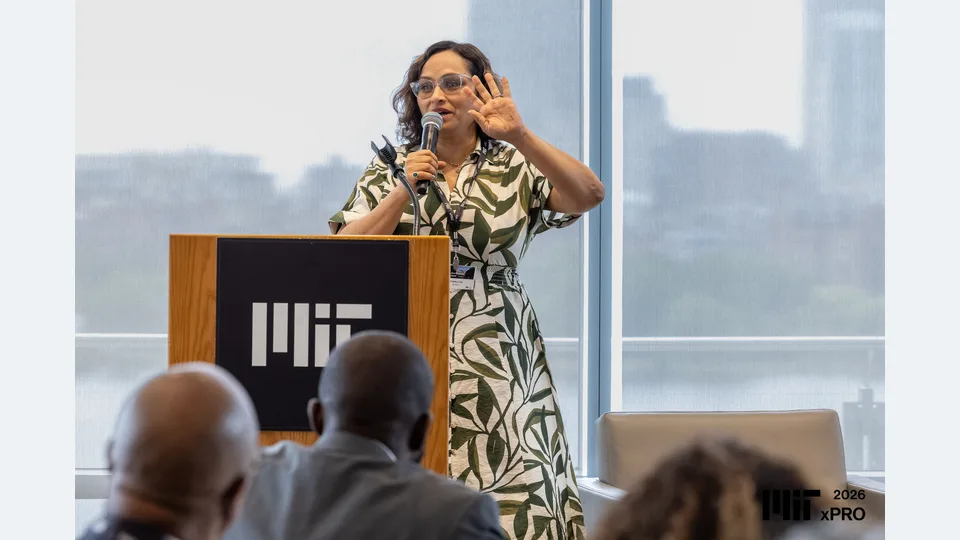
Operational sovereignty gives universities authority over how shared computing resources are allocated, managed and secured. The University of Utah’s Redtail AI factory supercomputer brings advanced computing capabilities to a statewide community. Supporting researchers, students, administrators and external partners through that infrastructure requires more than computing capacity, according to Manish Parashar (pictured), chief AI officer of […] The post University of Utah retains operational sovereignty as Redtail expands research access appeared first on SiliconANGLE.

Faster Retrieval for Better, More Efficient RAG

Maximum inner product search (MIPS) sits at the core of recommendation systems, search, and retrieval-augmented generation (RAG). Given a query vector, MIPS systems search within a database of millions of candidate key vectors for the one that best matches the query. The original data point associated with that best-matching key is then used to handle the query: in RAG, the document that is best suited to answer the question is typically prefixed to the query. As the number of keys grows to millions and vector dimensions reach thousands, the computational cost of running an exhaustive…

MANTA: Unlocking DAG Flexibility in Asynchronous BFT

arXiv:2610.34419v1 Announce Type: new Abstract: DAG-based BFT protocols marked a shift in consensus design by replacing single-leader proposal paths with concurrent block proposals linked through a shared graph, where references encode consensus evidence. However, under heterogeneous wide-area networks (WANs), existing designs suffer from prolonged rounds and degraded performance due to straggler effects. The root cause is rigid round advancement: replicas move in synchronized rounds, waiting for enough references from the previous round before advancing. We propose a flexible DAG growth framework for asynchronous BFT consensus. Our key observation is that while reference quorums are necessary for safety and liveness, they need not block every round advancement. Instead, the connectivity r

Timeline and related coverage

OpenESM: Energy-Steered Models Are Scalable Foundation Learners

arXiv:2610.33005v1 Announce Type: new Abstract: Energy-based models have shown promising properties for domain-specific tasks but remain challenging in modeling general-purpose scenarios. To bridge this gap, we design energy-steered models (ESMs) for foundational language modeling. ESMs integrate energy steering and token generation within a single architecture to leverage the energy-guided search to refine token generation. Specifically, ESMs first optimize a latent state over the energy landscape, then leverages the refined latent state for token generation. By performing such energy-guided pre-training on large-scale corpora, ESMs learn generally effective energy landscape where favorable tokens correspond to lower energy values. To explore the scaling behavior of ESMs, we pre-train ESM

新闻源配图 · arXiv cs.CL
Timeline and related coverage

GLP Networking API Specification

arXiv:2610.32583v1 Announce Type: cross Abstract: Multiagent deterministic GLP (madGLP) runs Grassroots Logic Programs (GLP) as agents that communicate solely by asynchronous message passing, and assumes fair delivery: every message sent is eventually delivered. Each agent runs on a person's smartphone, named by the person's public key. A grassroots platform depends on no global resource but the network, so agents must reach one another over Bluetooth Low Energy, on a local network, and across the Internet from behind NAT, via rendezvous servers anyone can run. What madGLP requires of such a network, and what the network requires of the platform, has not been specified. We specify the networking layer beneath madGLP. Anything that can be done in GLP is done in GLP: the layer provides only

Timeline and related coverage

OFA: Towards Building a One-For-All Model

2022 is a year of generalist models! With the bloom of multimodal pretraining, especially the unified model, we have witnessed the opportunity to building a generalist model that is capable of processing tasks of different modalities or multi-modalities! Thus, we propose OFA1, namely One-For-All, a unified multimodal pretrained model that unifies understanding and generation tasks concerning modalities into a single framework, and we pretrain OFA with the instruction-based multitask-pretraining that endows it with multiple capabilities.