A cutting-edge technology paper interpretation column by Penguin Think Tank, under Tencent Technology. At the intersection of code and business, we seek certainty in AI. Written by Boyang Edited by Xu Qingyang Lately, if you only follow news from the fields of theoretical mathematics and physics, it feels like...
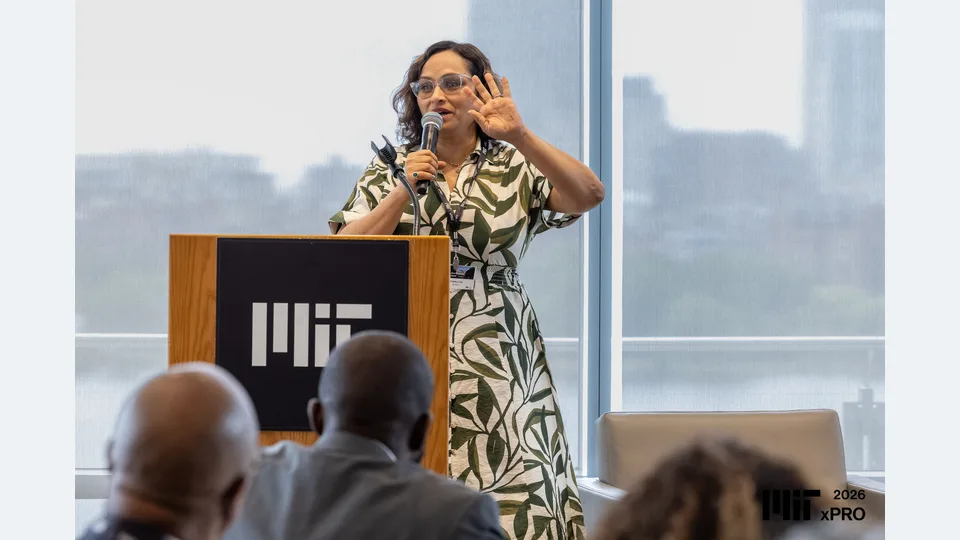
Prabha Jha used her experience with MIT Open Learning’s program for senior executives to develop AI solutions for her employer, Verizon, and to write a book.
GRASP is a new gradient-based planner for learned dynamics (a “world model”) that makes long-horizon planning practical by (1) lifting the trajectory into virtual states so optimization is parallel across time, (2) adding stochasticity directly to the state iterates for exploration, and (3) reshaping gradients so actions get clean signals while we avoid brittle “state-input” gradients through high-dimensional vision models. Large, learned world models are becoming increasingly capable. They can predict long sequences of future observations in high-dimensional visual spaces and generalize across tasks in ways that were difficult to imagine a few years ago. As these models scale, they start to look less like task-specific predictors and more like general-purpose simulators. But having a powe
Understanding the behavior of complex machine learning systems, particularly Large Language Models (LLMs), is a critical challenge in modern artificial intelligence. Interpretability research aims to make the decision-making process more transparent to model builders and impacted humans, a step toward safer and more trustworthy AI. To gain a comprehensive understanding, we can analyze these systems through different lenses: feature attribution, which isolates the specific input features driving a prediction (Lundberg & Lee, 2017; Ribeiro et al., 2022); data attribution, which links model behaviors to influential training examples (Koh & Liang, 2017; Ilyas et al., 2022); and mechanistic interpretability, which dissects the functions of internal components (Conmy et al., 2023; Sharkey et al.