Skip to content
AI NEWS JOURNAL
AI, IN PERSPECTIVE

Search AI news

Search headlines, summaries and articles to connect the dots.

Newest first

University of Utah retains operational sovereignty as Redtail expands research access

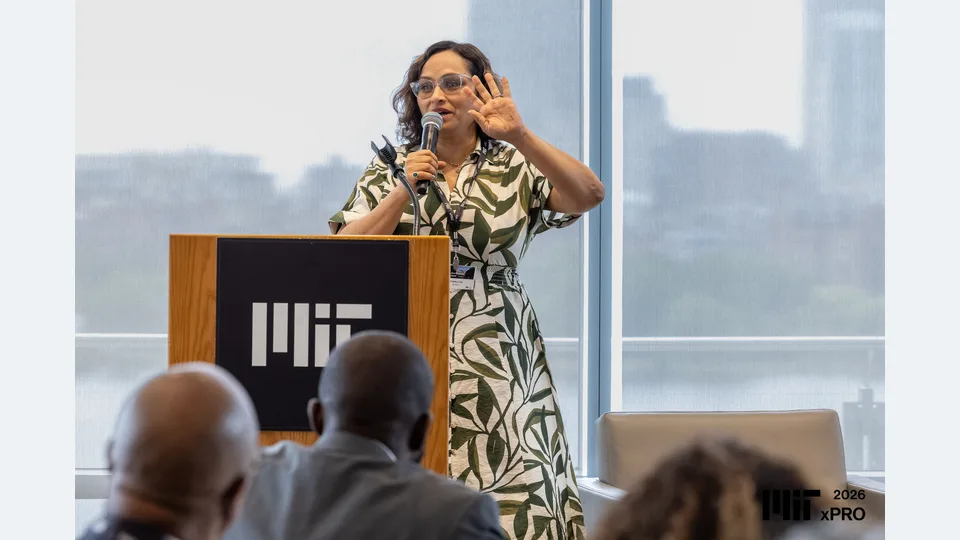
Operational sovereignty gives universities authority over how shared computing resources are allocated, managed and secured. The University of Utah’s Redtail AI factory supercomputer brings advanced computing capabilities to a statewide community. Supporting researchers, students, administrators and external partners through that infrastructure requires more than computing capacity, according to Manish Parashar (pictured), chief AI officer of […] The post University of Utah retains operational sovereignty as Redtail expands research access appeared first on SiliconANGLE.

Intersectional Invariant Learning for Fair Deepfake Detection

arXiv:2610.37881v1 Announce Type: new Abstract: Deepfake detection models achieve high overall accuracy but exhibit large performance disparities across demographic groups, causing some groups to experience substantially higher false-positive rates than others. Existing fairness-aware methods address this by constraining model outputs to equalize group predictions, but do not tackle the underlying feature-level bias. As a result, models may still rely on demographic characteristics, such as skin texture, as indirect cues for detecting manipulated content. To address this problem, we propose Intersectional Invariant Learning (IIL), a framework that improves feature learning rather than only adjusting model outputs. IIL alternates between identifying the most challenging demographic partitio

Timeline and related coverage

Amortized Localized Posterior Inference for Model Calibration with Application to an Ocean Turbulence Closure

arXiv:2610.37731v1 Announce Type: new Abstract: Model discrepancy may prevent a single calibration parameter from reproducing a physical response across the context domain. In addition, uncertainties in observations and contexts affect calibration and must be accounted for and quantified. We construct a family of localized posteriors by weighting observation likelihoods according to their proximity to a target context. Gaussian localization weights incorporate context uncertainty through covariance inflation, with reflection at domain boundaries and an optional correction for uneven context sampling. A conditional normalizing flow approximates the family of posteriors through amortized variational inference. Integrating the localized posteriors under a prescribed context measure gives the

Timeline and related coverage

DistOptimize: Automatic Optimization of Distributed Protocols

arXiv:2610.39017v1 Announce Type: new Abstract: Distributed consensus and consistency protocols are difficult to reason about yet foundational to the cloud; as such, they often undergo a rigorous proof and formal verification process before deployment. The same level of rigor is rarely applied to protocol modifications, which occur frequently in production and threaten to compromise safety. In this paper, we eliminate the risk of safety violations from manual modifications by presenting an automatic optimizer for distributed protocols: DistOptimize. DistOptimize adapts throughput optimizations from academic languages to frameworks used in production, verifying the correctness of the rewrites in Rocq and automating their application through a combination of calibration and ILP-based search

Timeline and related coverage

Frankly Speaking: The Company Election Integrity Keeps in Congressional Communication

arXiv:2610.36187v1 Announce Type: new Abstract: Election integrity is a shared commitment in American politics, but Democrats and Republicans in Congress increasingly mean different things by it. Analyzing 10,420 congressional e-newsletters sent from 2010 to 2025, we examine how the two parties invoke election terms such as ``integrity,'' ``security,'' and ``fraud.'' Using diachronic word embeddings, which track semantic change through how words are used in context, we measure how differently each party uses each term, how much each party shifts, and whether they share nearest semantic neighbors. We show that members of Congress do not need different words to tell different stories about elections. They need only place those same words in different company. Across nearly every term and yea

Timeline and related coverage

No Tokenizer, Still a Gap: Cross-Lingual Fairness of Homoglyph and Invisible-Character Watermarking

arXiv:2610.36432v1 Announce Type: new Abstract: Homoglyph and invisible-character watermarks are edit-based watermarks. Instead of changing how a model generates text, they hide a signal in the text after it is written. They swap some characters for homoglyphs, which look the same, or very similar, but have different Unicode code points, or they insert characters that do not display, all without access to the model that wrote the text. Generation-time watermarks work less well for lower-resourced languages due to how tokenizers split their text. Because they work on individual characters, these watermarks never touch a tokenizer, so we ask whether they escape this gap. Across 40 language varieties in 24 scripts, we measure capacity (the hidden bits each character can carry), how much of it

Timeline and related coverage

AK_QMUL at ArGuard Shared Tasks: A Single Fine-Tuned JAIS for Arabic Harmful-Prompt Detection

arXiv:2610.36360v1 Announce Type: new Abstract: We present AK_QMUL's submissions to the ArGuard-2026 shared tasks on Arabic harmful-prompt detection: a binary safe/unsafe task (B1) and a seven-way harm-domain task (B2). Both submissions use one backbone -- JAIS-6.7B fine-tuned with 4-bit QLoRA and a linear classification head over its last-token representation. For B1 we train a four-way head that factors the label by dialect register {safe, unsafe} x {MSA, other}, we augment the training fold with MSA prompts from AraSafe, and decode with a plain argmax to score safe/unsafe. For B2 we fine-tune the same backbone as a seven-way classifier and average the softmax outputs of five random seeds. Both submissions ranked first on their track, with macro-F1 0.984 on B1 and 0.790 on B2. We report

Timeline and related coverage

Beyond IceBERT: Open-Data ModernBERT Encoders for Icelandic from 12M to 1B Parameters

arXiv:2610.36230v1 Announce Type: new Abstract: IceBERT, the reference encoder for Icelandic, found that a cleaned web crawl is enough to train a strong model and that starting from a multilingual model can help on some tasks. We revisit both findings with the ModernBERT architecture. We train Icelandic encoders from 12M to 1B parameters on 9B tokens of open data, and rerun IceBERT's benchmarks and five newer tasks for 30 encoders under one protocol with confidence intervals. Our 1B model trained from scratch, to our knowledge the first monolingual Icelandic encoder of that size, is significantly better than IceBERT on all eleven tasks; warm-started from the English Ettin encoder of the same shape, it has the best score of all encoders on every task we rank. Because our model shapes match

Timeline and related coverage

Calibrated for Which Policy? Conformal Uncertainty for Fixed World Models Under Intervention

arXiv:2610.35877v1 Announce Type: new Abstract: Changing a deployment policy can invalidate a world model's uncertainty while leaving the physical transition mechanism and predictor unchanged. For one-step prediction, if source and target laws share the conditional mechanism $P(Y|X)=Q(Y|X)$, then the intervention is identified by the pre-outcome change of measure $w(X)=dQ_X/dP_X$. For policy-controlled dynamics this ratio factors into state-occupancy and action-propensity terms. Weighted conformal calibration transports marginal coverage to the target law; with an estimated ratio $\hat w$, $P_Q\{Y \in C_{\hat w}(X)\} \ge 1-\alpha-TV(Q,\hat Q) \ge 1-\alpha-E_P|w-\hat w|$. Population log-loss regret for a source-versus-target domain classifier bounds the same ratio error. If $h$ is its clipp

Timeline and related coverage

Is Token Confidence Just Chain Length? A Signal-Processing Audit of Reasoning Traces

arXiv:2610.36709v1 Announce Type: new Abstract: Reasoning language models answer math problems by writing long chains of thought, and sampling many chains per problem and taking a majority vote raises accuracy at a large cost in generated text. A popular way to cut that cost scores each chain by the model's confidence in each token it writes, where a token is a word or part of a word. The method averages this confidence over a sliding window of 2048 tokens and keeps or stops chains based on the lowest average. We treat the confidence, recorded token by token, as a signal in the sense of audio or radio, and examine the method with standard signal-processing tools such as spectral analysis and statistical tests for detecting a sudden change. We sampled 16 chains for each of 500 problems from

Timeline and related coverage

PRISM: Promoting Sampling Diversity of Large Language Models with Implicit Stochastic Modulation

arXiv:2610.32101v1 Announce Type: new Abstract: Large language models (LLMs) exhibit mode collapse, where their output distribution concentrates on familiar semantic modes. When diversity disappears, repeated sampling becomes semantic repetition rather than discovery, making rare but stronger solutions unlikely to surface and leaving self-evolution and continual learning difficult to sustain. Most remedies intervene only at inference time, shaping sam- ples without making diversity a model capability. We propose PRISM, a training-time framework that internalizes diversity within the model. PRISM combines (i) submodular curation that pairs each prompt with diverse-yet-correct multi-teacher solutions, and (ii) stochastic embedding modulation, which turns special-token perturbations into impl

Timeline and related coverage

EVOLVE: Uncertainty-Aware Multivariate Time Series Anomaly Prediction with Adaptive Prototype Memories

arXiv:2610.32189v1 Announce Type: new Abstract: Unsupervised multivariate time series anomaly prediction (AP) aims to estimate future anomaly risks from current observations, providing early-warning signals for proactive intervention and maintenance in complex systems. Existing unsupervised AP methods follow a perturbation-based paradigm, where predefined or random perturbations are injected into historical windows to simulate abnormal future evolution. However, these methods share perturbations across different variables and contexts, and learn deterministic history-to-future evolution. In reality, anomaly evolution is variable- and context-dependent: the same perturbation may be amplified into abnormal future dynamics in one variable or context, while being absorbed as normal fluctuation

Timeline and related coverage

Linear-Time Context Compression with State-Space Encoding

arXiv:2610.33006v1 Announce Type: new Abstract: Transformer-based large language models (LLMs) impose substantial computation and memory costs as context sizes increase, motivating methods that compress a context into a shorter representation before inference. Existing soft-prompt compression methods typically use the same Transformer backbone as used in the target model, where producing the compressed representation leads to significant latency overheads. This restricts them to the offline setting where context is compressed once and then reused across many queries. We propose the Boa Compressor, a plug-and-play online context compressor built on a Mamba state-space model (SSM) that encodes arbitrary-length context in a single linear-time pass, producing a representation on which we condi

Timeline and related coverage

Compatible Likelihoods for Flow Matching on Manifolds

arXiv:2610.31981v1 Announce Type: new Abstract: On the simplest non-Euclidean manifold, the 1D flat torus, we exhibit a distribution where a recently proposed extension of Riemannian flow matching is globally optimized by a velocity field that pushes samples away from the data distribution. We trace this failure mode to a property we call compatibility; a likelihood-based flow matching objective is compatible if its population minimizer recovers the marginal velocity field induced by the data and coupling. We give a general condition for compatibility, apply it to existing methods, and bound the worst-case error in terms of a residual component vanishing under compatibility. Next, we note that existing compatible objectives put density on velocities that are infeasible on compact manifolds

新闻源配图 · arXiv cs.LG
Timeline and related coverage

Conceptizer: Next-Token Prediction Is Not All You Need

arXiv:2610.33027v1 Announce Type: new Abstract: Next-token prediction (NTP) rewards only the token that occurs next, penalizing every alternative. But natural language often offers many ways to express the same meaning. We introduce Conceptizer, a training framework that extends next-token prediction with a reward for meaning. Conceptizer uses a fixed, model-agnostic vocabulary of ~9K concepts, built from contextual synonyms, as units of meaning alongside tokens as units of text. It maps each next-token distribution to a concept distribution and shares the reward for the target meaning across its possible wordings. This provides a concept-level training signal without adding model parameters. Applied to 3 model families at 1B-8B parameters, Conceptizer achieves the lowest held-out NTP perp

Timeline and related coverage