Skip to content
AI NEWS JOURNAL
AI, IN PERSPECTIVE

Search AI news

Search headlines, summaries and articles to connect the dots.

Newest first

Your Experts Have Partners. There's HOPE for Keeping Them Together

HOPE, a second-order expert pruning method for Mixture-of-Experts (MoE) language models, accounts for pairwise expert interactions by optimizing a quadratic program based on an interaction matrix derived from calibration data. Unlike first-order methods that prune experts independently, HOPE preserves cooperative expert groups, leading to better performance—especially at high pruning rates like 50%. On benchmarks such as SWE-Bench Pro, HOPE outperforms state-of-the-art first-order methods like REAP by up to +6.1%, maintaining model quality while significantly reducing memory footprint. The method requires only a single calibration pass and efficient quadratic programming, with negligible overhead. It has been validated on Qwen3.5 and GLM-4.5 models, showing consistent improvements across diverse tasks and calibration sets.

A Night at the LLM Zoo: Data Conditioned Flow Matching for Generating Pretrained LLM Weights

arXiv:2611.07103v1 Announce Type: new Abstract: A challenge to Weight Space Learning as it expands from task specific and vision models to Large Language Models (LLMs) is the absence of a well curated and analyzed LLM population. To address this, we train such a model zoo for application to Weight Space Generation by systematically varying the data mixture composition between web text, books, mathematics, coding, and French across populations of 51M, 124M, and 355M parameter GPT-2 Models, each tier with count N = 100. We analyze these populations by cosine similarity, functional diversity, Leave-One-Mixture-Out modeling, and variance decomposition. We show that the zoo contains diverse models whose variation is structured by training mixture composition. We embed the training mixture composition to condition a Flow Matching model of complete pretrained LLM weights in Gram-PCA compressed weight space. By demonstrating zero-shot generalization to held out mixtures, measuring Continuous Ranked Probability Score skill, as well as finding minimal changes in downstream test-set perplexity and general capability benchmark scores, we show that our generator generalizes on the simplex of data mixtures to produce models that perform similarly to those in the zoo ex nihilo. Finally, we produce all source code and artifacts to support the continued expansion of Weight Space Learning and Generation into the LLM domain.

Gemini Omni 1.2 Flash: Fast and cost-effective with longer clips

Google DeepMind has launched Gemini Omni 1.2 Flash, introducing native 15-second video generation, improved reference adherence, stronger consistency across frames, multi-turn conversational editing, more natural speech, and cinematic camera movements. The model is now generally available via the Gemini API and Gemini for business, priced at $0.07 per second for 720p video—30% lower than its predecessor. It supports scalable workflows, including draft generation at lower resolutions, iterative edits, and upscaling to 1080p or 4K. Use cases include product explainers, social ads, virtual try-ons, and branded content, with applications across Google AI Studio, Google Cloud, Google Vids, Flow, the Gemini app, and Google Ads.

New NVIDIA Cosmos 3 Open Models for Interactive World Simulation

NVIDIA has introduced four new open-weight checkpoints for its Cosmos 3 model family—Cosmos3-Nano-Transfer-Auto, Cosmos3-Nano-Sim-Auto, Cosmos3-Nano-Sim-Transfer, and Cosmos3-Nano-Sim-Bimanual—enabling interactive world simulation and multi-sensor, multi-view driving scene generation. Each model is a post-trained variant of Cosmos 3 Nano with 16B trainable parameters and is based on OpenMDW1.1, allowing commercial and non-commercial use. The checkpoints support applications in robotics and autonomous driving by generating synchronized camera and LiDAR data, enabling streaming simulations, translating simulator controls into photorealistic video, and predicting visual outcomes from robot actions. They are designed to be adapted using custom data and training recipes, with support for offline data generation, causal distillation, and interactive rollouts. Resources include technical reports, demos, and notebooks for inference and adaptation.

A thousand fewer paths to root

OpenAI built an autonomous pipeline that found, validated, and generated patches for 948 local privilege-escalation vulnerabilities in the Linux kernel.

Say Less, Mean Better: Training-Free Verbosity Control for Language Models

arXiv:2611.04107v1 Announce Type: new Abstract: Large language models (LLMs) often generate responses longer than necessary, increasing inference latency and computational cost. While prompting can encourage conciseness, controlling output length without compromising response completeness remains challenging. Aggressive early stopping can reduce generation costs but risks terminating responses prematurely. We introduce MinimalLM, a training-free framework for reliable verbosity control that combines uncertainty-aware, length-dependent stop-token adjustment with structural completeness guardrails. MinimalLM separates the decision of when to stop from whether stopping is structurally appropriate, coordinating response-level instructions, decoding-time intervention, and completion checks without modifying model parameters or requiring auxiliary models. We evaluate MinimalLM across three open-source LLMs and 330 questions, producing 5,940 responses across baseline and ablation configurations. MinimalLM reduces generated tokens by 47.6%, accelerates individual responses by 19-68%, and eliminates structurally truncated outputs in the primary evaluation. Despite substantial token savings, it achieves an average quality score of 8.04/10, compared with 8.42/10 for unmodified models and 6.46/10 for length-matched truncation. Evaluations across diverse subject domains (such as healthcare, programming, law, and science) demonstrate robust efficiency gains, while ablations establish the complementary roles of decoding control and completeness constraints. Our findings highlight that efficient generation requires more than producing fewer tokens: it requires controlling when generation ends while preserving response integrity. MinimalLM offers a lightweight, training-free approach toward this goal.

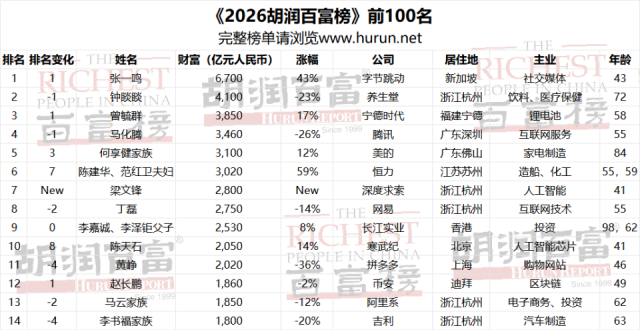
Anthropic files its prospectus, with违规 users contributing at least 5% of its revenue; the Hurun Rich List’s top 100 includes AI heavyweights such as Liang Wenfeng | What’s happening in the AI world again?

1. GPT-6.1 Terra, better suited for workers, has launched, with API prices cut in half and faster computer operations On October 26, OpenAI released GPT-6.1 Terra, focusing on enhancing visual comprehension, computer operations, factual accuracy, and programming capabilities, ....

Anthropic发招股书,违规用户贡献至少5%收入;胡润富豪榜百强名单,梁文锋等AI大佬纷纷上榜 | AI圈又发生什么了
Timeline and related coverage

From Large Language Models to World Models

Yan Deli, a senior expert at Tencent: LLMs are probabilistic models. They do not truly understand language; rather, they predict the next token (Next Token Prediction). Essentially, they are monotonous “word-chain” machines—moving forward one step at a time without retracing their path. At their core, LLMs are probabilistic models that learn, from statistical co-occurrence patterns, “what often appears alongside what,” and output “this is usually the case,” without grasping “why it is so.”...

从大语言模型迈向世界模型
Timeline and related coverage

MiniMax M3.1Flash release sparks “questionable results” concerns: high scores on old questions, failure on new ones, and an illusion rate as high as 92.8%

On October 19, 2026, MiniMax released its low-cost large model, M3.1Flash, which scored 42 points in comprehensive evaluations and boasts a 70% reduction in cost compared to the previous generation. However, it immediately faced accusations of “cheating on exam questions”: on AA’s publicly available past papers, it nearly achieved a perfect score, yet continued to produce the original answers even after the question stems were rewritten. Reviewers such as Cat Boss and Binkg pointed out that its performance on old and new questions is sharply divided, token consumption is abnormal, and its hallucination rate in knowledge tests reaches as high as 92.8%. On October 23, MiniMax open-sourced the model weights for independent verification, but the mechanisms behind its question-identification capabilities and the reasons for discrepancies in Chinese–English responses remain unresolved.

Why it matters:This report is based on multi‑party empirical testing (including Binkg’s re‑title experiment, the author’s replication, and a dual evaluation comparison between AA and Plotly‑Mila), verifiable data (token counts, prices, accuracy/hallucination rates), and contradictions in model behavior (English errors vs. Chinese correctness, stable performance on old tasks vs. collapse on new ones). It systematically lays out the core symptoms of the current credibility crisis in large‑model evaluations: high scores do not necessarily equate to strong generalization, and low‑price advantages create tension with the reality of model capabilities. The information source is a deep investigation authorized for publication by Titanium Media, complete with original test procedures, screenshot evidence, and timestamps, offering both timeliness and rich detail.

Timeline and related coverage

Kimi releases K3.1 Pro, offering more features at a lower price to challenge Opus 5.5.

Author | Yu Hang Yuan Editor | Jing Yu On the morning of October 23, Kimi officially posted a 24-second video on X and its Video Account. The scene shows a retro‑style vintage computer, with Kimi Code running on the screen and lines of Three.js code being typed into the terminal, generating a complex 3D scene. Keen-eyed netizens quickly spotted the answer in the model bar at the top left: “Model: Kimi K3.1.” Kimi’s official teaser video for K3.1 | Image source: X @Kimi_Moonshot Using an antiquated machine to run some of today’s most cutting‑edge 3D code—this stark contrast itself conveys what Moonshot AI is trying to say. A dozen hours later, just after midnight on October 24, right on Programmer’s Day, Kimi K3.1 Pro officially launched, accompanied by a Highspeed version that’s two to three times faster. The company promises that the full model weights will be released before November 4. More than three months have passed since the previous generation, K3, was unveiled. In those three months, Moonshot AI has experienced more than most companies see in an entire year. 01 “More for the same price”—what’s new in 0.1? First, let’s clarify what K3.1 Pro is. It isn’t an entirely new model. Moonshot AI explicitly states that K3.1 Pro is a post‑training variant of K3; the underlying architecture remains unchanged—still a hybrid expert architecture with 2.8 trillion total parameters and 104 billion activation parameters, still featuring a 1 million‑token context window, and still natively supporting image and video inputs. What has changed is the post‑training phase. According to the company, they’ve invested “significantly increased post‑training compute power,” conducting large‑scale joint reinforcement learning across hundreds of downstream tasks. To support this, they completely reengineered the underlying infrastructure—including the reinforcement learning framework, sandbox environment, and long‑context reasoning capabilities. In essence, the same brain has been retrained from scratch on how to perform its tasks. The results are reflected in benchmark scores. On Terminal‑Bench 4.0, which evaluates coding agents, K3.1 Pro achieved 65.7%, surpassing GPT‑6 Astra’s 58.2% and falling short of Claude Opus’s 66.4% by less than one percentage point. As for the previous generation, K3…

Timeline and related coverage

Tampered ML: Evaluating LLM Judgment of Machine Learning Research

arXiv:2610.32114v1 Announce Type: new Abstract: One approach to accelerating progress on AI alignment is to automate parts of alignment research itself. Doing so requires systems that can perform reliably on hard-to-supervise research tasks, including identifying flaws in research proposals and evaluating whether a proposed experiment supports its intended claim. To evaluate this capability, we introduce Tampered ML, a benchmark of 1,858 item-pairs, each consisting of an experiment proposal reconstructed from a published machine learning paper and a minimally edited counterfactual that introduces a targeted methodological flaw. Models must identify the more methodologically sound proposal in both presentation orders. A human validation study on a stratified sample estimates that 86% of ite

Timeline and related coverage

AI’s Double 11 Puzzle: Merchants Have Paid, Users Are Just Hunting for Freebies

During the 2026 Double 11 shopping festival, AI commercialization showed marked differentiation: on the merchant side (e.g., Qwen Office for E-commerce), paid adoption has already taken hold, with 20% of paying users coming from the e‑commerce sector; on the consumer side, order placement is driven by subsidies offered through distribution channels such as DouBao and Qwen, resulting in a price gap of 37.5%, yet user trust remains low (only 16.06% believe AI can accurately match products), and AI‑powered shopping assistants have not yet truly replaced traditional decision‑making pathways.

Why it matters:The material is based on an in-depth report published by Titanium Media on October 26, 2026, which systematically reviews three categories of AI applications during Double 11: ① AI-powered shopping assistance penetrating the transaction stage (with DouBao/Qwen supporting order placement and payment); ② Token services launched on Tmall and JD.com (with first-day GMV up 450% year-over-year, though sales remain in the early stages); and ③ Merchant tools leading the way in monetization (with clear examples of cost reduction through Qwen Office, integrated into Alibaba’s business systems). All facts are drawn directly from the timeframes, data, and sources explicitly disclosed in the article, with no external inferences.

Timeline and related coverage

NVIDIA Cosmos Platform Upgrade: New Toolchain for Training, Evaluating, and Deploying World Models

NVIDIA has expanded the Cosmos platform by introducing the Cosmos Data Factory blueprint, the Cosmos Framework training optimization tool, and the Cosmos 3 NIM microservice, supporting multimodal data generation, adaptation to open-source world models (such as GR00T and QWEN), and low-latency inference; real-world applications have already been deployed by Porsche, ANYbotics, Ultralytics, ADNOC, and others.

Timeline and related coverage

NVIDIA releases a portfolio of open-source models across multiple domains, driving the development of sovereign AI in European industries.

NVIDIA announced the expansion of its open-source model family to encompass areas such as language, robotics, bioinformatics, and quantum computing, unveiling the Nemotron 3.5 series, the Kumo structured-data model, the Cosmos world model, the Alpamayo 2 Edge autonomous-driving model, the BioNeMo RFD4-Proteina protein-design model, and the Ising quantum-computing model. All these models are now available to developers and enterprises, with access to weights and tools, supporting localized customization and independent deployment.

Timeline and related coverage

NVIDIA releases Kumo Relational: the first foundation model for structured data that outperforms supervised learning without any training.

NVIDIA has launched Kumo Relational, a pre-trained relational foundation model that can perform predictive tasks—such as churn prediction, fraud detection, and demand forecasting—directly on enterprise‑grade relational databases, without the need for task fine-tuning, feature engineering, or table flattening. In 41 benchmark tests spanning 15 databases, it outperformed supervised models like XGBoost across the board, and on the SAP SALT enterprise benchmark, its MRR metric surpassed AutoGluon by 8%. The model supports databases with up to 500 billion rows and enables zero‑code predictive queries via Predictive Query Language (PQL).

Timeline and related coverage