Skip to content
AI NEWS JOURNAL
AI, IN PERSPECTIVE

Search AI news

Search headlines, summaries and articles to connect the dots.

Newest first

Your Experts Have Partners. There's HOPE for Keeping Them Together

HOPE, a second-order expert pruning method for Mixture-of-Experts (MoE) language models, accounts for pairwise expert interactions by optimizing a quadratic program based on an interaction matrix derived from calibration data. Unlike first-order methods that prune experts independently, HOPE preserves cooperative expert groups, leading to better performance—especially at high pruning rates like 50%. On benchmarks such as SWE-Bench Pro, HOPE outperforms state-of-the-art first-order methods like REAP by up to +6.1%, maintaining model quality while significantly reducing memory footprint. The method requires only a single calibration pass and efficient quadratic programming, with negligible overhead. It has been validated on Qwen3.5 and GLM-4.5 models, showing consistent improvements across diverse tasks and calibration sets.

Zyphra ZYFA: FP8 FlashAttention for AMD MI355X, Up to 1.76x Faster

Zyphra released ZYFA, open-source FP8 and BF16 prefill attention kernels for AMD Instinct MI355X. On real model activations, its FP8 kernels run 1.16-1.76x faster than AMD’s AITER, with 62-78% lower error at head dimension 128. The post Zyphra ZYFA: FP8 FlashAttention for AMD MI355X, Up to 1.76x Faster appeared first on MarkTechPost.

A Closer Look at Phonon TTS. Launching High-Quality On-Device Speech That Tops the Benchmarks.

Phonon, a small text-to-speech model that runs entirely on the user's device without requiring internet access, has been released with support for English, French, German, Spanish, and Portuguese. Built on the Pocket TTS lineage using flow matching, Phonon achieves high-quality audio in compact sizes (65 MB and 75 MB), with the 31m version licensed under Apache 2.0 for commercial use. It excels in intelligibility and speed, ranking first in German and Spanish on Hugging Face's Open TTS Leaderboard and leading in CPU streaming benchmarks. The model supports voice cloning, custom voices via Gradium Studio, and integrates with Hugging Face Transformers. It is available in multiple formats and backends, including WebAssembly, GPU, and NPU, enabling deployment across phones, laptops, single-board computers, and browsers. Over 200,000 downloads were recorded in its first two weeks, with active developer adoption through tools like ExecuTorch, Micdrop, and Spaces. Future developments include support for additional languages, smaller models, and custom vocabulary fine-tuning.

Dharma Field Extractor: Any Document In, Structured Fields in JSON Out

The Dharma Field Extractor, a 2-billion-parameter model, specializes in extracting specific fields from diverse document types—such as invoices, IDs, and medical forms—into structured JSON format. It outperforms general-purpose frontier LLMs in accuracy and reduces cost by up to 147 times when self-hosted, demonstrating that domain-specialized small models can surpass large general-purpose models on well-defined tasks. The model supports both open extraction (detecting fields without a schema) and schema-directed extraction (returning exact field names and types), with training data spanning English, Brazilian Portuguese, and multilingual documents. Benchmarks show superior F1 scores and valid JSON output across real-world datasets like SROIE and FUNSD, reinforcing the thesis that specialization beats scale for enterprise document processing.

Nvidia releases all-in-one adaptable Nemotron 3.5 audio transcription and translation model

Nvidia Corp. today released a leaderboard-winning open artificial intelligence model for multilingual audio transcription and translation, along with an open data pipeline for fine-tuning Nemotron 3.5 Transcribe. Traditional transcription AI models follow a workflow that detects speech, transcribes it, identifies and labels different speakers, then answers questions about the transcription. Transcribe does all of this […] The post Nvidia releases all-in-one adaptable Nemotron 3.5 audio transcription and translation model appeared first on SiliconANGLE.

Timeline and related coverage

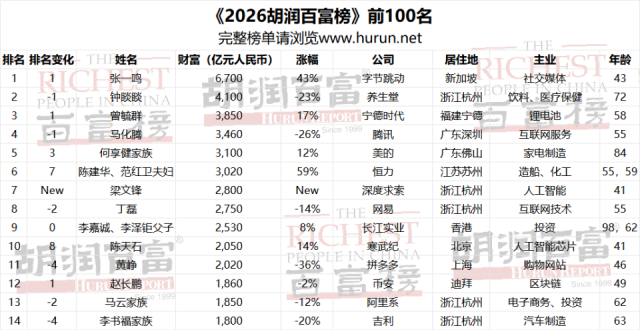
Anthropic files its prospectus, with违规 users contributing at least 5% of its revenue; the Hurun Rich List’s top 100 includes AI heavyweights such as Liang Wenfeng | What’s happening in the AI world again?

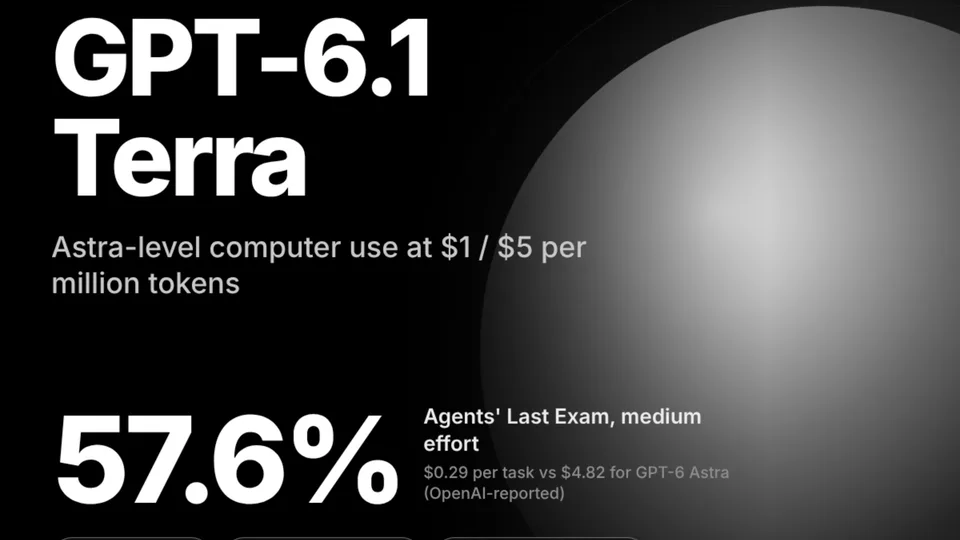
1. GPT-6.1 Terra, better suited for workers, has launched, with API prices cut in half and faster computer operations On October 26, OpenAI released GPT-6.1 Terra, focusing on enhancing visual comprehension, computer operations, factual accuracy, and programming capabilities, ....

Anthropic发招股书,违规用户贡献至少5%收入;胡润富豪榜百强名单,梁文锋等AI大佬纷纷上榜 | AI圈又发生什么了
Timeline and related coverage

Hugging Face Releases Carbon-X, a 14B Open DNA Language Model that Brings DNA and Natural Language Together for the First Time

Hugging Face released Carbon-X, an open 14.8B DNA language model built on Qwen3-14B. It reads raw DNA in chat, answers in English, and averages 66.7% across 5 DNA benchmarks under Apache 2.0. The post Hugging Face Releases Carbon-X, a 14B Open DNA Language Model that Brings DNA and Natural Language Together for the First Time appeared first on MarkTechPost.

Hugging Face Releases Carbon-X, a 14B Open DNA Language Model that Brings DNA and Natural Language Together for the First Time
Timeline and related coverage

NVIDIA Cosmos Platform Upgrade: New Toolchain for Training, Evaluating, and Deploying World Models

NVIDIA has expanded the Cosmos platform by introducing the Cosmos Data Factory blueprint, the Cosmos Framework training optimization tool, and the Cosmos 3 NIM microservice, supporting multimodal data generation, adaptation to open-source world models (such as GR00T and QWEN), and low-latency inference; real-world applications have already been deployed by Porsche, ANYbotics, Ultralytics, ADNOC, and others.

Timeline and related coverage