
Measuring how AI agents handle everyday wet-lab science
OpenAI introduces BioBasicsBench, a 100-task benchmark measuring how well AI agents interpret raw experimental data and handle everyday wet-lab science.
Search headlines, summaries and articles to connect the dots.
OpenAI introduces BioBasicsBench, a 100-task benchmark measuring how well AI agents interpret raw experimental data and handle everyday wet-lab science.
NVIDIA Nemotron 3.5 Transcribe and Granary v2: Intelligent Multilingual Transcription You Can Prompt and Adapt
Mirendil released Fern 0.1, its first model, pretrained from scratch with a 10M-token context window. It targets agentic AI R&D work, scores 100% on RULER single needle at 10M, but trails frontier models on agentic coding. The post Mirendil Launches Fern 0.1, Its First Model, With 10M-Token Context appeared first on MarkTechPost.
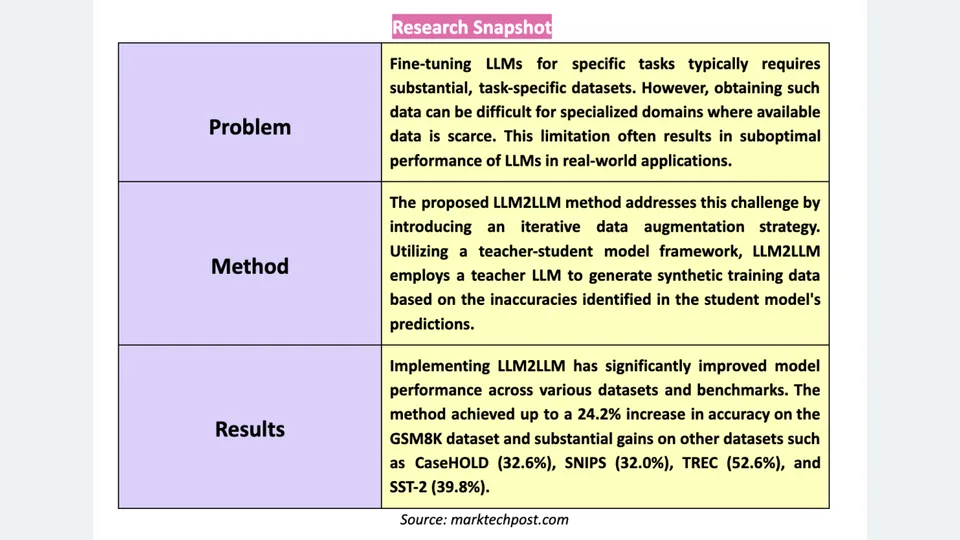
Baidu has released Unlimited OCR 2, an MIT-licensed 3B OCR model that parses hundred-page documents in one request. Its SR-SWA attention keeps per-step decoding cost nearly flat, scoring 77.1 on MarathonDocBench The post Baidu Open-Sources Unlimited OCR 2 for Hundred-Page Document Parsing appeared first on MarkTechPost.

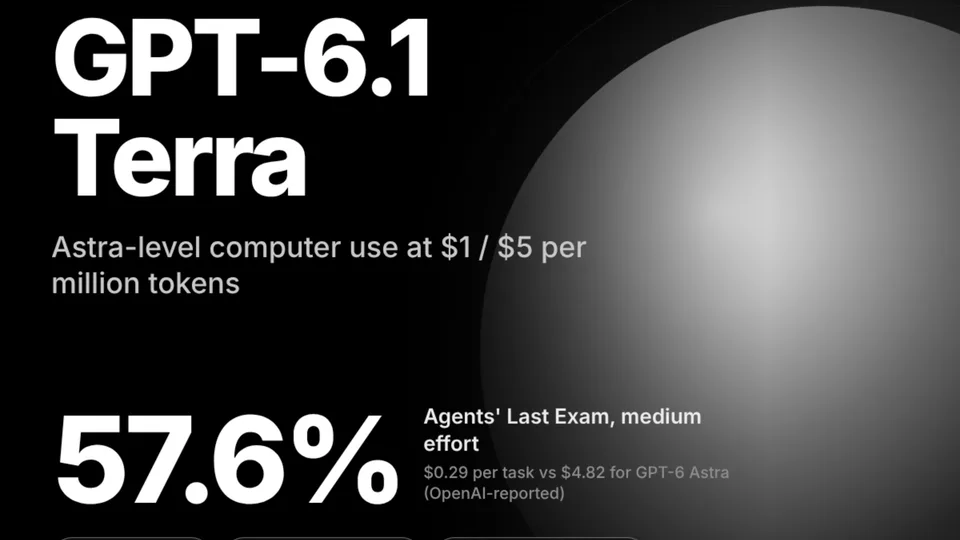
OpenAI released GPT-6.1 Terra, a fast computer-use and vision model priced at $1/$5 per million tokens. It matches GPT-6 Astra’s medium-effort Agents’ Last Exam score at $0.29 per task versus $4.82. The post OpenAI Launches GPT-6.1 Terra, Halving GPT-6.1 Sol’s API Price for Agent Work appeared first on MarkTechPost.
arXiv:2610.32215v1 Announce Type: new Abstract: The growing computational power of modern GPU data centers has let a few industrial giants train and deploy large language models (LLMs) on massive amounts of data. Yet the sheer scale of these models and their training data makes centralized development increasingly hard to sustain, and at the same time shuts out smaller institutions that hold relevant private data but lack comparable infrastructure. In this paper, we organize our positions on distributed LLM training around the pretraining and fine-tuning paradigms, covering federated learning, split learning, and decentralized approaches, and we assess their readiness for geo-distributed settings with heterogeneous hardware and unreliable connectivity. We then present a {\em unified} syste

Redesigning source control at Anthropic Interesting piece from Anthropic describing why and how they built their own custom alternative to Git, based on the dramatic increase in rate of changes to their code after the past six months. In May 2026, Anthropic averaged around 2,500 code changes merged per day; as of September, we merged over 30,000 per day. They included a chart showing those changes. I had Claude modify their chart (code here) to add markers for the public releases of each of their models in 2026: This shows public release dates, not the date when models became available for Anthropic's internal use. My guess is that the introduction of Fable/Mythos class models is a key factor in the increased coding velocity. "Antique" is their new code review system. The source control sy
QWEN CHAT API DEMO DISCORD It is widely recognized that continuously scaling both data size and model size can lead to significant improvements in model intelligence. However, the research and industry community has limited experience in effectively scaling extremely large models, whether they are dense or Mixture-of-Expert (MoE) models. Many critical details regarding this scaling process were only disclosed with the recent release of DeepSeek V3. Concurrently, we are developing Qwen2.