
How Data Culture measured its way from zero trust to a shippable AI analytics agent
Data Culture built a 3-step evaluation framework that took one AI analytics deployment from 0% accuracy to 94.7%.

Search headlines, summaries and articles to connect the dots.
Data Culture built a 3-step evaluation framework that took one AI analytics deployment from 0% accuracy to 94.7%.
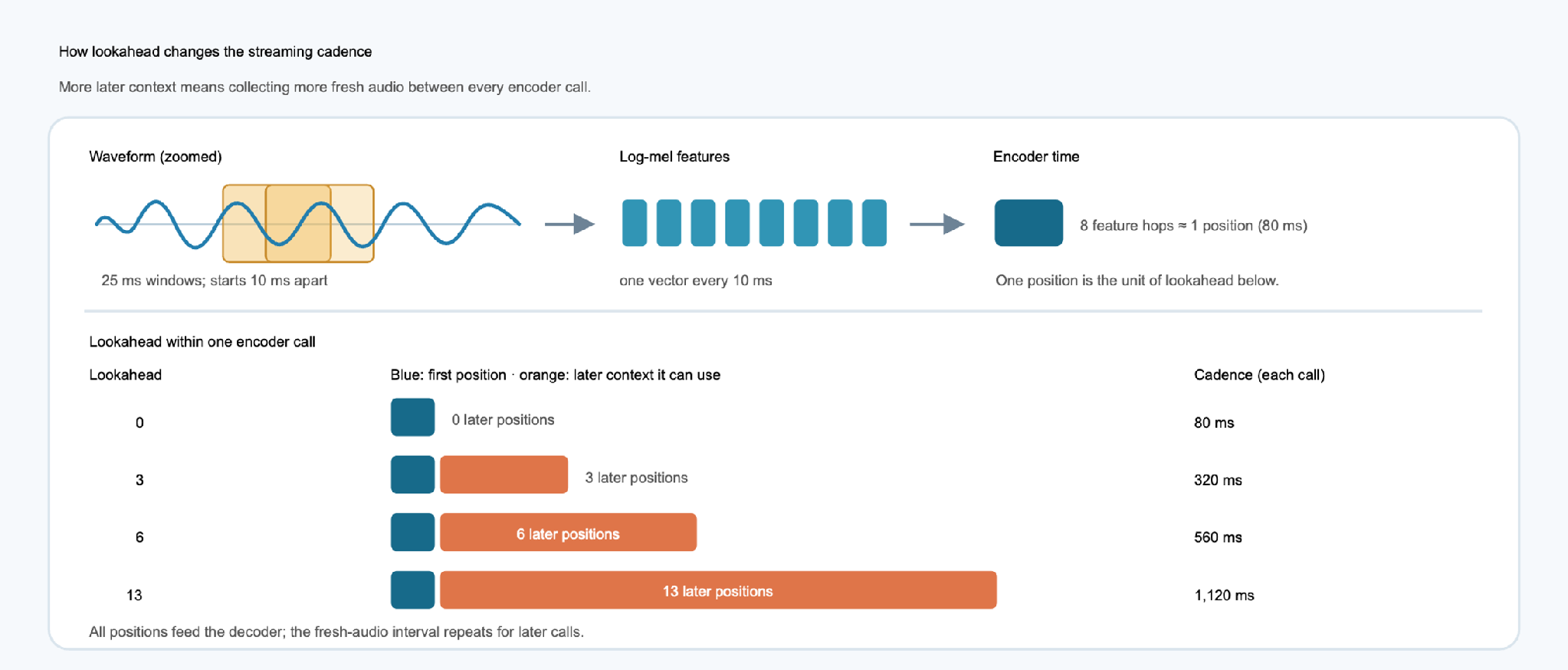
When you’re speaking to a device, you expect text to appear as you talk. That makes streaming automatic speech recognition (ASR) a different challenge from batch transcription, where the model... The post Optimizing Streaming Speech Recognition on Arm® Edge Devices with ExecuTorch appeared first on PyTorch.

Nace AI has released Drex for Search, bringing its Drex decision models to document search for AI agents. Nace reports 92.05% on BrowseComp-Plus with 12.6 search calls, and fewer agent turns on OfficeQA Pro. The post Nace AI Releases Drex for Search for AI Agents: 92.05% on BrowseComp-Plus With 12.6 Search Calls appeared first on MarkTechPost.
arXiv:2610.31946v1 Announce Type: new Abstract: Three students answered the same exam prompt by hand: "What is happiness? Are you happy?" Their ages, recorded at collection, are 17, 28, and 45. The 17-year-old's answer is hedged and formally phrased. Asked to match each answer to an age and gender label, most frontier language models confidently assign it to an adult. This paper reports a structured case study of that failure across six models: Claude Fable 5, Gemini 3.1 Pro, GPT-5.6 Sol, Grok 4.5, GPT-4o (2024), and DeepSeek V4. We ran 1,081 API sessions and scored 3,225 responses across six experimental conditions that manipulate framing, disclosure format, and audience-awareness instruction. Three of six models perform at or near chance (1/3) on the matching task while reporting 73-88%
arXiv:2610.32114v1 Announce Type: new Abstract: One approach to accelerating progress on AI alignment is to automate parts of alignment research itself. Doing so requires systems that can perform reliably on hard-to-supervise research tasks, including identifying flaws in research proposals and evaluating whether a proposed experiment supports its intended claim. To evaluate this capability, we introduce Tampered ML, a benchmark of 1,858 item-pairs, each consisting of an experiment proposal reconstructed from a published machine learning paper and a minimally edited counterfactual that introduces a targeted methodological flaw. Models must identify the more methodologically sound proposal in both presentation orders. A human validation study on a stratified sample estimates that 86% of ite
On October 26, 2026, arXiv published the paper arXiv:2610.31838v1, introducing Sense-Aligned Grounding Evaluation (SAGE)—a unified 10-candidate image-selection benchmark—along with the training‑agnostic Gloss-Augmented Reasoning (GAR) framework, designed for cross‑noun, verb, and entity‑centered multimodal grounding evaluation.

Why it matters:This study is the first to unify three types of tasks—VWSD, VerSe, and WikiDiverse—under a term-centric grounded evaluation protocol, introducing a mechanism for identifying hard negative samples and context‑exchange diagnostics. Empirical results demonstrate that the synergistic effect of definition enhancement and constraint‑guided reasoning can significantly improve the Hits@1 metric (from 65.90 to 71.22), thereby providing a more fine-grained, interpretable new evaluation paradigm for multimodal semantic alignment.
arXiv:2610.31918v1 Announce Type: new Abstract: Distilling interactive LLM agents requires choosing between teacher-generated demonstrations and student-generated experience, corresponding broadly to off-policy and on-policy distillation. While both have proven effective, we argue that this distinction is inherently hierarchical: the policy that induces an interaction history need not be the same as the policy that generates the token prefix of the current action. We introduce a hierarchical agent distillation framework that formalizes these two levels of on-policiness and enables explicit control over their pairing, mixture proportions, and training schedule. We study this problem through self-distillation, where a frozen teacher has access to task guidance unavailable to the student, and

arXiv:2610.31728v1 Announce Type: new Abstract: Muon has become a popular optimizer for large language model training, yet its theoretical foundations remain poorly understood. In this work, we study how gradient noise geometry shapes Muon's preconditioning benefits. We first show, theoretically and empirically, that under the classical isotropic noise assumption, Muon offers no acceleration beyond a rescaling of the learning rate. This motivates us to investigate structured noise arising from mini-batch sampling in associative memory with heterogeneous task frequencies. We establish an exact balancing threshold for two tasks and extend the analysis to multiple tasks, revealing how task coverage and gradient reliability jointly shape learning. Our analysis shows that Muon can soften the de
arXiv:2610.32046v1 Announce Type: new Abstract: Recent \emph{test-time training} (TTT) frameworks have enabled open-weight large language models (LLMs) to outperform inference-only frameworks powered by frontier models on scientific discovery tasks. However, TTT introduces additional computational cost for online weight updates during the discovery process, making computational efficiency an important consideration when scaling to larger models. This motivates us to explore an efficient \emph{test-time adaptation} method for scientific discovery. We introduce \emph{Test-Time Memory Evolution} (TTME), a plug-and-play test-time adaptation method, as an alternative to TTT. TTME continually updates the external memory by distilling the experience to guide subsequent discovery without updating
arXiv:2610.32215v1 Announce Type: new Abstract: The growing computational power of modern GPU data centers has let a few industrial giants train and deploy large language models (LLMs) on massive amounts of data. Yet the sheer scale of these models and their training data makes centralized development increasingly hard to sustain, and at the same time shuts out smaller institutions that hold relevant private data but lack comparable infrastructure. In this paper, we organize our positions on distributed LLM training around the pretraining and fine-tuning paradigms, covering federated learning, split learning, and decentralized approaches, and we assess their readiness for geo-distributed settings with heterogeneous hardware and unreliable connectivity. We then present a {\em unified} syste
Hugging Face released Carbon-X, an open 14.8B DNA language model built on Qwen3-14B. It reads raw DNA in chat, answers in English, and averages 66.7% across 5 DNA benchmarks under Apache 2.0. The post Hugging Face Releases Carbon-X, a 14B Open DNA Language Model that Brings DNA and Natural Language Together for the First Time appeared first on MarkTechPost.

arXiv:2610.30355v1 Announce Type: new Abstract: Hallucinated citations make it harder to trace sources and verify the evidence behind scientific claims. Detecting them is difficult because bibliographic records can be incomplete or differ across source types and publication versions. A plausible match alone neither validates the citation nor establishes its underlying source. We introduce CiteResolve, a benchmark of 423 real-world hallucinated citations annotated for source recoverability. We further propose CiteAnchor, a source-aware grounding framework that adapts retrieval and field-level verification to each source type and separately determines citation validity and whether a unique source can be recovered. On an existing detection benchmark, CiteAnchor achieves 0.841 F1 with GPT-5.6
The paper, published on October 24, 2026, on arXiv (ID 2610.30900v1), introduces a new evaluation metric called “Respondent Coverage Gap” (RCG) to assess the extent to which synthetic survey respondents generated by large language models (LLMs) cover the full response-profile space of real human respondents.
Why it matters:Existing evaluation methods focus solely on the distribution of individual item responses or inter-item correlations, failing to detect whether LLM-generated responses replicate answer combinations that actually exist in the real population. RCG is the first to quantify coverage gaps by analyzing the full response profile, and empirical evidence from two U.S. social survey datasets reveals that all tested LLMs exhibit significant undercoverage of certain population groups, performing worse than both a simple marginal sampling baseline and a Gaussian copula model.
On October 24, 2026, arXiv published a research paper titled “ReflectPO: Reflection-Guided Policy Optimization for Long-Horizon LLM Agents” (ID 2610.30933v1), introducing a reinforcement learning framework called ReflectPO, designed to enhance the autonomous error-recovery capabilities of tool-augmented large language model agents in complex, multi-step, state-dependent tasks.
Why it matters:This paper is a cutting-edge AI study recently published, focusing on a key bottleneck in the real-world deployment of LLM-based agents: the cumulative effect of early errors in long‑term tasks. Its proposed dual-component design—Reflection‑Guided Sampling and Tree‑Structured Credit Assignment—features methodological innovation and empirically outperforms multiple baselines across two benchmarking scenarios, making it a valuable technical reference.
NVIDIA has released the Earth-2 open-source AI model family for Europe, including the region-specific nowcasting model StormScope EU, and is collaborating with organizations such as AXA, Vaisala Xweather, the University of Manchester, and TotalEnergies to conduct real-world validation, covering tasks like storm risk assessment, air quality modeling, solar power generation forecasting, and radar terrain inversion.
Walmart has officially launched Agent Gateway (an AI agent gateway) along with its accompanying Agent Profiles feature, enabling authorized AI agents—such as ChatGPT, Gemini, Meta Muse, and others—to perform searches and place orders on behalf of users across Walmart and Sam’s Club platforms. User control over agent activities is ensured through mechanisms like independent account configuration, transaction approvals, and spending limits. This move stands in stark contrast to Amazon’s recent ban on AI‑powered shopping agents.
Release: llm-gemini 0.35 I added support to llm-gemini for the new Gemini 4 Argon model, made available today via the Gemini API and for customers of their $100/month subscription plan. Here are the low, medium and high pelicans. As expected, they are all excellent: Gemini has a track record of producing great SVGs, and are the only lab where I know their staff have invested in SVG specifically (and who have boasted about their pelicans before.) Here's the "high" illustration, which cost me 17.166 cents: The pricing is interesting. At launch, Argon is $2/million input and $10/million output - the same price as GPT-6 Sol, half the price of Claude Opus 5.5 and 1/5th the price of Claude Fable 5.1 and GPT-6 Astra. But on December 1st Argon is set to double in price - so it will be the same pri
UST is bringing Claude to physical AI
Tech Report HuggingFace ModelScope Qwen Chat HuggingFace Demo ModelScope Demo DISCORD Introduction Two months after upgrading Qwen2.5-Turbo to support context length up to one million tokens, we are back with the open-source Qwen2.5-1M models and the corresponding inference framework support. Here’s what you can expect from this release: Opensource Models: We’re releasing two new checkpoints, Qwen2.5-7B-Instruct-1M and Qwen2.5-14B-Instruct-1M, marking the first time we’ve upgraded our opensource Qwen models to handle 1M-token contexts.
GITHUB HUGGING FACE MODELSCOPE DISCORD Introduction In recent years, Large Language Models (LLMs) have made remarkable advances in mathematical reasoning, yet they can make mistakes, such as miscalculations or logical errors, leading to wrong conclusions. Moreover, even when achieving correct final answers, these powerful models can still regularly make up plausible reasoning steps, where the final answers build upon flawed calculations or derivations, which undermine the reliability and trustworthiness of LLMs’ reasoning processes.