Skip to content
AI NEWS JOURNAL
AI, IN PERSPECTIVE

Search AI news

Search headlines, summaries and articles to connect the dots.

Newest first

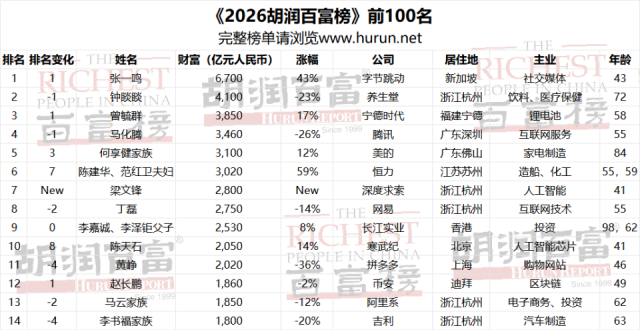
Anthropic files its prospectus, with违规 users contributing at least 5% of its revenue; the Hurun Rich List’s top 100 includes AI heavyweights such as Liang Wenfeng | What’s happening in the AI world again?

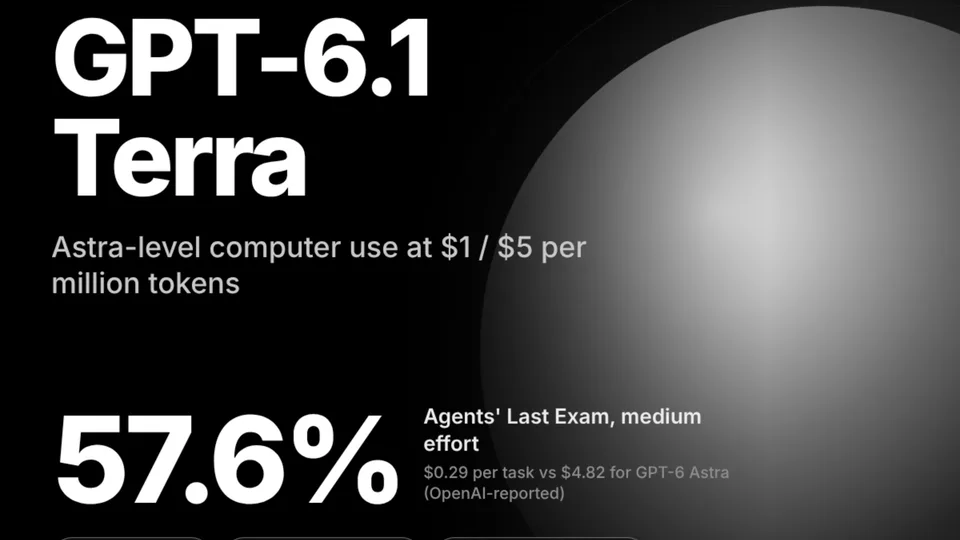
1. GPT-6.1 Terra, better suited for workers, has launched, with API prices cut in half and faster computer operations On October 26, OpenAI released GPT-6.1 Terra, focusing on enhancing visual comprehension, computer operations, factual accuracy, and programming capabilities, ....

Anthropic发招股书,违规用户贡献至少5%收入;胡润富豪榜百强名单,梁文锋等AI大佬纷纷上榜 | AI圈又发生什么了
Timeline and related coverage

Hugging Face Releases Carbon-X, a 14B Open DNA Language Model that Brings DNA and Natural Language Together for the First Time

Hugging Face released Carbon-X, an open 14.8B DNA language model built on Qwen3-14B. It reads raw DNA in chat, answers in English, and averages 66.7% across 5 DNA benchmarks under Apache 2.0. The post Hugging Face Releases Carbon-X, a 14B Open DNA Language Model that Brings DNA and Natural Language Together for the First Time appeared first on MarkTechPost.

Hugging Face Releases Carbon-X, a 14B Open DNA Language Model that Brings DNA and Natural Language Together for the First Time
Timeline and related coverage

NVIDIA Cosmos Platform Upgrade: New Toolchain for Training, Evaluating, and Deploying World Models

NVIDIA has expanded the Cosmos platform by introducing the Cosmos Data Factory blueprint, the Cosmos Framework training optimization tool, and the Cosmos 3 NIM microservice, supporting multimodal data generation, adaptation to open-source world models (such as GR00T and QWEN), and low-latency inference; real-world applications have already been deployed by Porsche, ANYbotics, Ultralytics, ADNOC, and others.

Timeline and related coverage

Reflection releases the open-source large model Beam: a 501B-parameter sparse MoE architecture that supports million-token contexts and multi-level inference control.

Reflection has released the open-source large language model Beam (501B parameters, with 23B effective activations per token), which employs a 256-expert sparse MoE architecture, supports 1M tokens of context, NVFP4/FP8 quantization, multi-level inference configuration, and on-premises deployment. All technical claims have not been independently verified, hardware requirements are high, and the community generally believes that individual users will find it difficult to afford.

Timeline and related coverage

Qwen2.5: A Party of Foundation Models!

GITHUB HUGGING FACE MODELSCOPE DEMO DISCORD Introduction In the past three months since Qwen2’s release, numerous developers have built new models on the Qwen2 language models, providing us with valuable feedback. During this period, we have focused on creating smarter and more knowledgeable language models. Today, we are excited to introduce the latest addition to the Qwen family: Qwen2.5. We are announcing what might be the largest opensource release in history!

Qwen2.5-LLM: Extending the boundary of LLMs

GITHUB HUGGING FACE MODELSCOPE DEMO DISCORD Introduction In this blog, we delve into the details of our latest Qwen2.5 series language models. We have developed a range of decoder-only dense models, with seven of them open-sourced, spanning from 0.5B to 72B parameters. Our research indicates a significant interest among users in models within the 10-30B range for production use, as well as 3B models for mobile applications. To meet these demands, we are open-sourcing Qwen2.

Qwen2.5-Math: The world's leading open-sourced mathematical LLMs

GITHUB HUGGING FACE MODELSCOPE DISCORD 🚨 Qwen2.5-Math mainly supports solving English and Chinese math problems through CoT and TIR. We do not recommend using this series of models for other tasks. Introduction A month ago, we released the first series of mathematical LLMs - Qwen2-Math - of our Qwen family. Today, we have upgraded it and open-sourced Qwen2.5-Math series, including base models Qwen2.5-Math-1.5B/7B/72B, instruction-tuned models Qwen2.5-Math-1.5B/7B/72B-Instruct, and mathematical reward model Qwen2.

Qwen2-Audio: Chat with Your Voice!

DEMO PAPER GITHUB HUGGING FACE MODELSCOPE DISCORD To achieve the objective of building an AGI system, the model should be capable of understanding information from different modalities. Thanks to the rapid development of large language models, LLMs are now capable of understanding language and reasoning. Previously we have taken a step forward to extend our LLM, i.e., Qwen, to more modalities, including vision and audio, and built Qwen-VL and Qwen-Audio. Today, we release Qwen2-Audio, the next version of Qwen-Audio, which is capable of accepting audio and text inputs and generating text outputs.

Qwen1.5-MoE: Matching 7B Model Performance with 1/3 Activated Parameters

GITHUB HUGGING FACE MODELSCOPE DEMO DISCORD Introduction Since the surge in interest sparked by Mixtral, research on mixture-of-expert (MoE) models has gained significant momentum. Both researchers and practitioners are keenly interested in understanding how to effectively train such models and assessing their efficiency and effectiveness. Today, we introduce Qwen1.5-MoE-A2.7B, a small MoE model with only 2.7 billion activated parameters yet matching the performance of state-of-the-art 7B models like Mistral 7B and Qwen1.

Introducing Qwen1.5

GITHUB HUGGING FACE MODELSCOPE DEMO DISCORD Introduction In recent months, our focus has been on developing a “good” model while optimizing the developer experience. As we progress towards Qwen1.5, the next iteration in our Qwen series, this update arrives just before the Chinese New Year. With Qwen1.5, we are open-sourcing base and chat models across six sizes: 0.5B, 1.8B, 4B, 7B, 14B, 32B, 72B, and 110B, and also an MoE model (see blog for more information).