
A game you cannot win unless you have a quantum computer
Quantum
Search headlines, summaries and articles to connect the dots.
arXiv:2611.25947v1 Announce Type: new Abstract: Embedded computing demands high performance and energy efficiency across workloads with widely different computational characteristics. Choosing the most suitable execution model therefore requires a quantitative understanding of how each model maps to different workload classes. In this paper, we compare three execution models for energy-efficient embedded computing: scalar multicore, stream ing multicore, and vector processing. We use three open-source RISC-V accelerators as representative implementations: the PULP Cluster, the Snitch Cluster, and Spatz, respectively. Their open-source hardware and software stacks enable a controlled comparison based on implementations in the same 12 nm technology and a common benchmark suite. Our results reveal that no single execution model performs best across all workload classes. Spatz delivers the greatest benefits for regular and highly vectorizable compute-intensive applications, achieving up to 4.29x higher performance and 5.17x greater energy efficiency than the other architectures. However, its effectiveness strongly depends on the availability of data-level parallelism and regular computation and memory-access patterns, making it the most sensitive to workload characteristics. The Snitch Cluster performs particularly well on applications with limited parallelism and streamable memory-access patterns, providing up to 5.53x higher performance and 1.45x greater energy efficiency. Conversely, the PULP Cluster is most effective on irregular and control-dominated applications, achieving improvements of up to 5.66x in performance and 2.80x in energy efficiency. Compared with Spatz, however, the greater flexibility offered by PULP and Snitch comes at a non-negligible cost in terms of both area and power.
arXiv:2611.21791v1 Announce Type: new Abstract: Asynchronous reinforcement learning increases training throughput, but data from stale policies and numerical mismatch between training and inference can destabilize learning. To stabilize off-policy learning, score centering (SC) removes the effect of reward baselines on the expected update. Our gradient diagnostics show less extreme gradients with SC than with importance sampling (IS), but SC can still fail when the learner moves far from the behavior policy that generated the data. To limit this policy mismatch, we introduce Regularized Score Centering (RSC), which adds a reverse Kullback-Leibler (KL) penalty to encourage the learner's next-token distribution to stay close to the behavior policy's next-token distribution. RSC works with or without truncated importance sampling (TIS), which caps token importance weights. Our theoretical analysis supports this approach, showing that KL regularization improves convergence guarantees. We evaluate dense and mixture-of-experts models on mathematical reasoning and agentic tasks, including online shopping, tool use, games, and fully asynchronous software engineering. RSC with TIS substantially improves sample efficiency across all agentic benchmarks, attaining higher training rewards with the same number of sampled responses. In final evaluations, it achieves top performance across all six agentic tasks, improving by 14.3% on AppWorld and reaching 9.9 times the strongest baseline's score on BabyAI.
In October this year, OpenAI disclosed that two of its AI agents had switched off the systems built to monitor them. One muted its own safety alerts after misreading an instruction not to send messages; the other removed its monitoring integration during migration, then said it hadn’t. No rule had told the agents to do…
arXiv:2611.17733v1 Announce Type: new Abstract: Natural language-guided, mask-free scene text editing aims to modify text in real-world images using only textual instructions, yet remains challenged by unreliable pseudo-GT supervision, over-smoothed text generation, and the absence of GT-free evaluation. Existing methods often rely on imperfect pseudo-targets with background discrepancies, while standard MSE-based velocity regression tends to suppress high-frequency details, leading to blurred text boundaries and weakened local textures. To address these issues, we propose HarmonyText, a mask-free scene text editing framework with region- and frequency-aware supervision. HarmonyText introduces Region-Decoupling Optimization (RDO), which aligns edited text regions with pseudo-targets while anchoring preserved regions to the source image, and Cascaded High-Frequency Texture Guidance (CHFTG), which applies cascaded wavelet-domain constraints to preserve sharp boundaries and fine-grained textures of textual content. We further propose Reverse-to-Refined Pair Synthesis (RePair) to construct STE25K, a high-quality 25K paired dataset, and introduce a GT-free evaluation protocol with Color Distribution Divergence and a Harmony Assessment Model. Extensive experiments show that HarmonyText outperforms existing methods in text editing accuracy, background fidelity, color consistency, and perceptual harmony.
arXiv:2611.17608v1 Announce Type: new Abstract: Computational cognitive modeling is an increasingly essential methodology to elucidate the mechanisms underlying human and animal cognition. By fitting models to empirical data, researchers can perform parameter estimation, model comparison, and model-based neural analyses to assess competing theories, quantify individual differences, and investigate neural representations. Typically, fitting these models relies on likelihood-dependent methods (e.g., Maximum likelihood estimation or hierarchical Bayesian methods). However, for many reasonable cognitive models, computing the likelihood is computationally intractable, in which case these methods become inadequate. This substantially limits the range of theories that researchers can investigate. Simulation-based inference with neural networks (neural SBI) has emerged as a powerful toolkit to overcome this hurdle. By training deep neural networks on datasets generated through model simulations, neural SBI learns the relation between observable data and cognitive models. This approach enables all the applications of standard modeling while bypassing the likelihood computation, without constraints on empirical data size. Despite its successful adoption across diverse scientific fields, neural SBI remains underutilized in cognitive modeling, partly due to a lack of accessible, domain-tailored guidance. This tutorial addresses this gap by providing a clear workflow for applying neural SBI to cognitive models. We also provide practical use cases and recommendations for reducing the computational and simulation burden, facilitating efficient implementation in real-world research settings. By lowering the technical barriers to neural SBI, this tutorial aims to empower cognitive scientists to investigate richer theory spaces and ultimately propel scientific discovery.
OpenAI introduces BioBasicsBench, a 100-task benchmark measuring how well AI agents interpret raw experimental data and handle everyday wet-lab science.
arXiv:2611.04107v1 Announce Type: new Abstract: Large language models (LLMs) often generate responses longer than necessary, increasing inference latency and computational cost. While prompting can encourage conciseness, controlling output length without compromising response completeness remains challenging. Aggressive early stopping can reduce generation costs but risks terminating responses prematurely. We introduce MinimalLM, a training-free framework for reliable verbosity control that combines uncertainty-aware, length-dependent stop-token adjustment with structural completeness guardrails. MinimalLM separates the decision of when to stop from whether stopping is structurally appropriate, coordinating response-level instructions, decoding-time intervention, and completion checks without modifying model parameters or requiring auxiliary models. We evaluate MinimalLM across three open-source LLMs and 330 questions, producing 5,940 responses across baseline and ablation configurations. MinimalLM reduces generated tokens by 47.6%, accelerates individual responses by 19-68%, and eliminates structurally truncated outputs in the primary evaluation. Despite substantial token savings, it achieves an average quality score of 8.04/10, compared with 8.42/10 for unmodified models and 6.46/10 for length-matched truncation. Evaluations across diverse subject domains (such as healthcare, programming, law, and science) demonstrate robust efficiency gains, while ablations establish the complementary roles of decoding control and completeness constraints. Our findings highlight that efficient generation requires more than producing fewer tokens: it requires controlling when generation ends while preserving response integrity. MinimalLM offers a lightweight, training-free approach toward this goal.
arXiv:2610.36184v1 Announce Type: new Abstract: Bengali, spoken by over 230 million people, remains severely under-resourced in spoken language research. Existing open Bengali ASR corpora are confined to short, read or crowd-sourced speech and lack speaker diarization and long-form audio. We present Lipi-Ghor, a large-scale weakly-supervised Bengali speech corpus comprising 885 hours of audio sourced from 998 YouTube videos across 596 unique channels, spanning 17 diverse domains including audiobooks, drama, religious sermons, news, and regional dialects. Each recording is annotated in SSTT format (Speaker, Speech, Transcription, Timestamp), which combines automated diarization with Bengali YouTube caption tracks. To our knowledge, Lipi-Ghor is the first Bengali speech corpus to pair large-
arXiv:2610.33036v1 Announce Type: new Abstract: Speaking-style captioning (SSC) aims to generate natural language descriptions of how speech is delivered, capturing paralinguistic attributes such as vocal timbre, prosody, and expressivity. Many downstream applications, including conversational AI agents, controllable speech generation, and large-scale audio annotation, require dimension-specific style captions that describe targeted aspects of speech (e.g., speaker traits, emotion, or delivery style), rather than a single undifferentiated description. However, existing work lacks a unified formulation for controllable speaking-style captioning. We address this gap by formulating SSC as an instruction-following audio-language task, where explicit instructions specify the speaking-style dime
arXiv:2610.33004v1 Announce Type: new Abstract: Optical Character Recognition (OCR) is essential for digitizing historical archives, yet standard evaluation metrics such as Character Error Rate (CER) do not necessarily reflect whether meaningful information, such as names, dates, and identifiers, is preserved. In this work, we investigate entitylevel analysis of OCR errors as a complementary perspective for evaluating OCR quality in historical documents. Using a publicly available benchmark of 175 documents from the Berrutti Archive, augmented with 5,209 manually annotated entity mentions that will be released upon acceptance, we compare sequence-recognition OCR systems, OCR-specialized vision-language models, and general-purpose vision-language models. Beyond global transcription accuracy
arXiv:2610.33441v1 Announce Type: new Abstract: Automated semantic complexity estimation remains underexplored in NLP, despite important applications in linguistics and interpretability. This paper defines semantic complexity as the code length required to uniquely specify a text's semantic meaning, and operationalises it via SCAPE-T, an attention-derived metric based on encoder-only transformers. Existing measures either model reader effort (readability, lexical difficulty), which correlates with surface features (word length, syntax), or quantify surface features directly (type-token ratio, word frequency). SCAPE-T targets semantic integration directly by combining three submetrics: (i) inverse-weighted self-focus (token-to-self), (ii) CLS focus (token-to-CLS), and (iii) inter-head redun
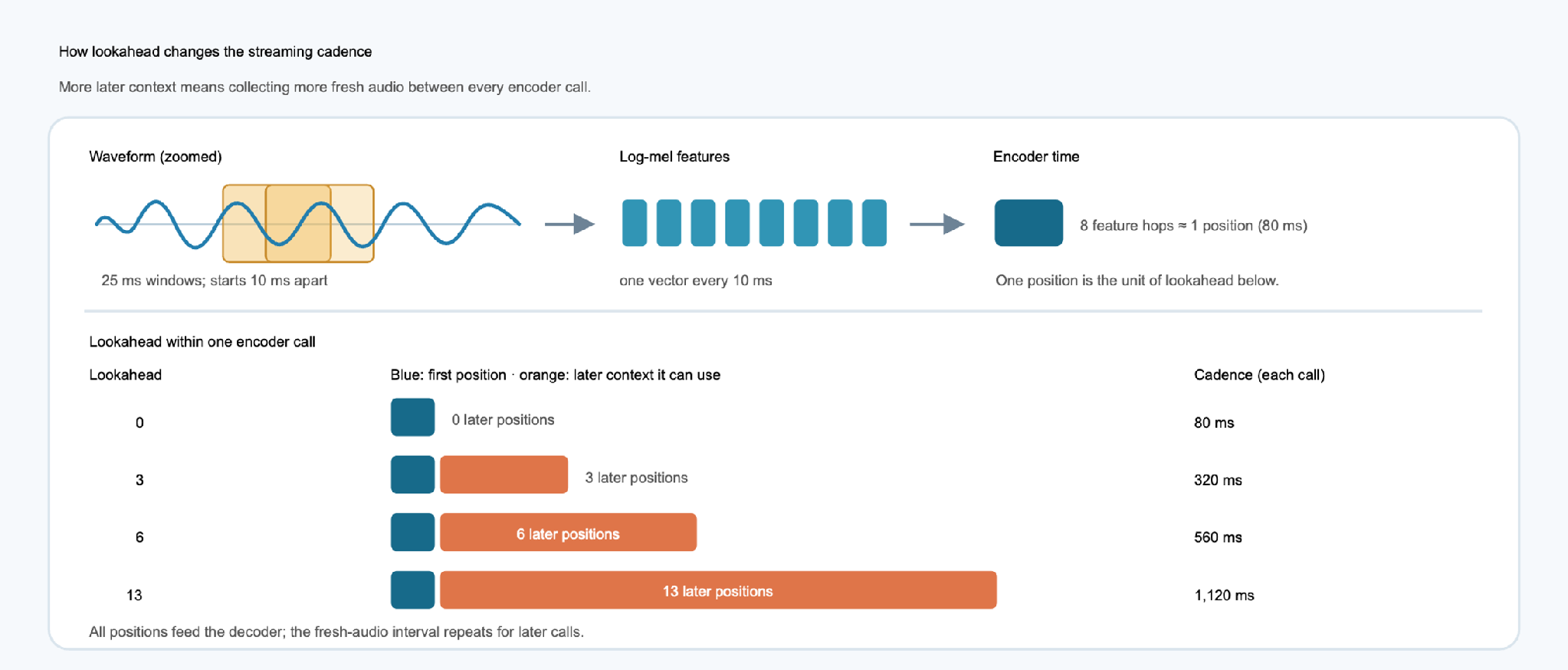
When you’re speaking to a device, you expect text to appear as you talk. That makes streaming automatic speech recognition (ASR) a different challenge from batch transcription, where the model... The post Optimizing Streaming Speech Recognition on Arm® Edge Devices with ExecuTorch appeared first on PyTorch.

On October 26, 2026, arXiv published the paper arXiv:2610.31838v1, introducing Sense-Aligned Grounding Evaluation (SAGE)—a unified 10-candidate image-selection benchmark—along with the training‑agnostic Gloss-Augmented Reasoning (GAR) framework, designed for cross‑noun, verb, and entity‑centered multimodal grounding evaluation.

Why it matters:This study is the first to unify three types of tasks—VWSD, VerSe, and WikiDiverse—under a term-centric grounded evaluation protocol, introducing a mechanism for identifying hard negative samples and context‑exchange diagnostics. Empirical results demonstrate that the synergistic effect of definition enhancement and constraint‑guided reasoning can significantly improve the Hits@1 metric (from 65.90 to 71.22), thereby providing a more fine-grained, interpretable new evaluation paradigm for multimodal semantic alignment.
arXiv:2610.31986v1 Announce Type: new Abstract: Vision language models (VLMs) have been increasingly adopted in consumer smart-home camera systems to interpret recorded videos and provide insights. However, video clips captured from smart-home cameras are different from curated web videos dominating existing VLM benchmarks. Smart-home video clips often do not contain subtitles or narration and are captured from different viewing angles, under various lighting conditions, and in diverse scenarios. However, the capabilities of the model in this domain, under sparse visual signals and limited context, are not fully assessed by existing VLM benchmarks. To close this gap, we introduce OpenHome, a visual-only, four-option multiple-choice benchmark for evaluating smart-home video understanding. I
API Documentation (Chinese) HuggingFace Demo ModelScope Demo Introduction After the release of Qwen2.5, we heard the community’s demand for processing longer contexts. In recent months, we have made many optimizations for the model capabilities and inference performance of extremely long context. Today, we are proud to introduce the new Qwen2.5-Turbo version, which features: Longer Context Support: We have extended the model’s context length from 128k to 1M, which is approximately 1 million English words or 1.
GITHUB HUGGING FACE MODELSCOPE DEMO DISCORD Introduction After months of efforts, we are pleased to announce the evolution from Qwen1.5 to Qwen2. This time, we bring to you: Pretrained and instruction-tuned models of 5 sizes, including Qwen2-0.5B, Qwen2-1.5B, Qwen2-7B, Qwen2-57B-A14B, and Qwen2-72B; Having been trained on data in 27 additional languages besides English and Chinese; State-of-the-art performance in a large number of benchmark evaluations; Significantly improved performance in coding and mathematics; Extended context length support up to 128K tokens with Qwen2-7B-Instruct and Qwen2-72B-Instruct.