
Chrome’s AI-powered Autofill can now dig through your Gmail to fill out forms
The autofill update lets Chrome pull flight confirmations, tracking info, order details, and other information from your inbox, with your permission.

Search headlines, summaries and articles to connect the dots.
The autofill update lets Chrome pull flight confirmations, tracking info, order details, and other information from your inbox, with your permission.
On October 27, 2026, Mozilla updated Firefox’s AI browsing feature, Smart Window, introducing a new capability to intelligently fill out forms based on the user’s currently open tabs. This feature supports extracting information from websites such as LinkedIn and personal portfolios to automatically populate multi-field forms like job application forms.
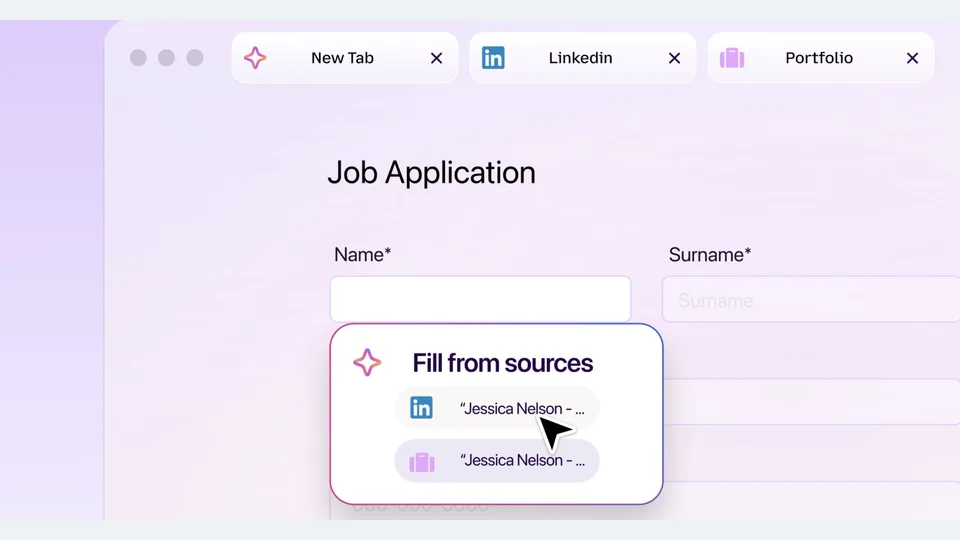
Why it matters:This update represents a significant advancement in Firefox’s recent AI feature iterations. As reported by The Verge and clearly dated October 27, 2026, the announcement focuses on specific interaction logic and use cases, with complete information elements and clear sources. However, it does not disclose technical implementation details, data processing methods, or privacy policies, nor does it specify whether this feature has been rolled out to all users or remains limited to certain testing channels.
The new standard, WebAI, is designed to work with a variety of AI models.

For most of its 30-year history, Cisco Partner Summit has focused on how partners sell Cisco Systems Inc. technology. This year’s event in Vancouver was about something different: how partners make money in a world where the transaction is no longer the main event. Cisco entered the event with tremendous momentum, as its stock was […] The post Cisco Partner Summit: Five insights that will define the channel in the AI era appeared first on SiliconANGLE.
For the past three years, the enterprise artificial intelligence conversation has focused on what models can say. The next three years will be about what systems are allowed to do. That’s a harder problem that better models alone won’t solve. On Wednesday, Oct. 28, I’ll be in Boston for the Bloomberg Tech Event: Building the […] The post What to watch for as enterprises move from AI experimentation to autonomous operations appeared first on SiliconANGLE.
Coyotec is bilingual, swears, and tells listeners how to defend themselves against ICE. Its popularity comes as more broadcasters are experimenting with artificial personalities.
AI is mass decompiling games. That's both awesome and scary. Indie game developer Popcar talks about the recent wave of AI-powered decompilation of existing games, enabling weird mashups between existing games, and producing a boom in game preservation projects to get old games working on new hardware (often in a browser using WebAssembly). I like how this piece captures both the positives and the negatives of this new development: Most people already realized the scary part by now. If AI can decompile games and software, then the entire tech industry is about to explode. Anybody can decompile other software and use it any way they'd like, and nobody can stop them. Companies can steal from competitors. Your paid game or app can be open-sourced against your will. This isn't exclusive to old