
Agents Are Going Async
Async subagents let an agent stay responsive while background workers run long tasks. How the orchestrator, notifications and approvals work in Deep Agents.
Search headlines, summaries and articles to connect the dots.
Async subagents let an agent stay responsive while background workers run long tasks. How the orchestrator, notifications and approvals work in Deep Agents.
DocuSign wired Claude Code, dbt Agent Skills, dbt MCP, and dbt v2 into one workflow and measured a 50% productivity gain.
An AI agent used dbt lineage from inside the BI layer to answer three data mysteries in the time it takes to get coffee.
On October 25, 2026, Microsoft Research open-sourced Agensh, a multi-agent runtime framework that operates without a central coordinator, enabling 1 to 1,024 LLM-powered coding agents to self-organize and collaborate on ProgramBench. The system achieves decentralized coordination through shared dashboards inspired by Gitea, Mattermost, and DeLM, with all agents following the same prompt-driven five-step loop; its scalability has been validated in a Linux + Docker environment.
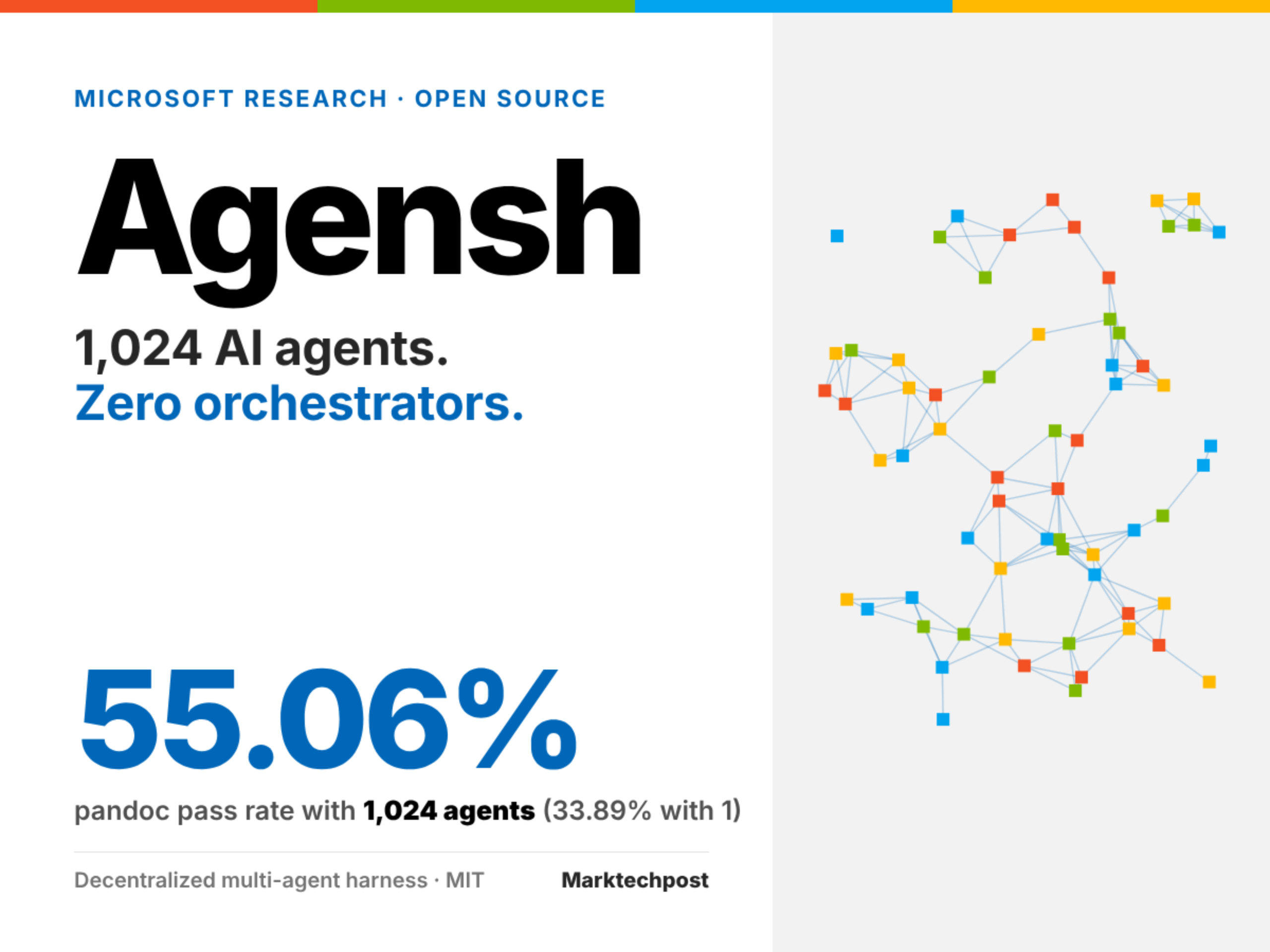
Why it matters:This achievement represents a significant evolution in multi-agent system architectures—abandoning the traditional “master‑agent” paradigm and enabling large‑scale self‑organization through prompt engineering and lightweight service composition. Empirical results on ProgramBench (e.g., 128 agents achieving a 49% improvement in task load balancing across five tasks) establish a new benchmark for distributed AI engineering. Released under the MIT License and compatible with mainstream single‑agent tools such as Copilot CLI, it offers valuable guidance for practical development.
On October 24, 2026, Anthropic open-sourced sandbox-runtime (srt), an OS-level sandboxing tool that operates without containers, designed to restrict file read/write and network access permissions for AI agents, MCP servers, and CLI tools. It supports macOS (Seatbelt), Linux (bubblewrap), and Windows (alpha), with npm package version 0.0.81 under the Apache-2.0 license.
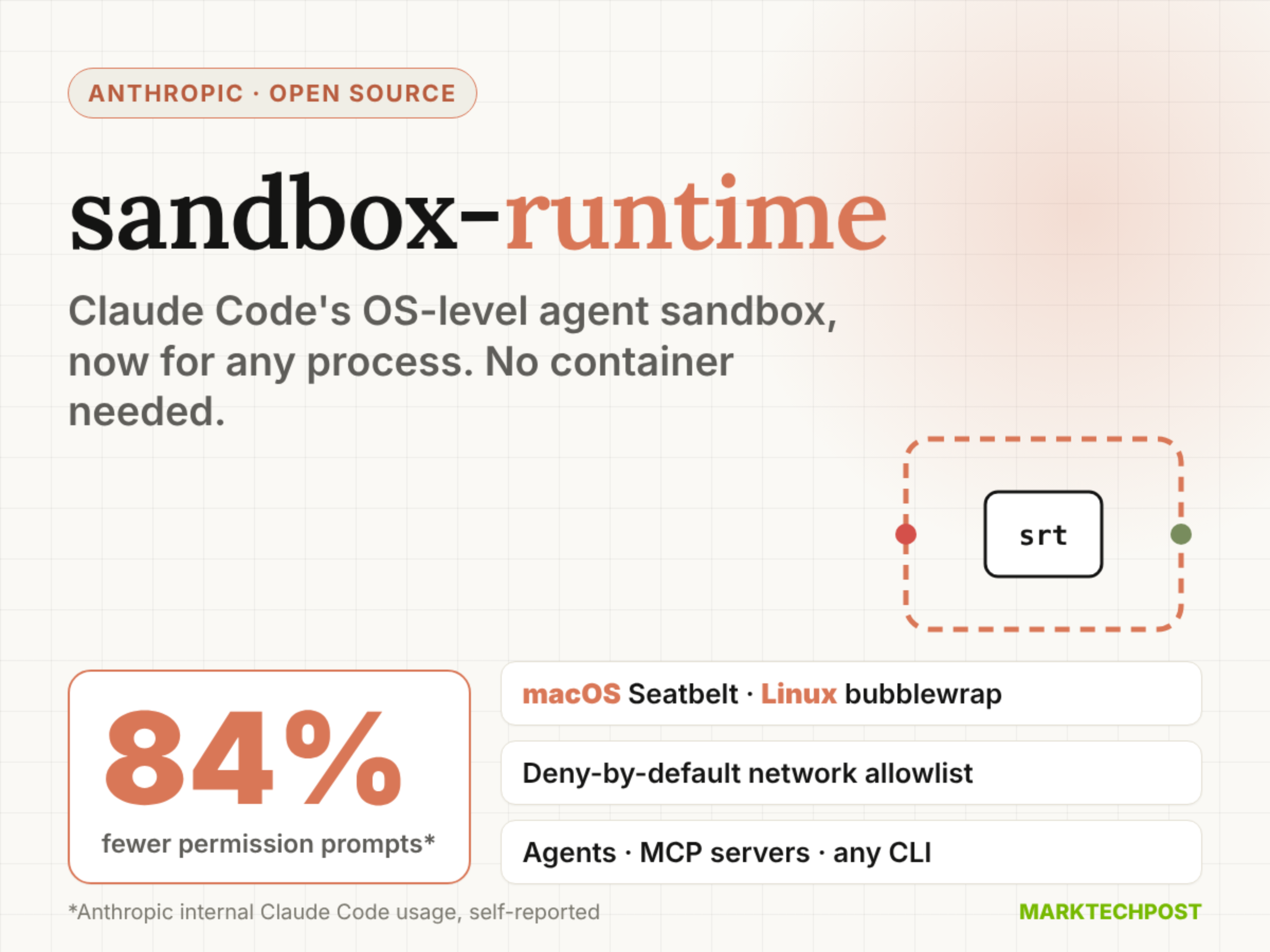
Why it matters:This tool represents a significant advancement in AI security infrastructure—achieving fine-grained, full-process-tree coverage through the operating system’s native isolation mechanisms, directly addressing the risks of prompt injection and privilege escalation, and has already been deployed for internal validation within Claude Code.