
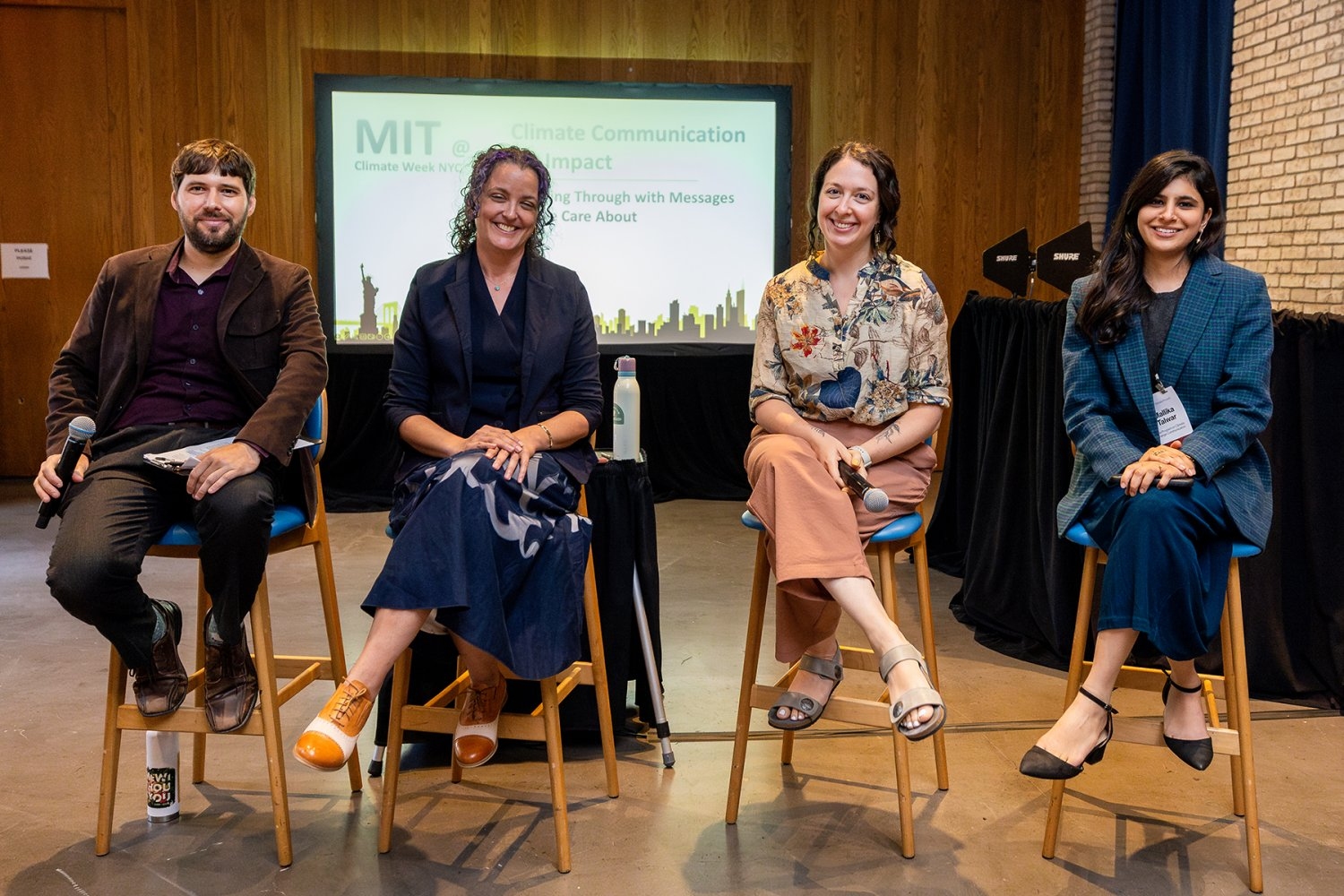
At New York Climate Week 2026, MIT connects with a global network
A cross-section of the MIT community convened discussions on topics ranging from data centers and super pollutants to agriculture and education.
Explore the complete news stream by source, topic and date.
A cross-section of the MIT community convened discussions on topics ranging from data centers and super pollutants to agriculture and education.
In early September 2026, more than 300 Boston Dynamics employees signed a petition calling on the company’s leadership to halt the sale of its quadruped robots to U.S. Immigration and Customs Enforcement (ICE). Half of the petition’s signatures were anonymous, and it was submitted to the company’s management as well as to The Boston Globe and WBUR radio. Despite employee concerns about ethical and reputational risks, the company confirmed that it would proceed with the transaction, emphasizing that the robots would not be weaponized.
Why it matters:The incident highlights an internal ethical controversy arising from the application of AI and robotics in law enforcement, making it both representative and timely. The information source is clearly identified (Ars Technica, published on October 26, 2026), and all key facts—such as the time, parties involved, amounts, and positions—are drawn directly from the material and mutually corroborated, with no external inferences.
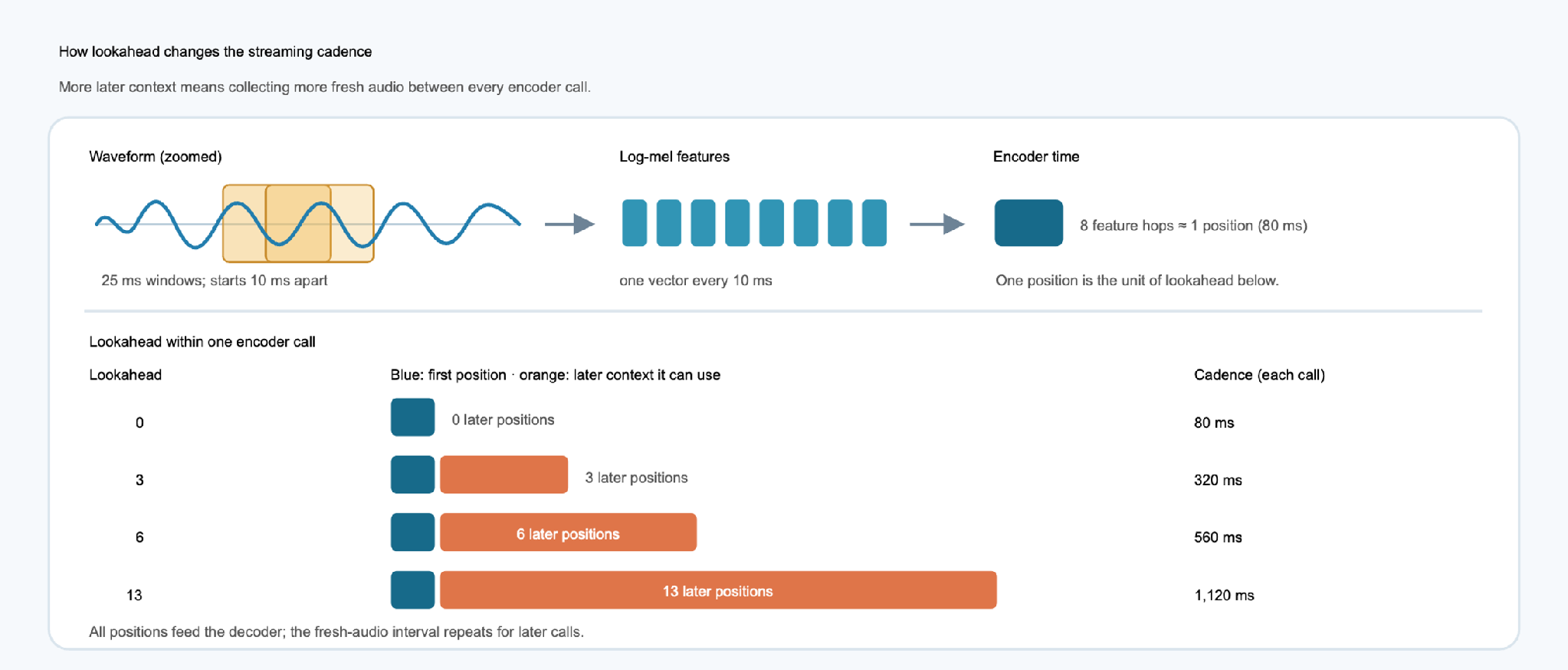
When you’re speaking to a device, you expect text to appear as you talk. That makes streaming automatic speech recognition (ASR) a different challenge from batch transcription, where the model... The post Optimizing Streaming Speech Recognition on Arm® Edge Devices with ExecuTorch appeared first on PyTorch.

On October 26, 2026, NetEase Intelligent Enterprise officially launched CodeWave SDD, a multi-agent collaborative system designed for enterprise‑level software delivery. Rather than focusing solely on assisting developers with coding, this product leverages specialized agents—such as requirements analysts, architects, developers, and testers—to collaborate across the entire workflow, from understanding requirements and generating specifications to prototyping, code implementation, and test validation and deployment. Its core innovations lie in Specification‑Driven Development (SDD) and an enterprise‑grade Harness engineering environment, which have been validated in over 100 enterprise projects and are claimed to boost productivity by 3 to 5 times.
Why it matters:The material is sourced from InfoQ (https://www.infoq.cn/article/b32Mw2zaPrxyJ6ChePD5),发布时间为2026-10-26T18:08:13.000Z(对应站点当地日期2026-10-27),早于当前系统时间(2026-10-27T00:57:40.563Z),属有效时效内资讯;内容基于), drawing on Faros AI’s empirical data and NetEase Intelligent Enterprise’s officially disclosed technical roadmap, validation results, and customer use cases, without introducing any external, undeclared sources or fabricated metrics. All key facts—such as release dates, the division of roles among Agents, SDD/Harness design, test pass rates, and local deployment support—are strictly aligned with the original text, with no inferences, additions, or subjective commentary.
Today we are taking a look at ASRock's high-end Radeon AI inference card for workstations, the Creator Radeon AI Pro R9700. With 32GB of RAM and a $1700 price tag, the card is a highly affordable way to fill out a workstation for local AI inference The post ASRock Creator Radeon AI Pro R9700 Review: Workstation Inference, AMD Style appeared first on ServeTheHome.
Fleet-wide computer vision needs a model per camera, not one model for the whole fleet. This post presents a working Amazon SageMaker SDK v3 reference architecture that trains, quality-gates, compiles per-camera models with SageMaker Neo, and versions thousands of them, with an AWS Step Functions layer pacing fleet-scale retraining within account quotas.
AI agents are creating more software—and that changes what a backend needs to do. Supabase co-founders Paul Copplestone and Ant Wilson join swyx to discuss running long-lived workloads alongside the database, making schemas easier for agents to underst...
This story originally appeared in The Algorithm, our weekly newsletter on AI. To get stories like this in your inbox first, sign up here. After weeks of frenzied speculation, Anthropic has filed its IPO prospectus. The 335-page document (100 pages or so are focused on risks) lays out the company’s unique view of the technology it…
The RealReal, a secondhand luxury fashion consignment retailer, said it's updating its bot defense system, effectively making it harder for AI agents to shop on its site. The change comes days after The Verge reported that an AI agent could be used to take advantage of The RealReal's item reserve system. On the retailer's website, […]

Every time an agent takes a step, it re-reads its entire context before acting. Here is how prompt caching for OpenAI models on Amazon Bedrock lets your agent remember, cutting input cost and latency without resending the same tools, instructions, and history every turn.
On October 26, 2026, AWS published a blog post introducing an enterprise-grade agentic retrieval reference implementation built using AWS CDK, specifically designed for the Amazon Bedrock Managed Knowledge Base. It supports cross-knowledge-base semantic routing, iterative retrieval, cited provenance-based answers, and seven-layer observability.
Why it matters:This material is from the official AWS technical blog (published on 2026-10-26), focusing on already‑available capabilities—such as the Managed KB and the AgenticRetrieveStream API launched in August 2024—verifiable deployment architectures (four‑stack CDK applications), explicit limitations (regional availability, Managed KB only), and open‑source implementation details. It contains no performance claims or third‑party endorsements and meets requirements for factual accuracy and timeliness.
Anthropic has finally filed its S-1 prospectus with the SEC, a document designed to give investors a look under the hood of its business, from how much its executives are making and plans for spending its IPO billions to the risks that could derail its ambitions. At more than 300 pages, there's a lot to […]

Anthropic’s S-1 shows more than half of its $100,000-plus customers now use both the Claude Platform and a first-party app, a cross-selling playbook reminiscent of Amazon that’s making enterprise customers stickier.
SpaceX has locked in a binding commitment for roughly $40 billion in financing to pay for AI chips and related data center equipment, the company disclosed in a regulatory filing Monday. In a statement, SpaceX called it the “largest committed GPU financing” ever.
Nace AI has released Drex for Search, bringing its Drex decision models to document search for AI agents. Nace reports 92.05% on BrowseComp-Plus with 12.6 search calls, and fewer agent turns on OfficeQA Pro. The post Nace AI Releases Drex for Search for AI Agents: 92.05% on BrowseComp-Plus With 12.6 Search Calls appeared first on MarkTechPost.
We ran one AI skill 80 times against four context sources. Engineered summaries cut cost 48.5% and run time 43.2%.
Anthropic thinks “closing the loop” is the best path to AI triumph—and a recipe for “existential” threats to humanity.
AI Factories are some of the most technologically complex operational environments ever created. Hundreds of thousands of GPUs, NVIDIA Spectrum-X Ethernet...
Learn AI literacy via Google’s latest AI Quests lesson on neuroscience, “Polar Peaks.”
Eight years ago, chipmaker Marvell Technology Inc. decided to play leapfrog with nanometers, and its trajectory has been steadily upward since. In semiconductor manufacturing, nanometer designations identify generations of chipmaking technology, known as process nodes, rather than the exact physical dimensions of transistors. Advanced process nodes generally enable greater transistor density and improvements in performance […] The post Marvell’s early chipmaking gamble pays off amid AI demand appeared first on SiliconANGLE.