
llama.cpp 发布 b11871 版本:新增 JSON 嵌套深度限制以防止服务崩溃
llama.cpp 在 b11871 版本中引入关键安全修复,对请求中 JSON 嵌套层级实施 128 层硬性限制,避免因深度递归解析导致 HTTP 线程栈溢出、服务崩溃(macOS 触发 SIGBUS,Linux 触发 SIGSEGV)。该策略覆盖 chat 接口多类输入场景,并统一返回 HTTP 400 错误。
Why it matters:按信源设置仅收录,不参与自动精选
Search headlines, summaries and articles to connect the dots.
llama.cpp 在 b11871 版本中引入关键安全修复,对请求中 JSON 嵌套层级实施 128 层硬性限制,避免因深度递归解析导致 HTTP 线程栈溢出、服务崩溃(macOS 触发 SIGBUS,Linux 触发 SIGSEGV)。该策略覆盖 chat 接口多类输入场景,并统一返回 HTTP 400 错误。
Why it matters:按信源设置仅收录,不参与自动精选
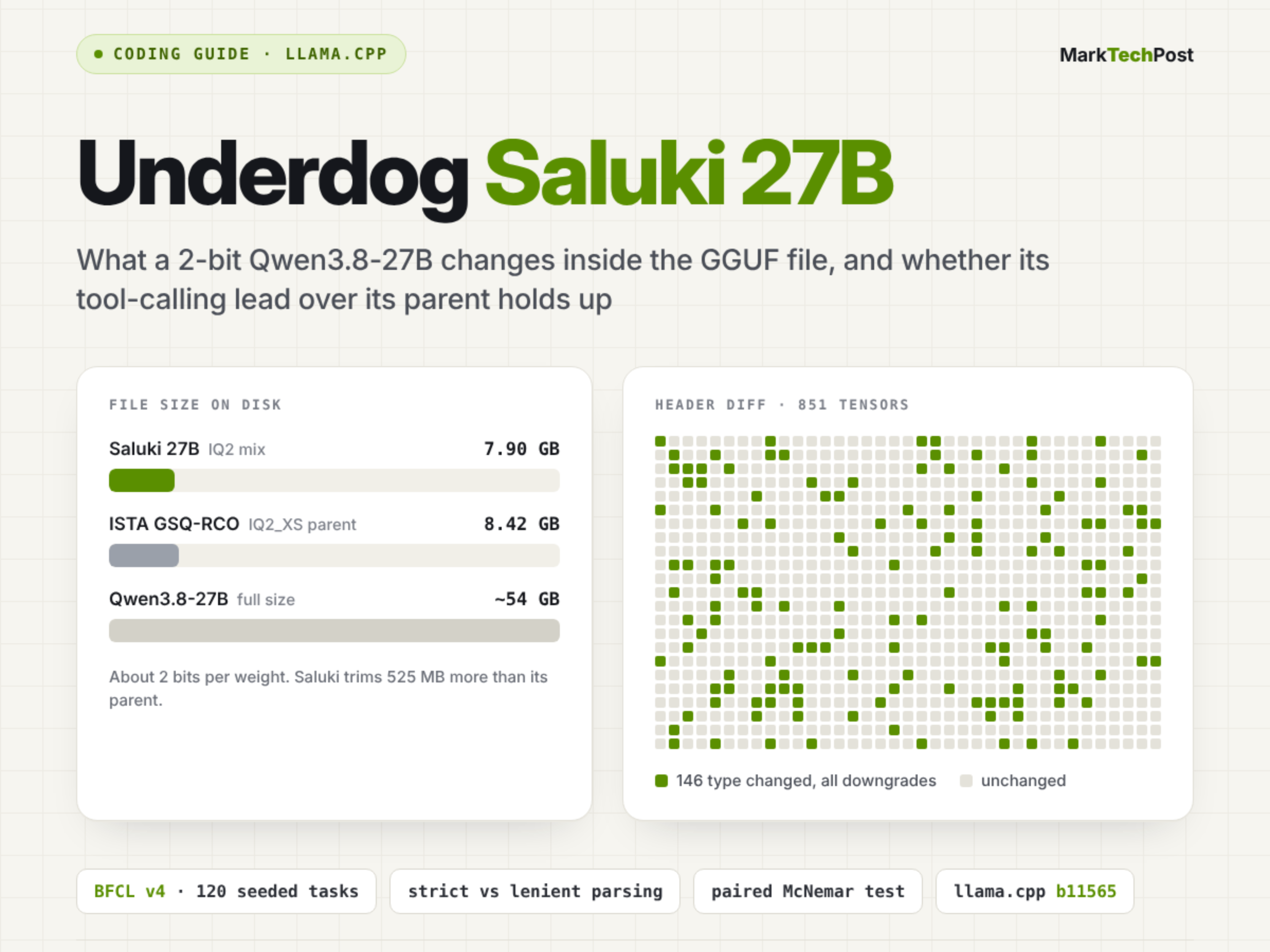
This article introduces Saluki 27B, a model released by Underdog—a 7.9 GB, 2-bit quantized variant of Qwen3.8-27B—built using the GSQ-RCO method from ISTA-DASLab. It claims to outperform the original 54 GB full-precision model on the BFCL v4 benchmark across 120 tasks; however, all performance conclusions are based solely on the developers’ assertions and have not been independently verified.
llama.cpp 在版本 b11870 中新增对 DeepSeek-V4.1-Flash(deepseek41)模型的支持,并针对其 Engram 架构进行多项底层优化,包括 KV 缓存计算简化、BF16 精度替代 MXFP8、in-graph 行 gather 等;同步提供覆盖 macOS、Linux、Windows、Android、iOS 及 openEuler 的多平台二进制构建。
Why it matters:按信源设置仅收录,不参与自动精选
llama.cpp 项目发布构建版本 b11869,主要修复 Jinja 模板中 select 和 selectattr 函数的参数解析逻辑,并提供覆盖 macOS、Linux、Windows、Android、iOS 及 openEuler 的数十种硬件与后端组合的预编译二进制包。
Why it matters:按信源设置仅收录,不参与自动精选
llama.cpp 于 GitHub 正式发布 b11867 版本,核心变更包括服务端(server)入口点重构(PR #31113),新增 server_role 机制;同时提供覆盖 macOS、Linux、Windows、Android、iOS 及 openEuler 的 40+ 预编译二进制包,支持 CPU、CUDA(12.4/12.8/13.4)、Vulkan、ROCm 10.0、OpenVINO、SYCL(FP16/FP32)、Snapdragon(Adreno+Hexagon)等多元硬件后端。
Why it matters:按信源设置仅收录,不参与自动精选
llama.cpp 项目发布构建版本 b11865,核心变更包括在 RDMA 接收逻辑中增加内存边界检查(PR #30399),并显著扩展硬件加速支持,覆盖 CUDA 13.4、ROCm 10.0、Vulkan、OpenVINO、SYCL 及高通 Snapdragon(CPU+Adreno+Hexagon)全栈异构计算后端;macOS KleidiAI 支持与 openEuler 构建被明确标记为 DISABLED。
Why it matters:按信源设置仅收录,不参与自动精选
llama.cpp v.b11861 修复了 minimax-m3 模型在 NVFP4/MXFP8 量化下因 scale 张量未注入计算图而导致的权重失真问题,避免‘token soup’与残差淹没;同步提供覆盖 macOS、Linux、Windows、Android、iOS 及 openEuler 的多平台二进制构建。
Why it matters:按信源设置仅收录,不参与自动精选
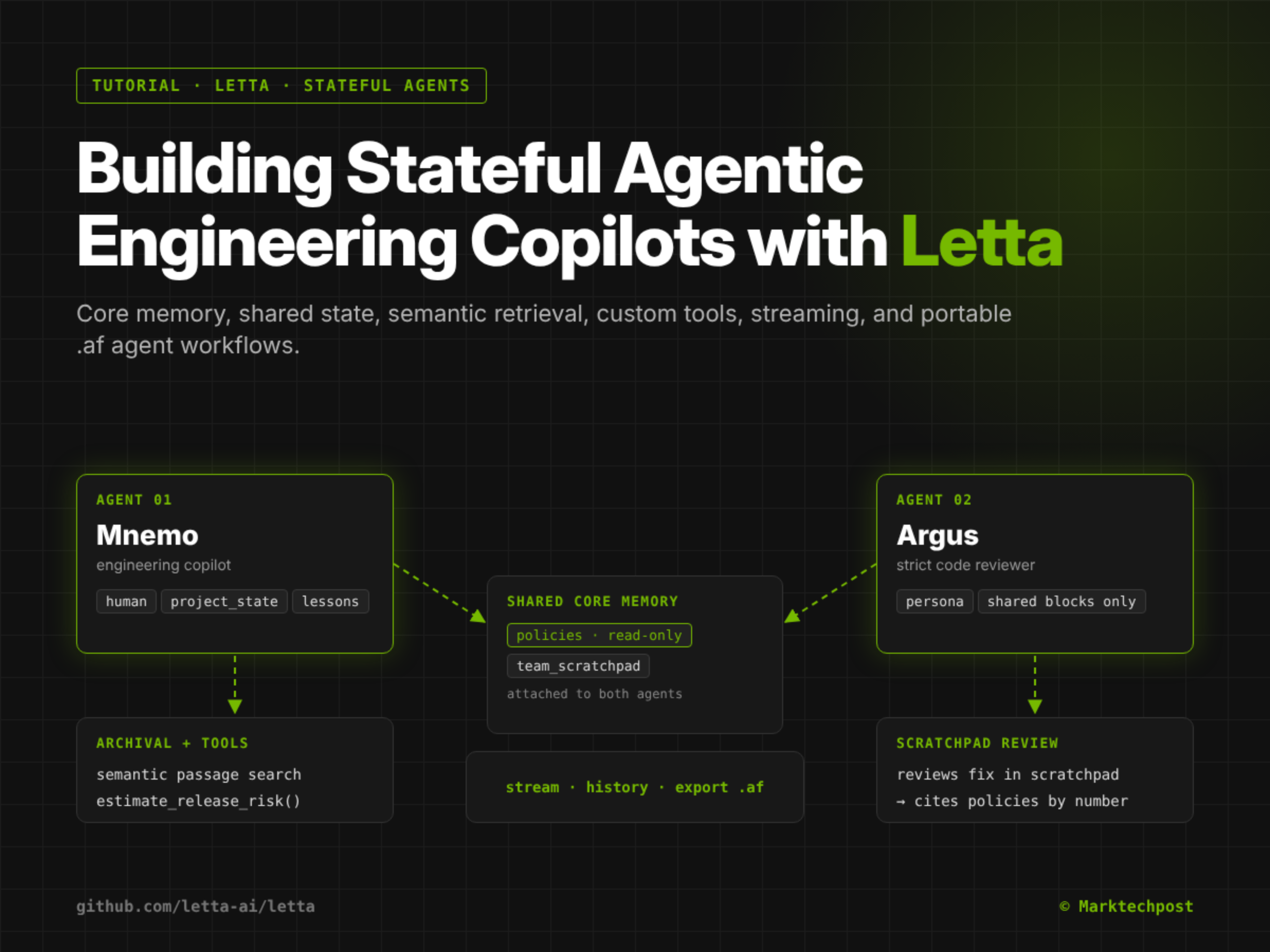
MarkTechPost published a tutorial on October 24, 2026, detailing how to build an agentic copilot with persistent state using the Letta framework. The guide covers capabilities such as verifiable core memory, multi-agent shared memory, semantic retrieval of archived knowledge, custom Python tool integration, streaming responses, and .agent format (.af) export. The content serves as a technical practice guide and does not provide performance metrics, security audits, or production‑environment validation.
On October 24, 2026, arXiv published the paper arXiv:2610.30705v1, introducing ULME—a post-training framework for causal-decoder–based large language models that, through a predictive coupling mechanism, achieves, for the first time, a mutually reinforcing unification of text embedding and language-generation capabilities. This approach was validated on the Qwen2.5/Qwen3 series (with 0.5B–8B parameters), yielding MTEB improvements of 3.3–4.1 points while maintaining performance on generation tasks such as MMLU.

Why it matters:This paper directly addresses the core issue of fragmented multimodal LLM capabilities: embeddings and generation have long been handled either by separate models or by “pseudo-unified” models that rely solely on parameter sharing. ULME achieves a substantial architectural breakthrough by employing learnable slots and joint training with three objectives—including a stop-gradient prediction loss—enabling the generation process to actively shape the embedding representations. The study features broad experimental coverage, strong baselines, comprehensive metrics, and was published on a reputable preprint platform, balancing timeliness with technical rigor.
The paper arXiv:2610.30158v1, published on October 24, 2026, introduces Lighthouse, the first digital assistant dedicated to exploring the history of the U.S. Civil Rights Movement, based on archival data from South Carolina. Its core innovation lies in adopting trustworthy content and user harm mitigation as design principles, employing a neuro-symbolic hybrid architecture that integrates large language models with rule-based symbolic reasoning.
Why it matters:This study is the first to apply AI‑assisted historical exploration to the sensitive and pivotal period of the Civil Rights Movement, explicitly introducing dual constraints—“trustworthiness” and “harm modeling”—which set it apart from general‑purpose chatbots. Its methodology (neurosymbolic integration), evaluation approach (including a human‑consensus‑based gold standard for subjective questions), and data scale (over 18,000 original archival documents) all hold significant academic demonstrative value.
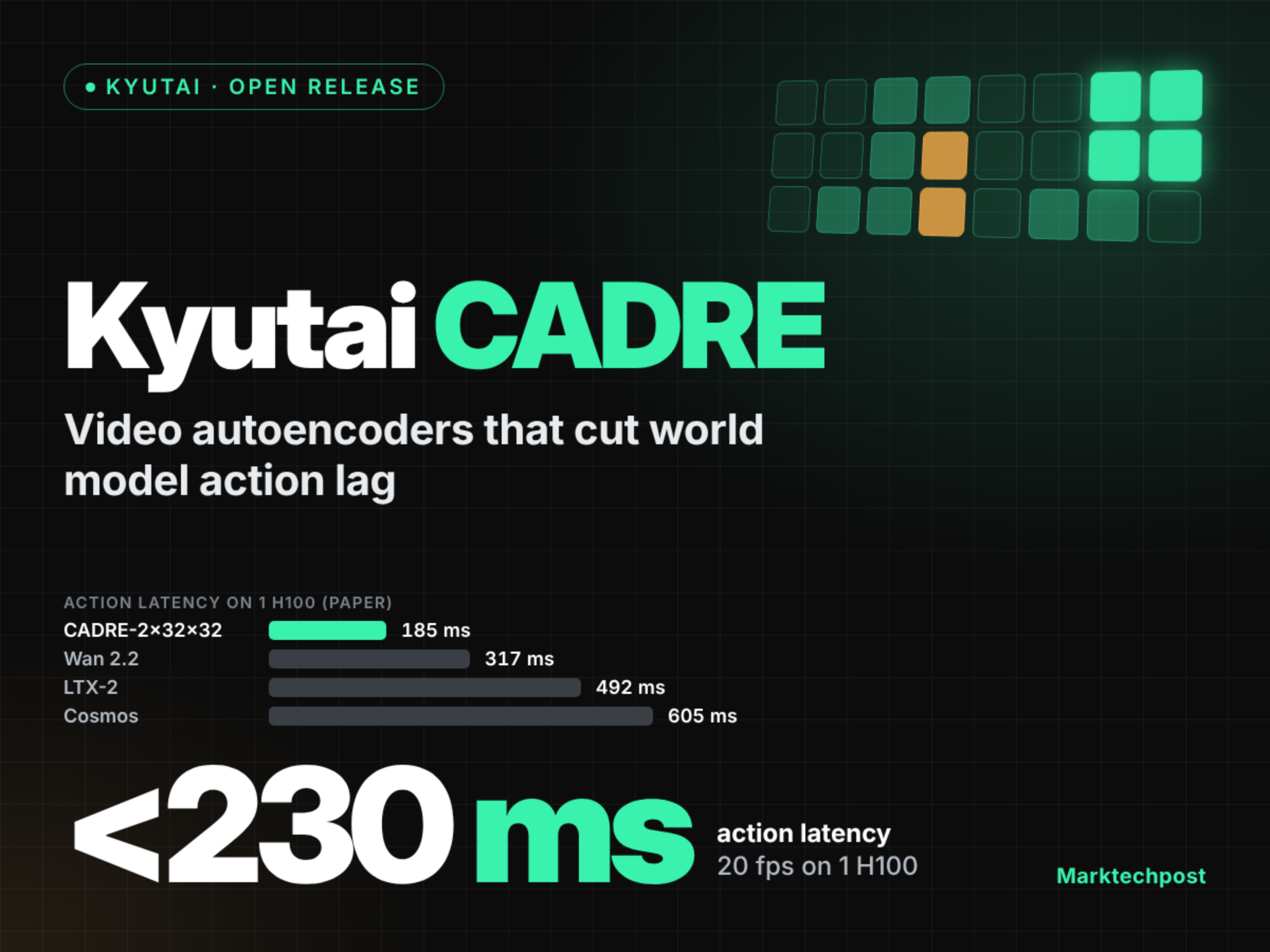
On October 23, 2026, Kyutai unveiled CADRE—a family of seven open-source causal diffusion-based video autoencoders designed to reduce action latency in world models. On a single H100 GPU, measured response latency was as low as 185 ms, with inference throughput reaching 23.4 fps, and the scene FVD metric dropping to 162.6 (compared to 599.7 for Wan 2.2). However, in robotic manipulation tasks, its action following rate (ARR) lagged behind both Wan 2.2 and Cosmos.
Jack Dorsey’s company, Block, announced the launch of an end-to-end voice AI model called Dessa, claiming it was trained entirely from scratch using only human speech dialogue data. The official demonstration samples exhibited a mix of naturalness and awkwardness—for example, mistakenly addressing a user as “Ronaldo”—highlighting its anthropomorphic yet still immature conversational capabilities.
The Founder Summit 2026, co-hosted by TechCrunch and Fidelity Private Shares, is scheduled for November 4, 2026, at the SoWa Power Station in Boston. The event will focus on practical topics such as product-market fit validation, founder leadership, localized scaling strategies, and AI-native architectures. Representatives from institutions including Toast, Bessemer, and Glasswing will share their firsthand experiences.
Amazon QuickSight’s layered maps now support the GeoJSON formats for Point and LineString geometries, enabling users to overlay store locations, delivery routes, or flight trajectories on the same map. This capability requires no third-party services, but it does demand that GeoJSON files adhere to the proper structure, with matching keys and static updates.
Bayer Crop Science has built the Agentic Decision Engine (ADE) on Amazon Bedrock AgentCore—a natural-language multi-agent platform for breeding experts, analysts, and researchers—as an enhancement layer rather than a replacement for its existing Connected Decision Engine (CDE). The system is now live in production, serving over 100 R&D users and enabling approximately 80% of issues to be resolved independently through 22 domain-specific agents and about 20 API tools.
谷歌研究团队在I/O 2026大会上集中发布面向科学发现、气候预测、医疗健康与边缘计算的系列AI系统,包括多模态科研助手Gemini for Science、支持飓风预警的WeatherNext、可自主构建操作系统的Agentic平台Antigravity 2.0,以及开源量子芯片Willow等;所有成果均为实验性演示,尚无独立验证或监管批准。
Why it matters:人工审核