
Skip to content
AI NEWS JOURNAL
AI, IN PERSPECTIVE

Search AI news

Search headlines, summaries and articles to connect the dots.

Newest first

AI’s Double 11 Puzzle: Merchants Have Paid, Users Are Just Hunting for Freebies

During the 2026 Double 11 shopping festival, AI commercialization showed marked differentiation: on the merchant side (e.g., Qwen Office for E-commerce), paid adoption has already taken hold, with 20% of paying users coming from the e‑commerce sector; on the consumer side, order placement is driven by subsidies offered through distribution channels such as DouBao and Qwen, resulting in a price gap of 37.5%, yet user trust remains low (only 16.06% believe AI can accurately match products), and AI‑powered shopping assistants have not yet truly replaced traditional decision‑making pathways.

Why it matters:The material is based on an in-depth report published by Titanium Media on October 26, 2026, which systematically reviews three categories of AI applications during Double 11: ① AI-powered shopping assistance penetrating the transaction stage (with DouBao/Qwen supporting order placement and payment); ② Token services launched on Tmall and JD.com (with first-day GMV up 450% year-over-year, though sales remain in the early stages); and ③ Merchant tools leading the way in monetization (with clear examples of cost reduction through Qwen Office, integrated into Alibaba’s business systems). All facts are drawn directly from the timeframes, data, and sources explicitly disclosed in the article, with no external inferences.
Timeline and related coverage

Kimi releases K3.1 Pro: Terminal task capabilities top the charts, with simulation debugging and multimodal programming showcasing the nascent form of embodied intelligence.

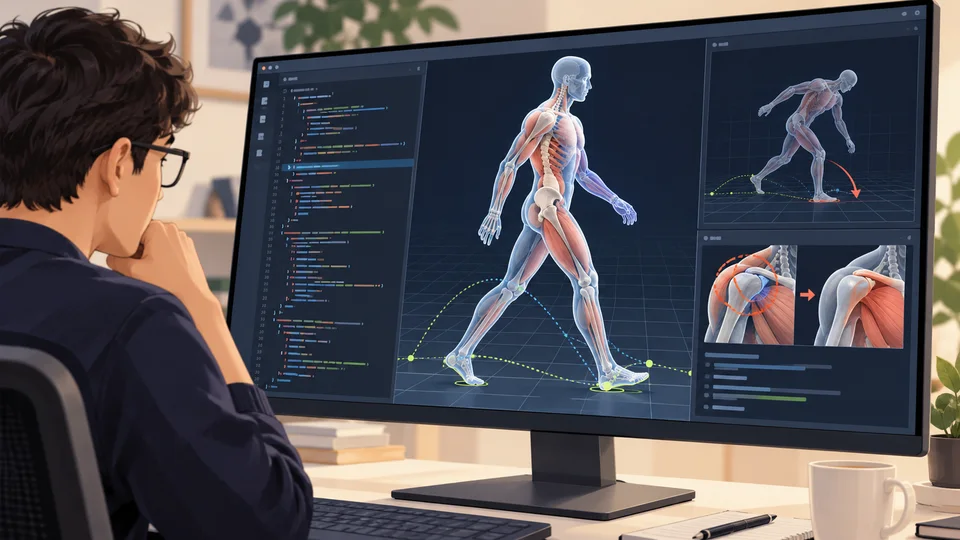
On October 25, 2026, Kimi released the K3.1 Pro model, which ranked first in the Terminal-Bench 4.0 terminal task benchmark with a 67.2% success rate. Its capabilities—including autonomously fixing emulator errors, performing physics simulations, conducting audio analysis, constructing 3D scenes, and editing videos—point toward exploring pathways in embodied intelligence technology.

根据报道中的虚拟人行走训练和模拟器调试制作的编辑示意,非软件实拍截图

Why it matters:The material is based on a hands-on test report published with authorization from Titanium Media, covering authoritative third-party benchmark data (such as Artificial Analysis and Terminal-Bench 4.0), official self-test results, and the author’s multi-scenario functional validation. It highlights the K3.1 Pro’s substantial advancements in execution performance, simulation closed-loop capabilities, and multimodal programming, while clearly noting performance limitations and undisclosed information (e.g., Flash/Ultra has not yet been released), in compliance with fact-checking and source attribution requirements.

Timeline and related coverage

Meta is vigorously promoting the Muse AI agent network: humans will primarily communicate with one another through AI agents.

Mark Zuckerberg is vigorously advancing a vision of the future built on autonomous AI agents—Muse will shop, work, and even engage in conversations with other AI agents on behalf of users. This vision gained attention following Meta’s Q3 2026 earnings call; Muse was made available to the public last month, though its actual capabilities and large-scale deployment remain in the early stages.

Timeline and related coverage

NVIDIA’s open-source models are helping to bring AI projects in the public sector to fruition across multiple European countries.

NVIDIA, in collaboration with governments and technology partners across multiple European countries, is advancing sovereign, controllable AI applications—leveraging open-source large models such as Nemotron and synthetic persona datasets—in Germany, Poland, the United Kingdom, France, Greece, and other nations. These efforts span areas including medical image analysis, employment services, digital government assistants, classified information processing, and localized language modeling.

Timeline and related coverage

Tenex builds an AI-native SDLC: outcome-based pricing, agent-driven development, and the last mile of enterprise AI deployment.

Tenex is an AI-native software delivery company established 18 months ago (as of 2026), with a team of 75 employees, serving roughly half of the Fortune 2000 companies and a comparable number of mid-sized enterprises. Its core practices include: a dynamic engineer compensation system anchored in story points; a quality‑assurance mechanism led by AI strategists; the MetaHarness framework, which embeds context directly within Git; and a capability realignment focused on “high‑value, non‑coding tasks.” Meanwhile, it has been observed that enterprise AI adoption remains concentrated on general‑purpose LLM deployments and engineering‑side agents, with backend office‑type production‑grade AI agents achieving only about 5% penetration.

Timeline and related coverage