Skip to content
AI NEWS JOURNAL
AI, IN PERSPECTIVE

Search AI news

Search headlines, summaries and articles to connect the dots.

Newest first

LangChain releases the five core components of its “Enterprise-Level Agent Framework”

On October 25, 2026, LangChain published a blog post systematically outlining the five universal architectural principles it has distilled from deploying AI agents (GTM Agent, OpenSWE, Content Studio) within its marketing, sales, and engineering teams: native integration with the work environment (Slack), a dynamic identity model (OBO + fixed credentials), a two-tiered memory mechanism (global/user-level), sandboxed code execution, and a high proportion of scheduled operations (not manually triggered). All agents are built on the Managed Deep Agents platform.

Why it matters:This information originates from the official LangChain blog, published on 2026-10-25T18:06:32.000Z—earlier than the current system time of 2026-10-25T23:01:18.857Z. The content focuses on implemented internal agent practices, with specific details such as Slack thread isolation, GitHub account attribution logic, and tiered permissions for Notion/Twitter, without including unverified predictions or external claims, thus meeting requirements for timeliness and factual accuracy.
Timeline and related coverage

Underdog Saluki 27B: Technical Analysis of the 2-bit Qwen3.8-27B Tool-Calling Model Based on GSQ-RCO

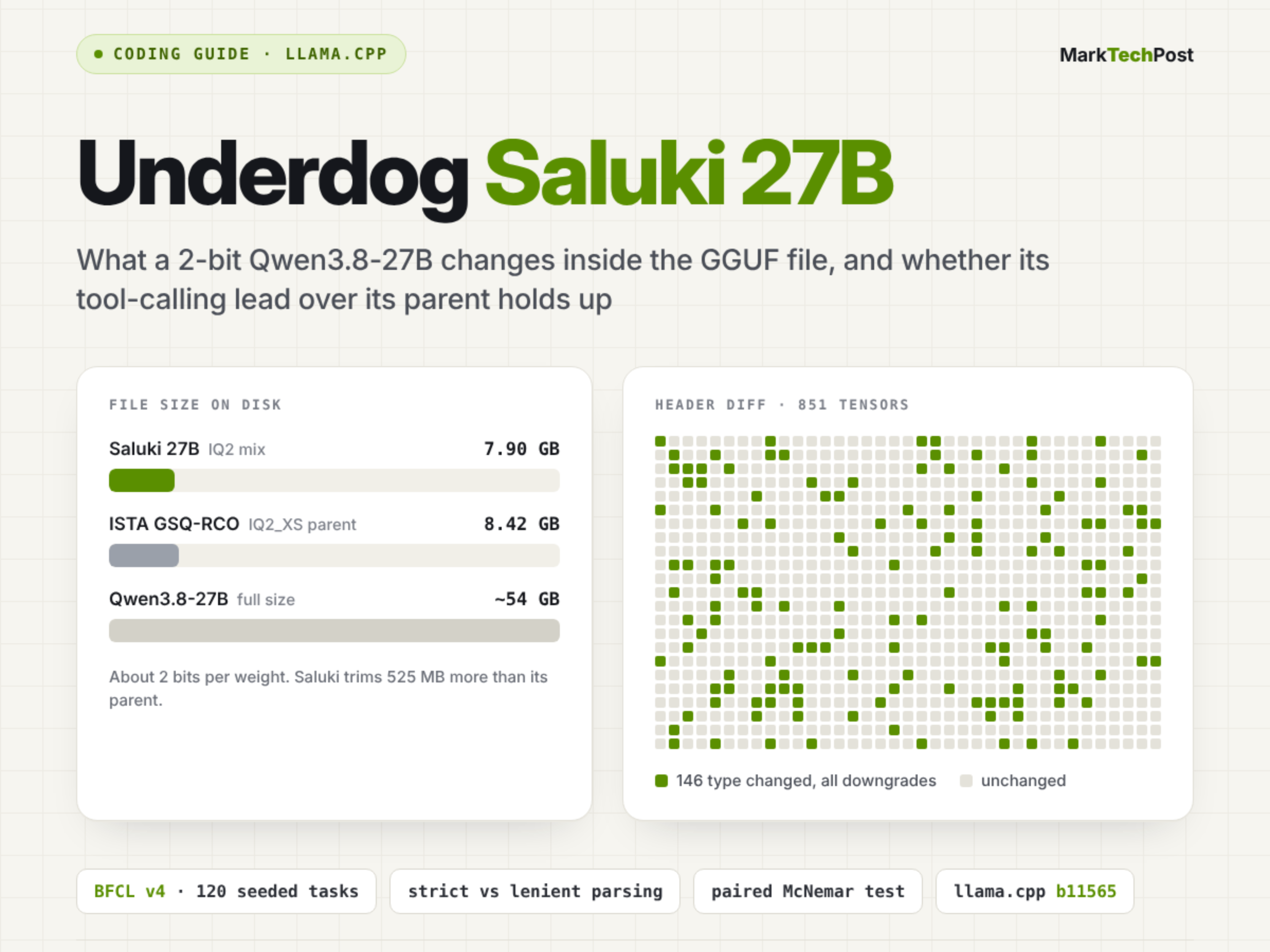
This article introduces Saluki 27B, a model released by Underdog—a 7.9 GB, 2-bit quantized variant of Qwen3.8-27B—built using the GSQ-RCO method from ISTA-DASLab. It claims to outperform the original 54 GB full-precision model on the BFCL v4 benchmark across 120 tasks; however, all performance conclusions are based solely on the developers’ assertions and have not been independently verified.

How to Run Underdog Saluki 27B: 2-Bit Qwen3.8-27B Tool-Calling Guide
Timeline and related coverage

Letta platform releases a tutorial on building stateful engineering collaborators: supporting core memory, shared state, and portable workflows.

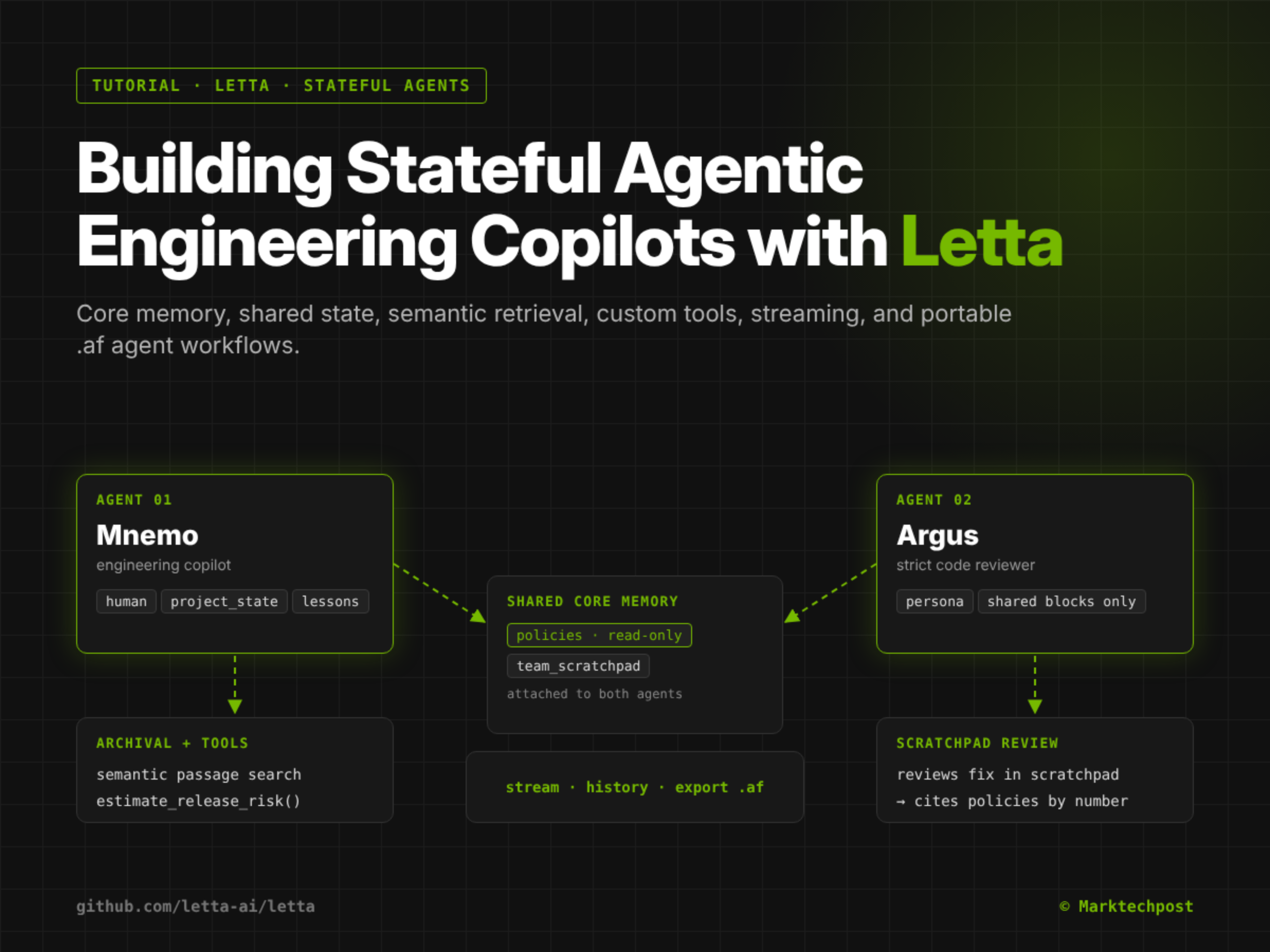
MarkTechPost published a tutorial on October 24, 2026, detailing how to build an agentic copilot with persistent state using the Letta framework. The guide covers capabilities such as verifiable core memory, multi-agent shared memory, semantic retrieval of archived knowledge, custom Python tool integration, streaming responses, and .agent format (.af) export. The content serves as a technical practice guide and does not provide performance metrics, security audits, or production‑environment validation.

Stateful Agentic Engineering Copilots with Letta: Core Memory, Shared State, Semantic Retrieval, Custom Tools, Streaming, and Portable Agent Workflows
Timeline and related coverage

Kyutai releases the CADRE video autoencoder family: designed for interactive world models, with end-to-end action latency reduced to below 230 milliseconds.

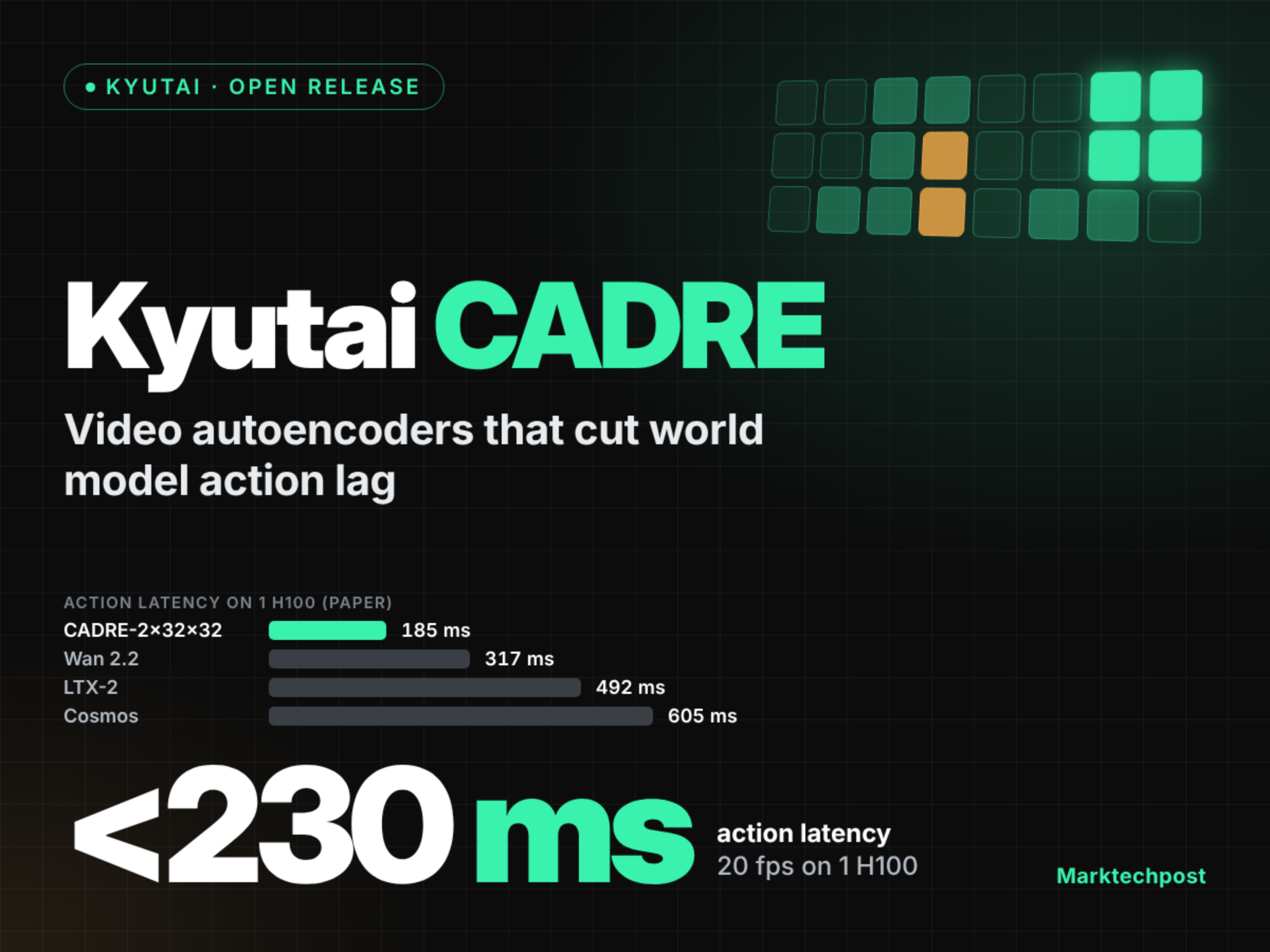
On October 23, 2026, Kyutai unveiled CADRE—a family of seven open-source causal diffusion-based video autoencoders designed to reduce action latency in world models. On a single H100 GPU, measured response latency was as low as 185 ms, with inference throughput reaching 23.4 fps, and the scene FVD metric dropping to 162.6 (compared to 599.7 for Wan 2.2). However, in robotic manipulation tasks, its action following rate (ARR) lagged behind both Wan 2.2 and Cosmos.

Kyutai CADRE: Video Autoencoders That Cut World Model Lag Below 230 ms
Timeline and related coverage

Block releases its new voice AI model, Dessa: trained entirely on real-world conversations, with a slightly awkward conversational style.

Jack Dorsey’s company, Block, announced the launch of an end-to-end voice AI model called Dessa, claiming it was trained entirely from scratch using only human speech dialogue data. The official demonstration samples exhibited a mix of naturalness and awkwardness—for example, mistakenly addressing a user as “Ronaldo”—highlighting its anthropomorphic yet still immature conversational capabilities.

Timeline and related coverage

TechCrunch Founder Summit 2026 will be held in Boston on November 4, focusing on customer acquisition, team building, and rational expansion.

The Founder Summit 2026, co-hosted by TechCrunch and Fidelity Private Shares, is scheduled for November 4, 2026, at the SoWa Power Station in Boston. The event will focus on practical topics such as product-market fit validation, founder leadership, localized scaling strategies, and AI-native architectures. Representatives from institutions including Toast, Bessemer, and Glasswing will share their firsthand experiences.

Timeline and related coverage

Amazon QuickSight’s layered maps now support GeoJSON point and line features, enabling the visualization of locations and routes together.

Amazon QuickSight’s layered maps now support the GeoJSON formats for Point and LineString geometries, enabling users to overlay store locations, delivery routes, or flight trajectories on the same map. This capability requires no third-party services, but it does demand that GeoJSON files adhere to the proper structure, with matching keys and static updates.

Timeline and related coverage

Bayer Crop Science has built the multi-agent decision-making engine ADE based on Amazon Bedrock AgentCore.

Bayer Crop Science has built the Agentic Decision Engine (ADE) on Amazon Bedrock AgentCore—a natural-language multi-agent platform for breeding experts, analysts, and researchers—as an enhancement layer rather than a replacement for its existing Connected Decision Engine (CDE). The system is now live in production, serving over 100 R&D users and enabling approximately 80% of issues to be resolved independently through 22 domain-specific agents and about 20 API tools.

Timeline and related coverage

Canva has launched its in-house AI image-generation model, Canva Craft, which employs a two-stage design and planning architecture.

Canva has launched its first in-house AI image-generation model, Canva Craft, which employs a two-stage architecture—planning followed by generation—to enhance design accuracy, consistency, and controllability. It supports 2K resolution and over 30 aspect ratios, catering to use cases such as social media, marketing content, and digital art.

Timeline and related coverage

Building a Production-Ready AI Service Framework: The New Focus of Enterprise AI Competition

As AI transitions from the experimental stage to large-scale production, corporate competitiveness is shifting from model selection to the serving harness—a suite of engineering systems that encompasses architecture design, memory management, scheduling strategies, and inference optimization. In an article published in MIT Technology Review, EXL points out that the key determinant of AI’s real-world impact is no longer model parameters or benchmark scores, but rather the ability to translate model capabilities into business value with controllable costs, reliable latency, and sustainable scalability.

Timeline and related coverage

Canva has launched its first in-house image-generation model, Canva Craft, which is now available to all users.

Canva has officially launched its first in-house image-generation model, Canva Craft, which employs a two-stage generative architecture, supports 2K resolution and output in 30 aspect ratios, and emphasizes text readability and layer editability. The model was trained on millions of human-designed templates within the platform and has already been integrated into Dream Lab and the API; going forward, it will be accessible via MCP to third-party chatbots such as ChatGPT and Gemini.

Timeline and related coverage

The Cornerstone of Scalable AI: Building Responsible Systems in Regulatory Environments

MIT Technology Review’s EmTech Future conference delves into the five pillars for building scalable AI systems in a heavily regulated environment—data, engineering, platforms, business models, and governance—and underscores how trustworthy, responsible deployment can transform emerging capabilities such as agentic AI into sustainable investment value.

Timeline and related coverage

Microsoft’s MAI-DxO system achieves 83% accuracy in diagnosing complex cases, but most of the improvement stems from the underlying large model.

According to research published in Science, Microsoft’s AI diagnostic system MAI-DxO achieved an accuracy of 83% in simulating the diagnosis of complex cases, significantly outperforming general practitioners at 36%; however, analysis indicates that this performance improvement stems primarily from the advanced foundation models it leverages—such as GPT-5.5—while the marginal gains attributable to its proprietary DxO orchestration architecture are limited, and no clear advantages were observed in routine settings like emergency departments.

Timeline and related coverage

IskayPet builds a multilingual enterprise knowledge assistant based on the Amazon Bedrock-hosted knowledge base.

Spanish pet-care company IskayPet leveraged Amazon Bedrock Managed Knowledge Bases to build an enterprise-grade knowledge assistant—covering Spain, Portugal, and France, and supporting four languages (Spanish, Portuguese, French, and English)—without needing to develop its own RAG infrastructure. The assistant supports business scenarios such as retail, veterinary care, onboarding, and procurement.

Timeline and related coverage

Amazon Quick has obtained HIPAA qualification, but compliance responsibility still rests with the customer.

Amazon Quick is an HIPAA‑compliant service offered by AWS that enables healthcare organizations to process Protected Health Information (PHI) upon signing a Business Associate Agreement (BAA); however, compliance with HIPAA does not equate to full regulatory compliance. Customers must rigorously manage its PHI processing workflows, encryption mechanisms, logging policies, and irreversible configuration requirements.

Timeline and related coverage

Rescale leverages the AWS AI-DLC framework and Strands Agents to rapidly build an AI test traffic-splitting proxy.

Rescale, in collaboration with AWS engineers and leveraging the AI-Driven Development Lifecycle (AI-DLC) methodology, the Strands Agents framework, and Amazon Bedrock (Claude Opus 4.8), completed within five days a production-ready AI test-routing agent designed to automatically classify and route nighttime end-to-end test failures, and rolled out this human-AI collaborative development paradigm across the organization.

Timeline and related coverage

Building Context-Aware AI: A New Paradigm for Enterprise Decision Intelligence

Celonis Chief Scientist Devavrat Shah argues that enterprise AI must be embedded in real-world business contexts—such as workflows, role-based permissions, and process constraints—in order to achieve “decision intelligence”; AI divorced from context is prone to errors, resource waste, or ineffective outputs. His technical approach relies on a “context layer” and a digital twin architecture, emphasizing incremental validation, role-based governance, and workforce empowerment. However, all these claims are subjective assertions and have not been independently verified.

Timeline and related coverage

NVIDIA Cosmos Platform Upgrade: New Toolchain for Training, Evaluating, and Deploying World Models

NVIDIA has expanded the Cosmos platform by introducing the Cosmos Data Factory blueprint, the Cosmos Framework training optimization tool, and the Cosmos 3 NIM microservice, supporting multimodal data generation, adaptation to open-source world models (such as GR00T and QWEN), and low-latency inference; real-world applications have already been deployed by Porsche, ANYbotics, Ultralytics, ADNOC, and others.

Timeline and related coverage

Global enterprises leverage the NVIDIA DSX platform to overcome AI infrastructure power bottlenecks.

Faced with the stark reality of over 200 GW of grid‑connected projects backlog in the United States and $300 billion in delayed equipment deliveries, several energy and industrial giants are leveraging NVIDIA’s DSX AI Factory platform to integrate power grids, facilities, and computing systems, enabling collaborative simulation and dynamic scheduling from substations to server racks—thus overcoming the primary bottleneck hindering current AI infrastructure development: power supply constraints.

Timeline and related coverage

NVIDIA drives the transformation of Europe’s retail sector: Open models and physical intelligence are being implemented in e-commerce, warehousing, and virtual try-on.

European retailers are leveraging NVIDIA-accelerated open large models and physics‑AI technologies to achieve large‑scale deployment across scenarios such as digital product discovery, intelligent warehouse simulation, virtual try‑on, and accelerated R&D. Companies including Shopify, Zooplus, L’Oréal, and the Otto Group have used tools like the Nemotron series of models, Omniverse digital twins, and ALCHEMI molecular simulations to significantly reduce inference costs, improve search accuracy, shorten R&D cycles, and validate improvements in conversion rates and sales growth.

Timeline and related coverage