Skip to content
AI NEWS JOURNAL
AI, IN PERSPECTIVE

Search AI news

Search headlines, summaries and articles to connect the dots.

Newest first

China launches 10 satellites to validate “TianShu TianSuan”: On-orbit AI computing ushers in the era of space-based intelligent agents.

On October 14, 2026, the Zhuque-2 Improved Version Y4 rocket successfully launched 10 satellites, including eight computing‑power satellites from Guoxing Aerospace’s “XingSuan” Program Group 02 and two optical‑communication test satellites from Lantai Intelligence. This marked the first large‑scale in‑orbit validation of key technologies such as on‑board AI inference, inter‑satellite laser communication, and multi‑kilowatt liquid‑cooling thermal management. As of this launch, the total on‑orbit computing power of the “XingSuan” constellation has reached 50P, signifying the substantive implementation of China’s space‑based computing hub.

Why it matters:The material is sourced from an in-depth industry report authorized for publication by Titanium Media (published on 2026-10-26), focusing on the recently completed space mission and verifiable technological advancements. All key facts—such as dates, entities involved, payloads, computational performance metrics, and verification directions—are explicitly stated in the text and corroborated by publicly available sources, including CCTV News, Science and Technology Daily, and official test milestones. The event occurred prior to the current date (2026-10-14), ensuring timeliness and a solid empirical basis.
Timeline and related coverage

The compilation rules for four indices, including the Shanghai Composite Index, will be adjusted starting today; the State-owned Assets Supervision and Administration Commission has outlined plans to deepen state-owned enterprise reform; S&P’s new regulations will affect $375 billion in funds.

Starting October 26, 2026, the SSE Composite Index, the SSE A‑Share Index, the SSE Free‑Float Index, and the STAR 50 Index will officially implement their revised compilation methodologies, introducing a new cap of 15% on the weight of any single constituent. On October 23, the State-owned Assets Supervision and Administration Commission of the State Council emphasized the need to steadily advance the implementation of the latest round of state‑owned asset and state‑owned enterprise reform tasks. On the same day (October 25), S&P Dow Jones Indices announced adjustments to its growth/value stock classification criteria; the new rules will take effect on December 21, impacting approximately $375 billion in passive investment funds.

Why it matters:The three policy and market‑rule changes all exhibit significant timeliness and systemic impacts: the index‑weighting red line directly affects the stability of A‑share core benchmarks; the SASAC’s statement reflects the central government’s urgent plan to tackle tough challenges in state‑owned enterprise reform; and S&P’s rule overhaul reshapes the logic of value investing, with implications amounting to hundreds of billions of dollars—making it a key variable in the global capital markets. All information is drawn from an authoritative, comprehensive report published by TMTPost on October 25, 2026, with clearly verifiable timelines, entities, measures, and impact figures.

Timeline and related coverage

LangChain releases the five core components of its “Enterprise-Level Agent Framework”

On October 25, 2026, LangChain published a blog post systematically outlining the five universal architectural principles it has distilled from deploying AI agents (GTM Agent, OpenSWE, Content Studio) within its marketing, sales, and engineering teams: native integration with the work environment (Slack), a dynamic identity model (OBO + fixed credentials), a two-tiered memory mechanism (global/user-level), sandboxed code execution, and a high proportion of scheduled operations (not manually triggered). All agents are built on the Managed Deep Agents platform.

Why it matters:This information originates from the official LangChain blog, published on 2026-10-25T18:06:32.000Z—earlier than the current system time of 2026-10-25T23:01:18.857Z. The content focuses on implemented internal agent practices, with specific details such as Slack thread isolation, GitHub account attribution logic, and tiered permissions for Notion/Twitter, without including unverified predictions or external claims, thus meeting requirements for timeliness and factual accuracy.

Timeline and related coverage

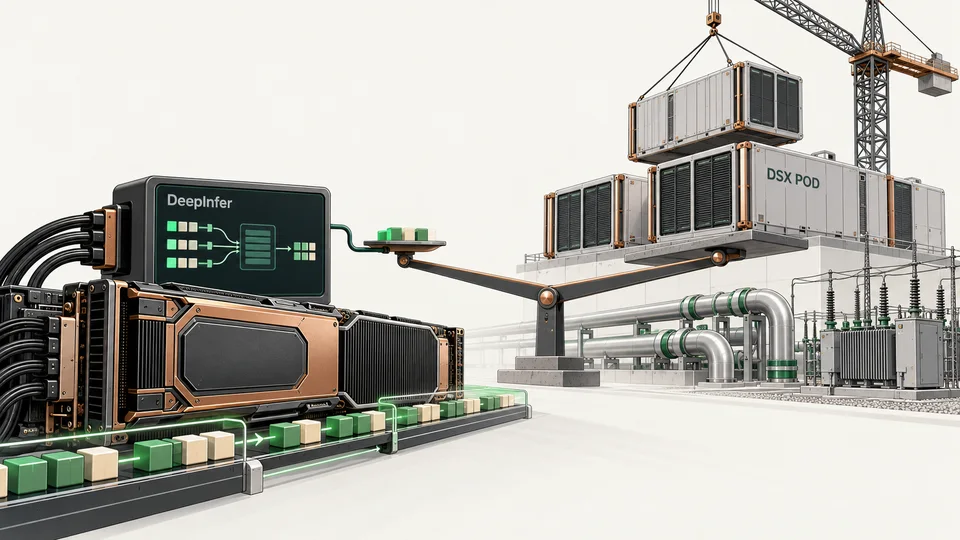
Low-Cost Intelligence vs. Expensive Ambitions: DeepInfer, DSX POD, and AI Investment Expansion

Issue 958 of “The Sequence Radar” examines inference software, modular AI factories, and enterprise AI investments side by side: cheaper per-inference does not necessarily mean lower overall industry spending. This article is compiled from the original publication and supplemented with technical scope and delivery terms based on DeepSeek and NVIDIA’s official materials.

推理软件效率与模块化AI基础设施投入的编辑示意,非实际产品照片
Timeline and related coverage

Open WebUI v0.12.4 Released: On-Demand Skill Loading, Context Compression Visualization, and Hundreds of Accessibility Improvements and Bug Fixes

Open WebUI v0.12.4 is a major maintenance release of the open-source large language model frontend, published before the trusted metadata date of 2026-10-25. Key updates include on-demand skill loading (requires enabling the built-in Skills tool and is disabled by default), explicit marking of the context compression process during chat, accessibility enhancements that address over one hundred WCAG compliance issues, and 26 feature fixes and behavioral adjustments verified through GitHub PRs/issues—covering strengthened permission controls and bug fixes for scenarios such as Safari, RTL, and multi-folder support. No new models, APIs, or third-party services were introduced, nor were any performance benchmarks, user data, or regulatory information included.

Timeline and related coverage

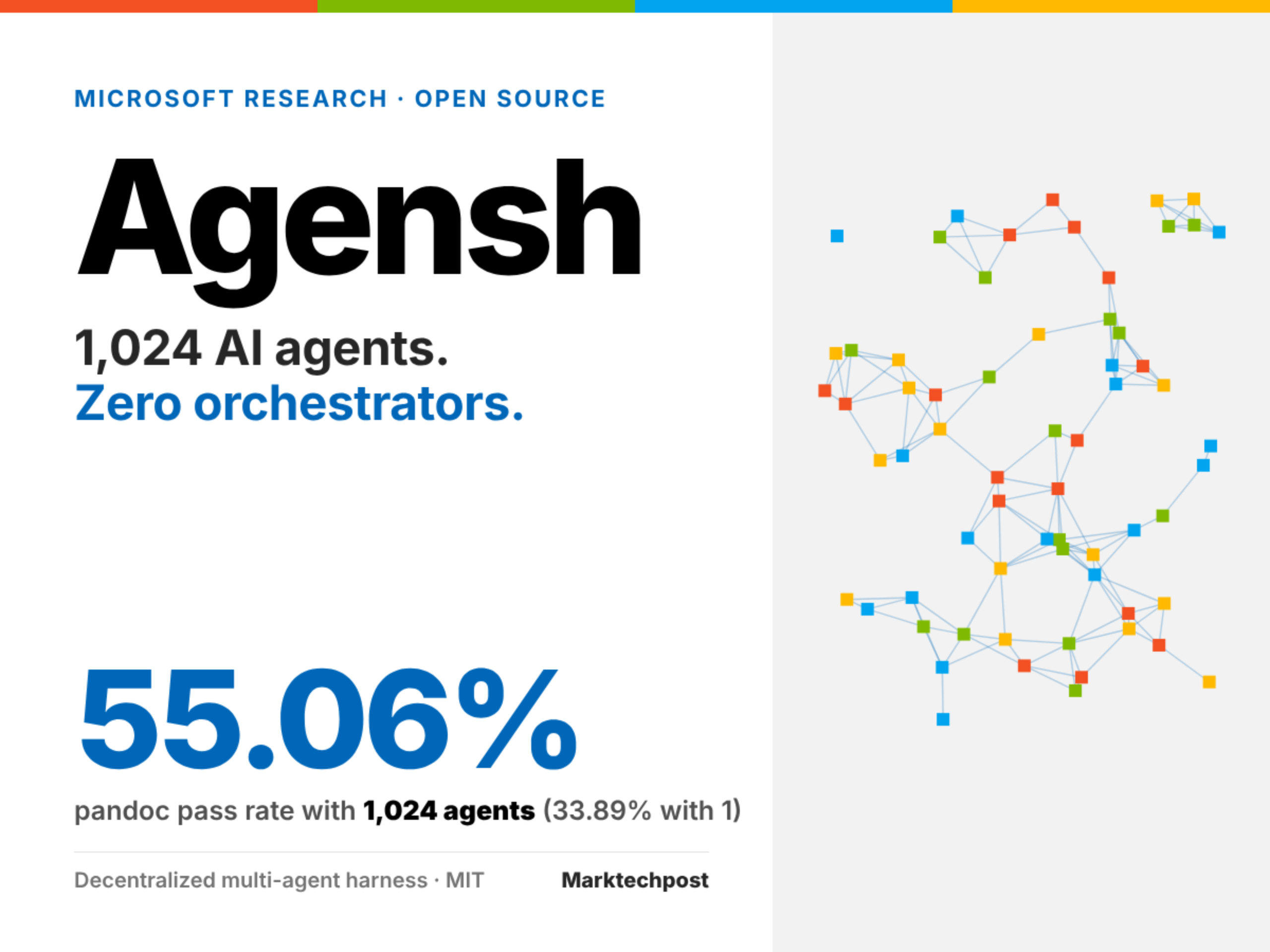
Microsoft open-sources Agensh: a decentralized framework that supports 1024 autonomous, collaboratively operating AI coding agents.

On October 25, 2026, Microsoft Research open-sourced Agensh, a multi-agent runtime framework that operates without a central coordinator, enabling 1 to 1,024 LLM-powered coding agents to self-organize and collaborate on ProgramBench. The system achieves decentralized coordination through shared dashboards inspired by Gitea, Mattermost, and DeLM, with all agents following the same prompt-driven five-step loop; its scalability has been validated in a Linux + Docker environment.

Microsoft Open-Sources Agensh: A Multi-Agent Harness for 1,024 Agents

Why it matters:This achievement represents a significant evolution in multi-agent system architectures—abandoning the traditional “master‑agent” paradigm and enabling large‑scale self‑organization through prompt engineering and lightweight service composition. Empirical results on ProgramBench (e.g., 128 agents achieving a 49% improvement in task load balancing across five tasks) establish a new benchmark for distributed AI engineering. Released under the MIT License and compatible with mainstream single‑agent tools such as Copilot CLI, it offers valuable guidance for practical development.

Timeline and related coverage

AI-driven market trends don’t undermine earnings—only valuations: Q3 reports confirm order visibility, and investors are bucking the trend by increasing positions.

From September 22 to October 22, 2026, the A-share AI sector continued to adjust, with the ChiNext Index falling 24.20% and the STAR 50 PE-TTM dropping nearly 60%, from 264 times to above 110 times. Meanwhile, corporate earnings collectively exceeded expectations during the same period—CATL reported a quarterly net profit of RMB 21.2 billion, Yuanjie Technology forecast a nearly sixfold increase, and Lianxun Instruments posted a net profit surge of over 18 times—while equity ETFs saw net inflows of nearly RMB 70 billion. The core driver of this correction was valuation compression, rather than deteriorating fundamentals.

Why it matters:The material explicitly states that the primary drivers of this round of decline are the rising discount rate (affecting the denominator) and weakening overseas regulatory expectations (eroding confidence on the numerator), which together have weighed on valuations—while industry conditions, order visibility, primary-market pricing, and policy‑exemption arrangements have all remained stable. Meanwhile, continued net ETF subscriptions and a spate of announcements from optical‑module companies indicating order backlogs extending through 2027 further confirm that the market is actively stepping in at low valuation levels, with a clear rationale and a fully substantiated chain of evidence.

Timeline and related coverage

llama.cpp releases version b11868: enhanced Hexagon NPU multi-core Flash Attention support, with cross-platform compilation and build capabilities.

llama.cpp v2.45.0 (tag b11868) has been officially released, with the core update being the introduction of a KV-head splitting mechanism in the Hexagon backend to optimize multi-core HMX Flash Attention performance and unify the FA splitting control flag. Binary packages are simultaneously available for all major platforms, including macOS, Linux, Windows, Android, iOS, and openEuler, supporting multiple backends such as CUDA 12/13, Vulkan, ROCm, OpenVINO, SYCL, and Snapdragon (Adreno + Hexagon).

Timeline and related coverage

llama.cpp releases version b11867: server-side entry point refactored, with full support for multiple platforms and heterogeneous acceleration backends.

llama.cpp has officially released version b11867 on GitHub. Key changes include a refactored server entry point (PR #31113) and the addition of the server_role mechanism. Additionally, more than 40 precompiled binaries are now available, covering macOS, Linux, Windows, Android, iOS, and openEuler, with support for diverse hardware backends such as CPU, CUDA (12.4/12.8/13.4), Vulkan, ROCm 10.0, OpenVINO, SYCL (FP16/FP32), and Snapdragon (Adreno + Hexagon).

Timeline and related coverage

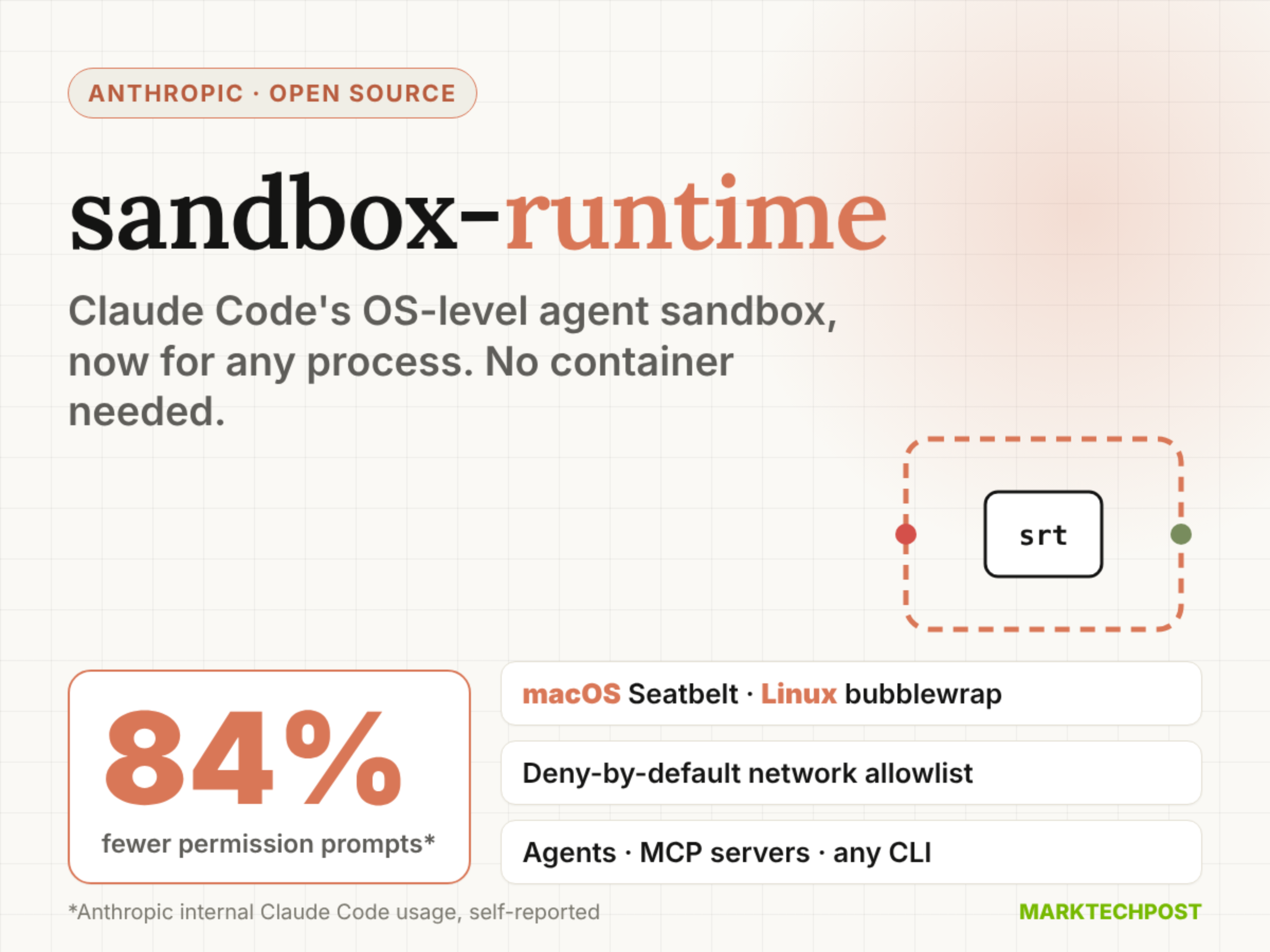
Anthropic open-sources the OS-level sandbox sandbox-runtime: providing container-free file and network isolation for AI agents.

On October 24, 2026, Anthropic open-sourced sandbox-runtime (srt), an OS-level sandboxing tool that operates without containers, designed to restrict file read/write and network access permissions for AI agents, MCP servers, and CLI tools. It supports macOS (Seatbelt), Linux (bubblewrap), and Windows (alpha), with npm package version 0.0.81 under the Apache-2.0 license.

Meet Anthropic’s sandbox-runtime: OS-Level Sandboxing for AI Agents, No Containers

Why it matters:This tool represents a significant advancement in AI security infrastructure—achieving fine-grained, full-process-tree coverage through the operating system’s native isolation mechanisms, directly addressing the risks of prompt injection and privilege escalation, and has already been deployed for internal validation within Claude Code.

Timeline and related coverage

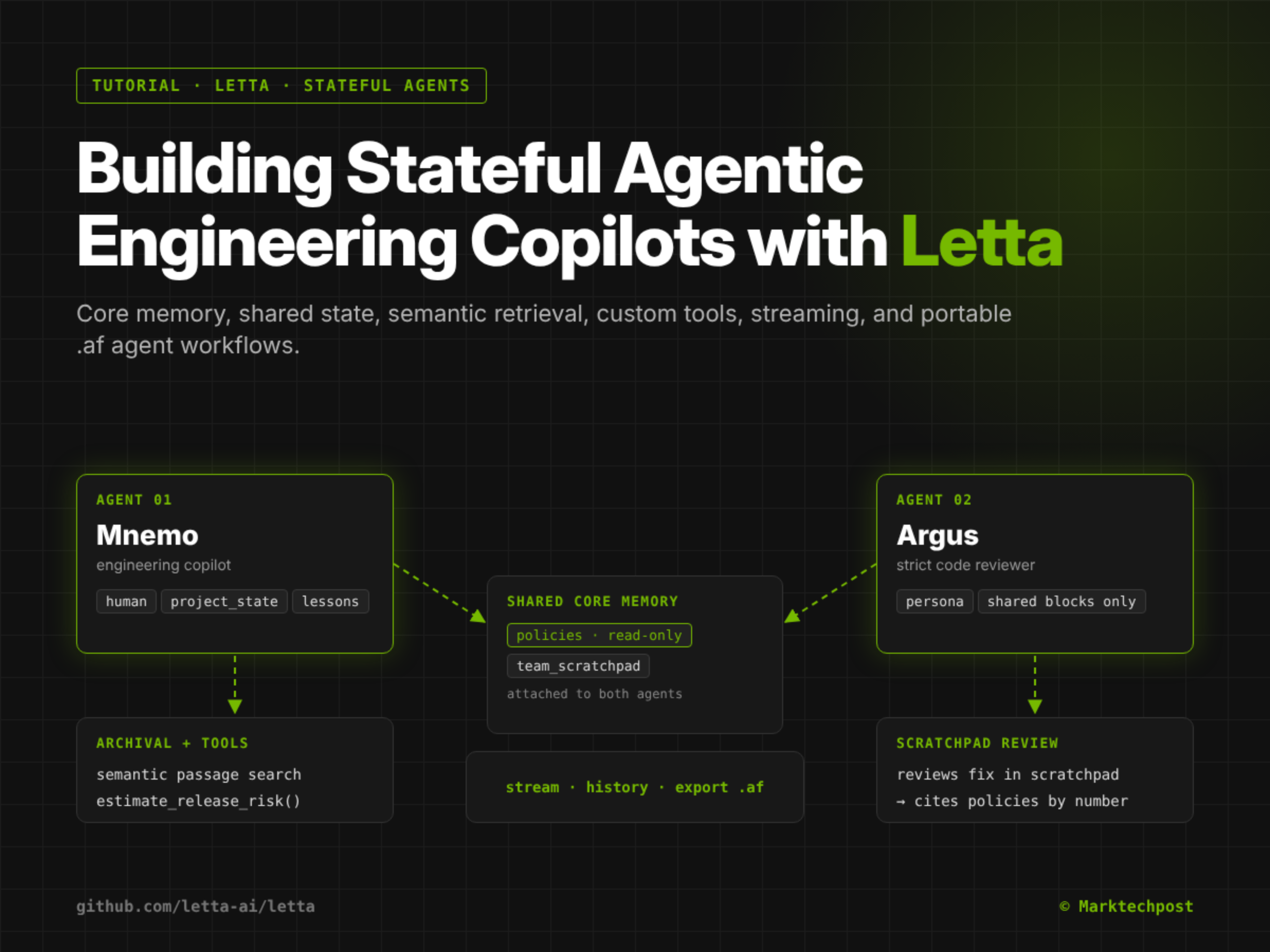
Letta platform releases a tutorial on building stateful engineering collaborators: supporting core memory, shared state, and portable workflows.

MarkTechPost published a tutorial on October 24, 2026, detailing how to build an agentic copilot with persistent state using the Letta framework. The guide covers capabilities such as verifiable core memory, multi-agent shared memory, semantic retrieval of archived knowledge, custom Python tool integration, streaming responses, and .agent format (.af) export. The content serves as a technical practice guide and does not provide performance metrics, security audits, or production‑environment validation.

Stateful Agentic Engineering Copilots with Letta: Core Memory, Shared State, Semantic Retrieval, Custom Tools, Streaming, and Portable Agent Workflows
Timeline and related coverage

月之暗面发布Kimi K3.1 Pro:2.8万亿参数开源权重模型,11月4日开放权重

月之暗面于2026年10月22日前后发布Kimi K3.1 Pro,一款2.8万亿参数、1040亿激活参数的多模态MoE模型,宣称性能逼近Fable 5.1;官方承诺11月4日发布开源权重,但截至报道时权重尚未公开;独立评测显示其在智能指数、代码与网络安全基准中表现突出,但存在推理成本、本地部署可行性及营销透明度等争议。

[AINews] Kimi 3.1 Pro 104BA-2.8T: Fable-5.1-Class Open Weights narrows Closed-AI lead to 1 month... and Pro Highspeed API with 2-3× speed
Timeline and related coverage

ULME Framework Achieves True Unification of Text Embedding and Language Modeling: A New Paper on arXiv Proposes a Predictive Coupling Mechanism

On October 24, 2026, arXiv published the paper arXiv:2610.30705v1, introducing ULME—a post-training framework for causal-decoder–based large language models that, through a predictive coupling mechanism, achieves, for the first time, a mutually reinforcing unification of text embedding and language-generation capabilities. This approach was validated on the Qwen2.5/Qwen3 series (with 0.5B–8B parameters), yielding MTEB improvements of 3.3–4.1 points while maintaining performance on generation tasks such as MMLU.

ULME: Predictive Coupling for Mutually Reinforcing Embedding and Language Modeling

Why it matters:This paper directly addresses the core issue of fragmented multimodal LLM capabilities: embeddings and generation have long been handled either by separate models or by “pseudo-unified” models that rely solely on parameter sharing. ULME achieves a substantial architectural breakthrough by employing learnable slots and joint training with three objectives—including a stop-gradient prediction loss—enabling the generation process to actively shape the embedding representations. The study features broad experimental coverage, strong baselines, comprehensive metrics, and was published on a reputable preprint platform, balancing timeliness with technical rigor.

Timeline and related coverage

Clinicians Lead the Development of Verifiable Safety Guidelines: Establishing a Traceable Layer of Safeguards for Mental Health Chatbots

On October 24, 2026, arXiv published the paper arXiv:2610.30690v1, which proposes a four‑rule safety‑check rulebook defined, finalized, and adjudicated under the guidance of two clinical physicians. After formal verification, this rulebook is deployed as a guardrail layer to govern the outputs of large language models (LLMs) in mental health contexts. All judgments within this guardrail can be traced back to a single naming rule and sixteen factual verifications, aiming to enhance the interpretability and testability of safety assessments.

From Clinical Judgment to Checkable Rules: Clinician-Led Guardrails for Mental-Health Chatbots

Why it matters:This study offers a safety‑enhancing approach distinct from mainstream prompt engineering, LLM‑as‑a‑Judge, or Constitutional AI. Its core innovation lies in structuring and formalizing clinical decision‑making while maintaining a complete audit trail throughout the process. All key claims—such as the number of rules, validation methods, factual base, comparative experimental data, and cost metrics—are explicitly stated in the original text, and the publication date (2026‑10‑24) aligns with the current UTC date (2026‑10‑25), ensuring timeliness and a solid foundation of credibility.

Timeline and related coverage

TauIndianBankBench Released: A Program-Aware Dialogue Agent Evaluation Benchmark for the Indian Retail Banking Sector

On October 24, 2026, researchers published TauIndianBankBench on arXiv (ID 2610.30161v1)—a task-oriented benchmark comprising 1,000 tasks, specifically designed to evaluate whether language-model–driven banking dialogue agents strictly adhere to operational procedures (such as obtaining a final settlement quote before closing an account), rather than relying solely on the final record to determine success or failure.

TauIndianBankBench: Procedure-Aware, Action-Oriented Evaluation of Tool-Using Conversational Agents

Why it matters:This benchmark directly addresses current blind spots in LLM evaluation: traditional methods only verify the final state of a dialogue, leading to 6.5–12.0% of sessions involving procedural jumps or unauthorized actions being mistakenly classified as successful; its program-aware design fills a critical gap in compliance assessment for business automation in the Indian banking sector.

Timeline and related coverage

New research introduces the ReflectPO framework, enhancing the autonomous error-correction capabilities of large language model agents in long-term tasks.

On October 24, 2026, arXiv published a research paper titled “ReflectPO: Reflection-Guided Policy Optimization for Long-Horizon LLM Agents” (ID 2610.30933v1), introducing a reinforcement learning framework called ReflectPO, designed to enhance the autonomous error-recovery capabilities of tool-augmented large language model agents in complex, multi-step, state-dependent tasks.

ReflectPO: Reflection-Guided Policy Optimization for Long-Horizon LLM Agents

Why it matters:This paper is a cutting-edge AI study recently published, focusing on a key bottleneck in the real-world deployment of LLM-based agents: the cumulative effect of early errors in long‑term tasks. Its proposed dual-component design—Reflection‑Guided Sampling and Tree‑Structured Credit Assignment—features methodological innovation and empirically outperforms multiple baselines across two benchmarking scenarios, making it a valuable technical reference.

Timeline and related coverage

WikiOriginQA released: A question-answering dataset for assessing cultural bias, automatically constructed based on the creation times of multilingual Wikipedia editions.

On October 24, 2026, the research team published a paper on arXiv (ID 2610.30677v1), introducing WikiOriginQA, a fully automated question-answering dataset that leverages the creation dates of Wikipedia editions in various languages to objectively characterize the origins of knowledge, with the aim of enhancing the scalability of cultural bias assessment.

WikiOriginQA: Automated Construction of a QA Dataset with Knowledge Origins for Analyzing Cultural Bias

Why it matters:This study proposes a method for generating culturally grounded provenance data at scale across languages without manual annotation, and experimental results demonstrate that large language models exhibit systematic performance advantages on Anglophone cultural-related tasks, providing a new tool for the quantitative analysis of cultural bias.

Timeline and related coverage

Lighthouse: The First Trusted Digital Assistant Dedicated to the History of the U.S. Civil Rights Movement Has Been Released

The paper arXiv:2610.30158v1, published on October 24, 2026, introduces Lighthouse, the first digital assistant dedicated to exploring the history of the U.S. Civil Rights Movement, based on archival data from South Carolina. Its core innovation lies in adopting trustworthy content and user harm mitigation as design principles, employing a neuro-symbolic hybrid architecture that integrates large language models with rule-based symbolic reasoning.

Lighthouse: On Building a Trustworthy Digital Assistant for Exploring History with Civil Rights Archives

Why it matters:This study is the first to apply AI‑assisted historical exploration to the sensitive and pivotal period of the Civil Rights Movement, explicitly introducing dual constraints—“trustworthiness” and “harm modeling”—which set it apart from general‑purpose chatbots. Its methodology (neurosymbolic integration), evaluation approach (including a human‑consensus‑based gold standard for subjective questions), and data scale (over 18,000 original archival documents) all hold significant academic demonstrative value.

Timeline and related coverage

SIM-UT: A User Behavior Simulation and Evaluation Framework for Medical Triage Chatbots

Researchers have proposed SIM-UT (Simulation of User Behaviour for Triage), a multi-round, real-user-behavior–based evaluation method designed to identify eco‑valid failure patterns of large language model (LLM)-driven medical triage chatbots in real-world settings within low- and middle-income countries (LMICs).

SIM-UT: A User Simulation based Evaluation Framework for Medical Triage Chatbots

Why it matters:This framework breaks through the limitations of existing single-round, English‑centric evaluations by conducting over 5,000 rounds of multilingual simulated conversations, covering real‑world WhatsApp health programs in India, South Africa, and Kenya. For the first time, it systematically reveals “de‑escalation risk,” a critical failure mode, demonstrating both methodological innovation and significant clinical safety implications.

Timeline and related coverage