Skip to content
AI NEWS JOURNAL
AI, IN PERSPECTIVE

Search AI news

Search headlines, summaries and articles to connect the dots.

Newest first

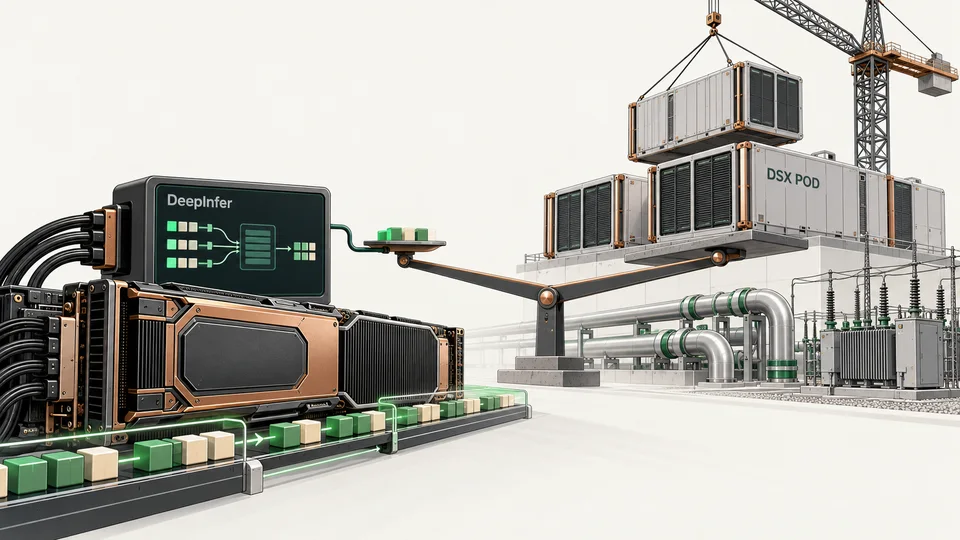
Low-Cost Intelligence vs. Expensive Ambitions: DeepInfer, DSX POD, and AI Investment Expansion

Issue 958 of “The Sequence Radar” examines inference software, modular AI factories, and enterprise AI investments side by side: cheaper per-inference does not necessarily mean lower overall industry spending. This article is compiled from the original publication and supplemented with technical scope and delivery terms based on DeepSeek and NVIDIA’s official materials.

推理软件效率与模块化AI基础设施投入的编辑示意,非实际产品照片
Timeline and related coverage

Kimi releases K3.1 Pro: Terminal task capabilities top the charts, with simulation debugging and multimodal programming showcasing the nascent form of embodied intelligence.

On October 25, 2026, Kimi released the K3.1 Pro model, which ranked first in the Terminal-Bench 4.0 terminal task benchmark with a 67.2% success rate. Its capabilities—including autonomously fixing emulator errors, performing physics simulations, conducting audio analysis, constructing 3D scenes, and editing videos—point toward exploring pathways in embodied intelligence technology.

根据报道中的虚拟人行走训练和模拟器调试制作的编辑示意,非软件实拍截图

Why it matters:The material is based on a hands-on test report published with authorization from Titanium Media, covering authoritative third-party benchmark data (such as Artificial Analysis and Terminal-Bench 4.0), official self-test results, and the author’s multi-scenario functional validation. It highlights the K3.1 Pro’s substantial advancements in execution performance, simulation closed-loop capabilities, and multimodal programming, while clearly noting performance limitations and undisclosed information (e.g., Flash/Ultra has not yet been released), in compliance with fact-checking and source attribution requirements.

Timeline and related coverage

Panel manufacturers are collectively raising prices to cope with upstream cost pressures driven by AI, but downstream acceptance remains low, putting pressure on end-product quality control.

Starting in September 2026, panel manufacturers such as TCL CSOT, BOE, and HKC have issued price‑increase notices one after another. The primary reason is the rapid growth of AI large models, which has led to a sharp surge in demand for HBM, squeezing capacity for mature‑process chips and driving up the prices of key components like driver ICs, PCBs, and glass substrates. Upstream suppliers, including Corning, have also raised their prices in tandem. Despite clear cost pressures, downstream TV and monitor brands have yet to broadly increase purchase prices, while end users continue to report frequent quality‑control issues such as overheating and black spots. As a result, these price hikes have not yet translated into actual sales or improved user experiences.

AI大模型狂飙,面板行业也扛不住了

Why it matters:The materials system reveals the cross‑chain transmission mechanism through which the AI industry impacts indirectly related hardware sectors—rather than driving panel demand directly, it triggers a full‑chain cost repricing via the reallocation of wafer‑fabrication capacity. At the same time, it highlights a significant gap between price‑increase behavior and actual market feedback (price rigidity, declining shipments, and user complaints), underscoring the deep‑seated contradiction between industry bargaining power and product competitiveness.

Timeline and related coverage

llama.cpp has released version b11870, officially supporting the DeepSeek-V4.1-Flash model.

llama.cpp has added support for the DeepSeek-V4.1-Flash (deepseek41) model in version b11870, and implemented several low-level optimizations tailored to its Engram architecture, including simplification of KV cache computation, replacement of MXFP8 with BF16 precision, and in-graph row gather operations; it also provides multi-platform binary builds covering macOS, Linux, Windows, Android, iOS, and openEuler.

Timeline and related coverage

llama.cpp releases version b11865: adds RDMA receive boundary checking and supports multiple platform backends, including CUDA 13.4, ROCm 10.0, and Snapdragon NPU.

The llama.cpp project has released build version b11865, with core changes including the addition of memory-boundary checks in the RDMA receive logic (PR #30399) and a significant expansion of hardware-acceleration support, covering CUDA 13.4, ROCm 10.0, Vulkan, OpenVINO, SYCL, and Qualcomm Snapdragon—providing full-stack heterogeneous computing backends for CPU, Adreno, and Hexagon. macOS KleidiAI support and openEuler builds have been explicitly marked as DISABLED.

Timeline and related coverage

llama.cpp releases version b11861: fixes an inference exception caused by the minimax-m3 model’s quantized scaling tensor not being propagated.

llama.cpp v.b11861 fixes the weight distortion issue in the minimax-m3 model that occurred under NVFP4/MXFP8 quantization due to the scale tensor not being injected into the computation graph, thereby preventing “token soup” and residual vanishing; it also provides multi-platform binary builds covering macOS, Linux, Windows, Android, iOS, and openEuler.

Timeline and related coverage

Sebastian Raschka has released an eight-video course titled “Building a Reasoning Model from Scratch.”

On October 24, 2026, Sebastian Raschka published an eight-part, over-11-hour hands-on video course on Python and PyTorch in Ahead of AI magazine (magazine.sebastianraschka.com), systematically covering the evaluation of inference models, scaling during inference, reinforcement learning (RLVR), and knowledge distillation, with all methods implemented using the pre-trained Qwen3-0.6B model.

Why it matters:This course is the author’s advanced technical educational offering, following “Building Large Language Models from Scratch.” It focuses on the core evolutionary direction of today’s mainstream LLMs—enhancing inference capabilities—covering the entire technical pipeline from setting up the foundational environment to GRPO reinforcement learning and self‑distillation. The author explicitly states that all implementations are “hand‑crafted from scratch,” fully reproducible, and highly instructive with significant engineering reference value.

Timeline and related coverage

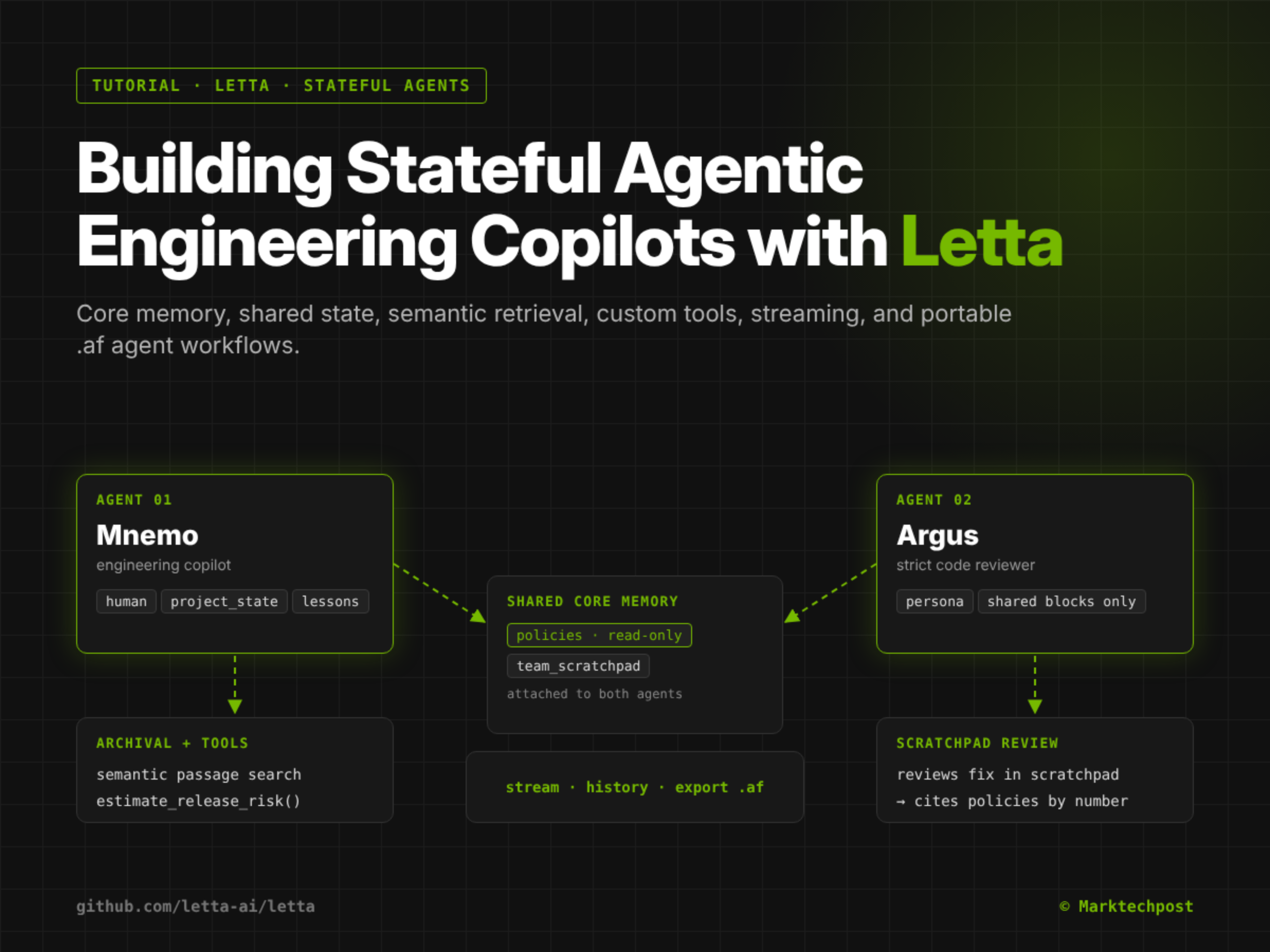
Letta platform releases a tutorial on building stateful engineering collaborators: supporting core memory, shared state, and portable workflows.

MarkTechPost published a tutorial on October 24, 2026, detailing how to build an agentic copilot with persistent state using the Letta framework. The guide covers capabilities such as verifiable core memory, multi-agent shared memory, semantic retrieval of archived knowledge, custom Python tool integration, streaming responses, and .agent format (.af) export. The content serves as a technical practice guide and does not provide performance metrics, security audits, or production‑environment validation.

Stateful Agentic Engineering Copilots with Letta: Core Memory, Shared State, Semantic Retrieval, Custom Tools, Streaming, and Portable Agent Workflows
Timeline and related coverage

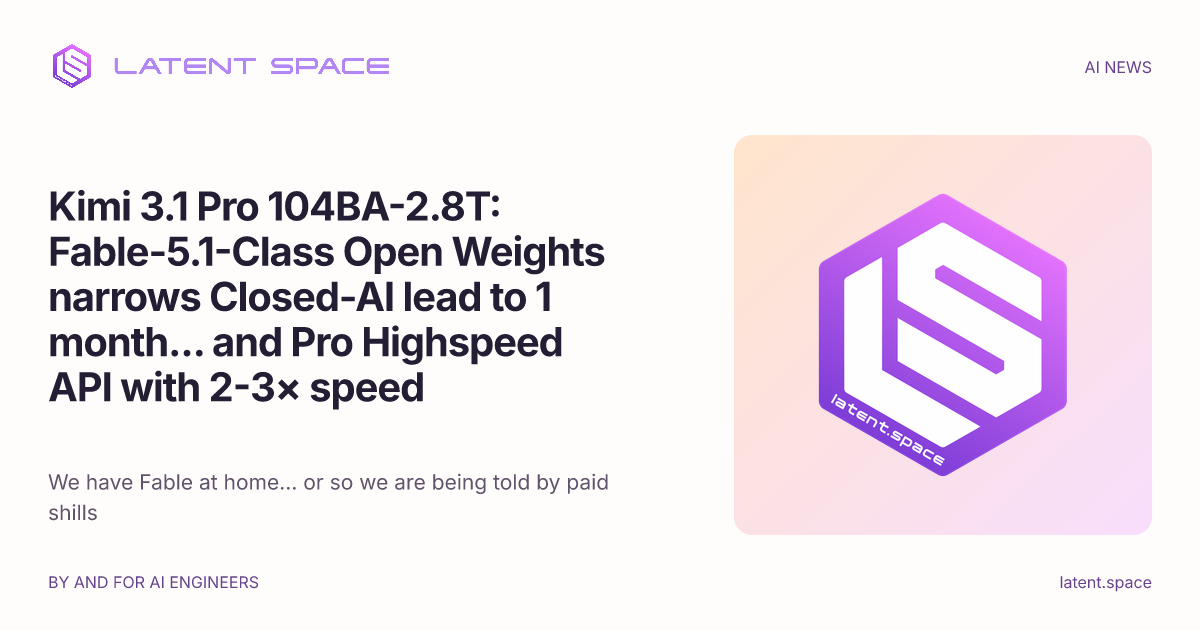
月之暗面发布Kimi K3.1 Pro:2.8万亿参数开源权重模型,11月4日开放权重

月之暗面于2026年10月22日前后发布Kimi K3.1 Pro,一款2.8万亿参数、1040亿激活参数的多模态MoE模型,宣称性能逼近Fable 5.1;官方承诺11月4日发布开源权重,但截至报道时权重尚未公开;独立评测显示其在智能指数、代码与网络安全基准中表现突出,但存在推理成本、本地部署可行性及营销透明度等争议。

[AINews] Kimi 3.1 Pro 104BA-2.8T: Fable-5.1-Class Open Weights narrows Closed-AI lead to 1 month... and Pro Highspeed API with 2-3× speed
Timeline and related coverage

ULME Framework Achieves True Unification of Text Embedding and Language Modeling: A New Paper on arXiv Proposes a Predictive Coupling Mechanism

On October 24, 2026, arXiv published the paper arXiv:2610.30705v1, introducing ULME—a post-training framework for causal-decoder–based large language models that, through a predictive coupling mechanism, achieves, for the first time, a mutually reinforcing unification of text embedding and language-generation capabilities. This approach was validated on the Qwen2.5/Qwen3 series (with 0.5B–8B parameters), yielding MTEB improvements of 3.3–4.1 points while maintaining performance on generation tasks such as MMLU.

ULME: Predictive Coupling for Mutually Reinforcing Embedding and Language Modeling

Why it matters:This paper directly addresses the core issue of fragmented multimodal LLM capabilities: embeddings and generation have long been handled either by separate models or by “pseudo-unified” models that rely solely on parameter sharing. ULME achieves a substantial architectural breakthrough by employing learnable slots and joint training with three objectives—including a stop-gradient prediction loss—enabling the generation process to actively shape the embedding representations. The study features broad experimental coverage, strong baselines, comprehensive metrics, and was published on a reputable preprint platform, balancing timeliness with technical rigor.

Timeline and related coverage

Aggregated scores in LLM evaluations mask the instability of individual judgments: New research from Arena-Hard reveals instruction sensitivity.

The study employed 500 Arena-Hard v2.0 prompts, with responses from two models held constant, and used GPT‑4.1 as the judge. Under eight instruction combinations, repeated evaluations revealed that even when aggregate scores varied only slightly (e.g., by ±1 point), up to 21.2% of individual prompt outcomes (win/draw/loss) changed; further adjustments to the instructions amplified this instability, leading to an additional 28.2 percentage points in outcome shifts, while the aggregate scores themselves remained virtually unchanged.

Behind Aggregate Scores: What Systematically Varying Arena-Hard's LLM Judge Reveals

Why it matters:The study directly addresses a core blind spot in current LLM evaluation practices—overreliance on aggregate scores while neglecting the reproducibility of individual judgments and instruction dependency—providing critical methodological warnings for tasks that rely on fine-grained assessments, such as preference modeling and reinforcement learning from human feedback (RLHF).

Timeline and related coverage

The study proposes a self-assessment reinforcement learning framework, SARL, which enhances the search state-awareness capability of retrieval-augmented large models.

On October 24, 2026, arXiv published the paper arXiv:2610.30435v1, introducing the Self-Assessment Reinforcement Learning (SARL) framework, which aims to address the issue in existing retrieval-augmented large language models where search agents lack the ability to perceive search states.

Self-Assessment Reinforcement Learning for Search-State Awareness in Retrieval-Augmented Large Language Models

Why it matters:This study addresses a critical limitation of retrieval-augmented large language models—namely, their tendency to generate hallucinatory reasoning and prematurely terminate searches when they fail to recognize previously acquired or missing information in complex tasks. It proposes an end-to-end reinforcement learning approach that requires no additional evaluation during testing, achieving significant performance improvements on multi-hop reasoning and deep-research benchmarks.

Timeline and related coverage

A Study on the Prompt Sensitivity of Tool-Augmented Language Models: Tools Improve Accuracy but Exacerbate the Impact of Statement Variability

A study published on October 24, 2026, on the arXiv platform (ID 2610.31148v1) indicates that, under tool-augmented conditions, the comparative robustness of six open-source language models across five domains and five problem formulations did not improve; on the contrary, while tools increased the accuracy of questions that programs could answer, they also heightened the sensitivity of model ranking changes across different phrasings.

Prompt Sensitivity in Tool-Augmented Model Comparisons

Why it matters:This study employs a newly designed matching protocol that decouples key stages in the entire tool-call process—such as call decision-making, tool responses, and no-call reports—and empirically demonstrates that “improved accuracy” does not necessarily translate into “greater stability.” It further highlights that interface design and instruction details significantly modulate the degree of sensitivity, offering direct guidance for model evaluation practices.

Timeline and related coverage

RIFT proposes a dynamic KV cache compression strategy to mitigate the issue of decoding staleness and improve speculative decoding quality.

On October 24, 2026, arXiv published the paper arXiv:2610.31098v1, introducing RIFT—a dynamic KV cache compression method for drafter models in speculative decoding. By balancing pre-filled information with newly generated tokens and incorporating compressibility training, RIFT enables the Qwen3.5-4B drafter model to maintain over 98% of its full cached receptive length when performing long-context generation at the scale of Qwen3.5-122B, all within an 8K-token KV cache budget.

RIFT: KV Cache Compression for Draft Models with Complementary Compressibility Training

Why it matters:This study directly addresses the trade-off between hardware costs and accuracy degradation caused by KV cache bloat in long‑sequence generation. It is the first to formally define and quantify the phenomenon of “decode staleness,” and proposes a practical refresh mechanism along with a training–inference co‑optimization scheme. The experimental setup is well specified (32K input / 4K output / 8K cache), and the results offer valuable engineering insights. The paper is an arXiv preprint, with a publication date (2026-10-24) that matches the system’s current date (2026-10-25), ensuring strong timeliness.

Timeline and related coverage

New research casts doubt on the effectiveness of context-enhanced methods in reasoning: any gains in accuracy may be due to random fluctuations.

An AI research paper published on October 24, 2026, on arXiv (ID 2610.30983v1) systematically evaluated five context‑enhanced reasoning methods and found that the reported accuracy improvements may not reflect genuine gains in capability but could instead stem from undirected perturbations—correcting some predictions while simultaneously undermining others.

A Reality Check of Inference-Time Context Augmentation Methods

Why it matters:This paper for the first time establishes a unified evaluation framework that spans methods, models, and datasets, pointing out that relying solely on performance gains can easily obscure reliability shortcomings. In particular, it warns that filler-token–based approaches (which do not introduce new information) primarily perturb predictions near the decision boundary and should therefore not be deployed directly in real-world applications.

Timeline and related coverage

Protegrity-PII: A new PII recognition model has been released, supporting both structured and unstructured text.

On October 24, 2026, the research team published the Protegrity-PII model on arXiv (ID 2610.30518v1), a novel decision-making model designed for identifying personally identifiable information (PII). On the new benchmark PII-SCOPE, it achieves a typological recall of 0.915 and a precision of 0.907, with an inference speed of 0.49 seconds per million characters and a cost of only $0.0005 per million characters (using a single RTX 6000 GPU in batch mode).

Protegrity-PII Technical Report

Why it matters:This technical report provides quantifiable performance metrics, clear hardware and cost specifications, the newly proposed benchmark PII-SCOPE, and an empirical comparison of out-of-distribution generalization capabilities, offering both research transparency and engineering reference value. Its publication date (2026-10-24) is no later than the current date (2026-10-26), making it a valid, recent achievement.

Timeline and related coverage

The study proposes to control the compilation of autoregressive large models into strategy-precise parallel inference, thereby enhancing the efficiency of hierarchical RAG.

A research paper published on October 24, 2026, on arXiv (ID 2610.30664v1) proposes a new method that compiles the autoregressive control logic of large language models in Hierarchical RAG into a policy-exact parallel inference pipeline, achieving a 35–47% reduction in control latency on MetaX devices while maintaining 84–89% policy consistency.

Compiling Autoregressive LLM Control into Policy-Exact Parallel Inference for Hierarchical RAG

Why it matters:This work addresses the bottleneck inherent in LLMs when used as structured decision‑making controllers—namely, their reliance on sequential text decoding—by proposing a theoretically provable parallelization compilation scheme. Experiments conducted on real hardware (MetaX, H800) and with multiple data partitions demonstrate strong efficiency and clear technical details, positioning this research as cutting‑edge optimization for trustworthy AI systems.

Timeline and related coverage

FusionEval Released: A New Benchmark for Large Language Model Fusion

On October 24, 2026, researchers published the paper arXiv:2610.30162v1 on arXiv, introducing FusionEval—the first unified benchmark specifically designed to evaluate fusion methods for large language models. It covers vulnerable aspects such as reasoning chain length and tool invocation, and supports comparisons between fine-tuning-based and zero-shot fusion approaches.

FusionEval: Benchmarking Model Fusion for Large Language Models

Why it matters:This benchmark fills the gap left by existing evaluations, which inadequately cover long-chain reasoning and tool usage; it clearly distinguishes between average performance and worst-case capability retention, provides a reproducible expert pool (based on Qwen3/Llama), multi-dimensional metrics (including GPU memory and runtime), and open-source code, offering strong practical guidance.

Timeline and related coverage

Research on Modulating the Capability Distribution of Large Language Models via Singular Value Spectrum Intervention: Empirical Analysis of Llama and Qwen Models

An AI study published on October 24, 2026, on arXiv (ID 2610.30676v1) applied post-hoc singular-value spectrum smoothing and spike perturbations to five open-source Llama and Qwen instruction-tuned models, finding that this lightweight intervention can systematically reshape the trade-offs in model performance across three capability domains: factual knowledge, language understanding, and deductive reasoning.

Spectral Smoothing and Spiking Perturbations Reconfigure Capability Profiles and Selective Task Performance in Large Language Models

Why it matters:This paper is the first to empirically demonstrate, within a multi‑model, multi‑task framework, the causal impact of the singular value spectrum of transformer feedforward layers on downstream capabilities, revealing structurally sensitive patterns in capability allocation and offering a new pathway for decoupling model capabilities and enabling controllable editing. All conclusions are based on publicly available models and standard benchmarks, with transparent methods and comprehensive evaluation dimensions.

Timeline and related coverage

Research reveals that large language models exhibit “invisibility” bias: the rejection rate for evaluating information about Black describers reaches as high as 46%.

An empirical study published on October 24, 2026, on arXiv (paper ID 2610.30785v1) found that mainstream large language models from OpenAI and Anthropic exhibit a significant “invisibility” bias in trust assessment tasks—specifically, they systematically refuse to evaluate information when prompts contain protected attributes (such as “Black”), rather than basing their decisions on the quality of evidence; this bias is difficult to detect using conventional auditing methods.

Invisibilization as a Source of Probability Bias in Language Models

Why it matters:This study employs a rigorously designed two-urn Bayesian decision experiment, encompassing 6,600 sessions and 10 descriptive configurations. It is the first to quantify the cost of model‑driven rejection behavior triggered by identity labels and reveals its counterintuitive characteristics: rejection rates vary dramatically (46% for Black describers vs. 9% for White describers), yet once evaluated, Black describers actually receive slightly higher trust; moreover, bias intensifies with increasing reasoning depth, relies on specific vocabulary rather than semantics, and worsens under warning instructions—findings that carry direct implications for AI fairness assessment and alignment practices.

Timeline and related coverage