Skip to content
AI NEWS JOURNAL
AI, IN PERSPECTIVE

Search AI news

Search headlines, summaries and articles to connect the dots.

Newest first

LangChain releases the five core components of its “Enterprise-Level Agent Framework”

On October 25, 2026, LangChain published a blog post systematically outlining the five universal architectural principles it has distilled from deploying AI agents (GTM Agent, OpenSWE, Content Studio) within its marketing, sales, and engineering teams: native integration with the work environment (Slack), a dynamic identity model (OBO + fixed credentials), a two-tiered memory mechanism (global/user-level), sandboxed code execution, and a high proportion of scheduled operations (not manually triggered). All agents are built on the Managed Deep Agents platform.

Why it matters:This information originates from the official LangChain blog, published on 2026-10-25T18:06:32.000Z—earlier than the current system time of 2026-10-25T23:01:18.857Z. The content focuses on implemented internal agent practices, with specific details such as Slack thread isolation, GitHub account attribution logic, and tiered permissions for Notion/Twitter, without including unverified predictions or external claims, thus meeting requirements for timeliness and factual accuracy.
Timeline and related coverage

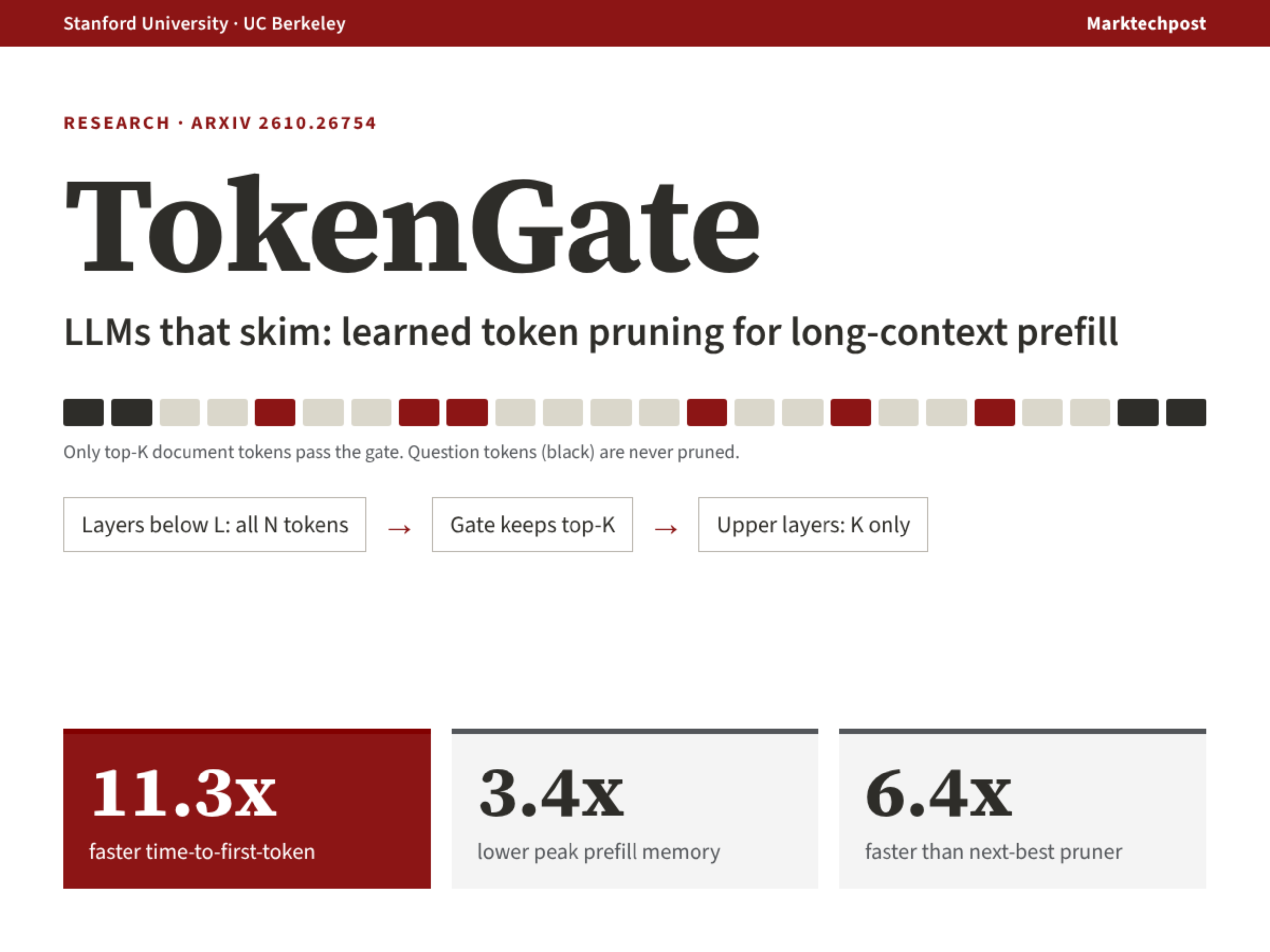
Researchers from Stanford and UC Berkeley Introduce TokenGate: Token-Gated Attention Makes Long-Context Prefill Up to 11.3x Faster

Researchers from Stanford University and the University of California, Berkeley have introduced TokenGate—a plug-and-play, learnable token-pruning module designed for existing large language models (LLMs). This approach accelerates the first-token generation time (TTFT) for long-context prefill by 1.4 to 11.3 times without sacrificing accuracy, while reducing peak memory usage by 1.5 to 3.4 times. The associated code and checkpoints have been made open source.

Researchers from Stanford and UC Berkeley Introduce TokenGate: Token-Gated Attention Makes Long-Context Prefill Up to 11.3x Faster
Timeline and related coverage

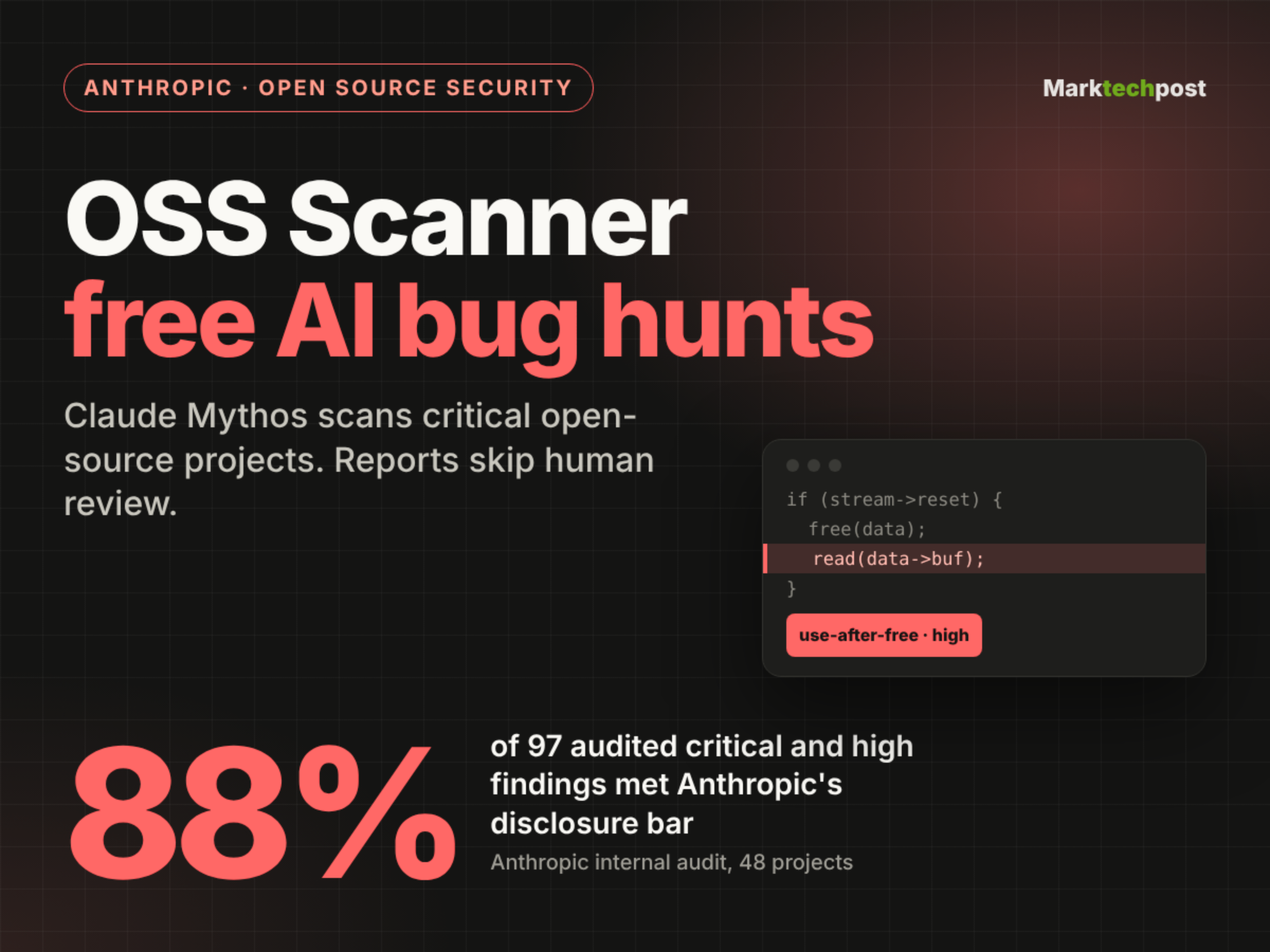
Anthropic launches OSS Scanner, a free AI-powered vulnerability scanner for critical open-source projects.

Anthropic launched OSS Scanner on October 8, 2026—a free, opt-in AI vulnerability-scanning tool powered by strong models such as Claude Mythos, designed specifically for critical open-source projects. As of October 19, it had onboarded 114 projects and, within 11 days, reported 77 high-severity and 803 medium-severity vulnerabilities (according to model ratings), with 88% of sampled audit results meeting its disclosure standards.

Anthropic Launches OSS Scanner, a Free AI Vulnerability Scanner

Why it matters:This tool represents a large-scale implementation of LLMs in the open-source security domain, characterized by zero cost, full automation, and offline auditing; however, bypassing the human review stage introduces risks of false positives and duplicate issues. Its accuracy metrics—88% detection rate and 1% false positive rate—and real-world project feedback (e.g., wolfSSL, curl) provide an empirical benchmark for the current state of AI‑driven vulnerability discovery.

Timeline and related coverage

Kimi releases K3.1 Pro: Terminal task capabilities top the charts, with simulation debugging and multimodal programming showcasing the nascent form of embodied intelligence.

On October 25, 2026, Kimi released the K3.1 Pro model, which ranked first in the Terminal-Bench 4.0 terminal task benchmark with a 67.2% success rate. Its capabilities—including autonomously fixing emulator errors, performing physics simulations, conducting audio analysis, constructing 3D scenes, and editing videos—point toward exploring pathways in embodied intelligence technology.

根据报道中的虚拟人行走训练和模拟器调试制作的编辑示意,非软件实拍截图

Why it matters:The material is based on a hands-on test report published with authorization from Titanium Media, covering authoritative third-party benchmark data (such as Artificial Analysis and Terminal-Bench 4.0), official self-test results, and the author’s multi-scenario functional validation. It highlights the K3.1 Pro’s substantial advancements in execution performance, simulation closed-loop capabilities, and multimodal programming, while clearly noting performance limitations and undisclosed information (e.g., Flash/Ultra has not yet been released), in compliance with fact-checking and source attribution requirements.

Timeline and related coverage

A quarter of PRs are “AI garbage”! The Linux Foundation has released a new report: AI writes code 52% faster, yet open-source maintainers are even more exhausted.

On October 20, the Linux Foundation released a report indicating that generative AI reduces the time required for code writing by an average of 52%; however, open-source project maintainers estimate that roughly 25% of pull requests are low-quality “AI slop,” with this figure rising to 31% in large-scale projects. The report highlights that the efficiency gains have not been matched by corresponding reductions in review and governance costs, as only 35% of projects have established formal AI contribution policies, underscoring growing developer burnout and a trust deficit.

Timeline and related coverage

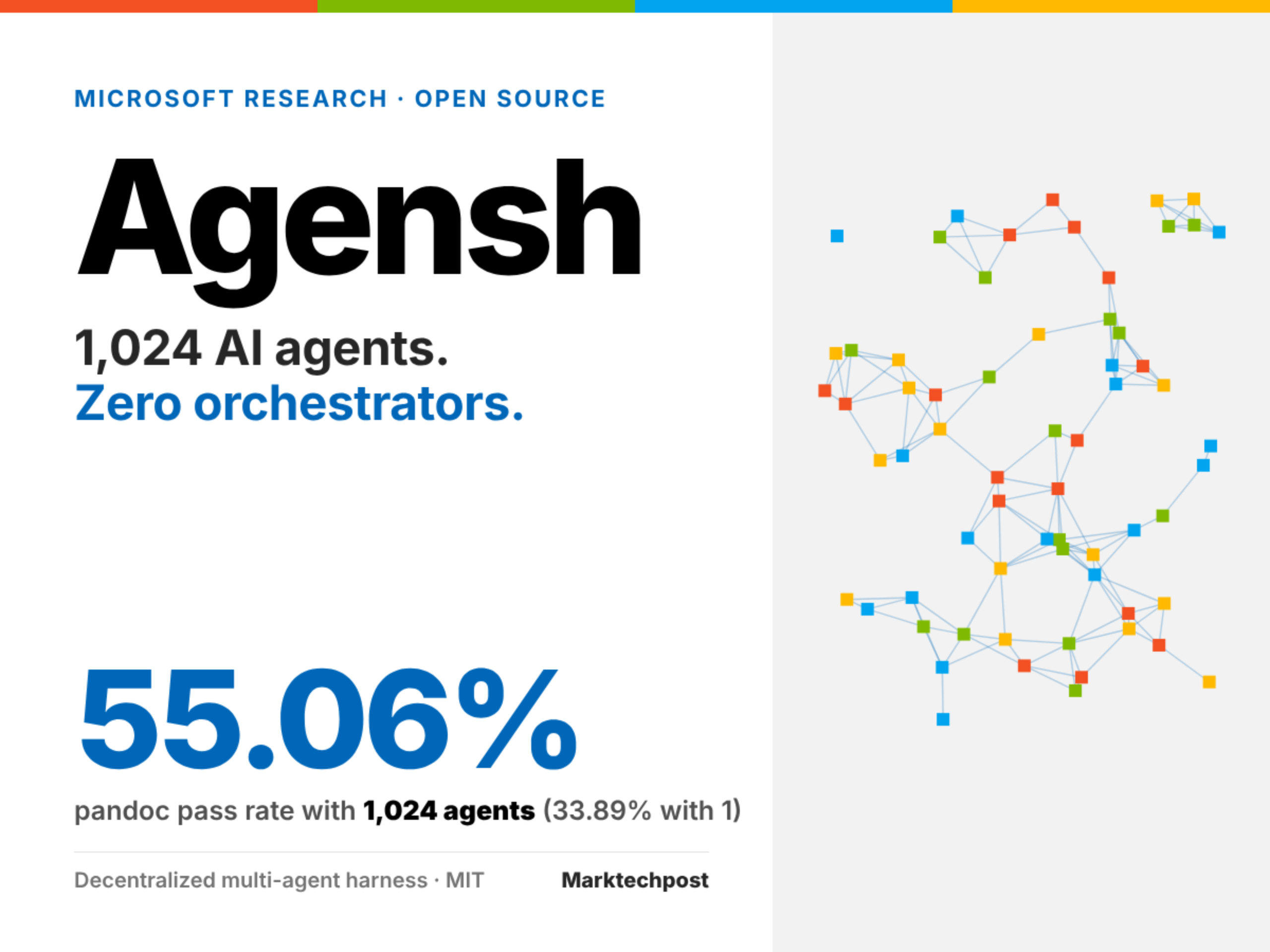
Microsoft open-sources Agensh: a decentralized framework that supports 1024 autonomous, collaboratively operating AI coding agents.

On October 25, 2026, Microsoft Research open-sourced Agensh, a multi-agent runtime framework that operates without a central coordinator, enabling 1 to 1,024 LLM-powered coding agents to self-organize and collaborate on ProgramBench. The system achieves decentralized coordination through shared dashboards inspired by Gitea, Mattermost, and DeLM, with all agents following the same prompt-driven five-step loop; its scalability has been validated in a Linux + Docker environment.

Microsoft Open-Sources Agensh: A Multi-Agent Harness for 1,024 Agents

Why it matters:This achievement represents a significant evolution in multi-agent system architectures—abandoning the traditional “master‑agent” paradigm and enabling large‑scale self‑organization through prompt engineering and lightweight service composition. Empirical results on ProgramBench (e.g., 128 agents achieving a 49% improvement in task load balancing across five tasks) establish a new benchmark for distributed AI engineering. Released under the MIT License and compatible with mainstream single‑agent tools such as Copilot CLI, it offers valuable guidance for practical development.

Timeline and related coverage

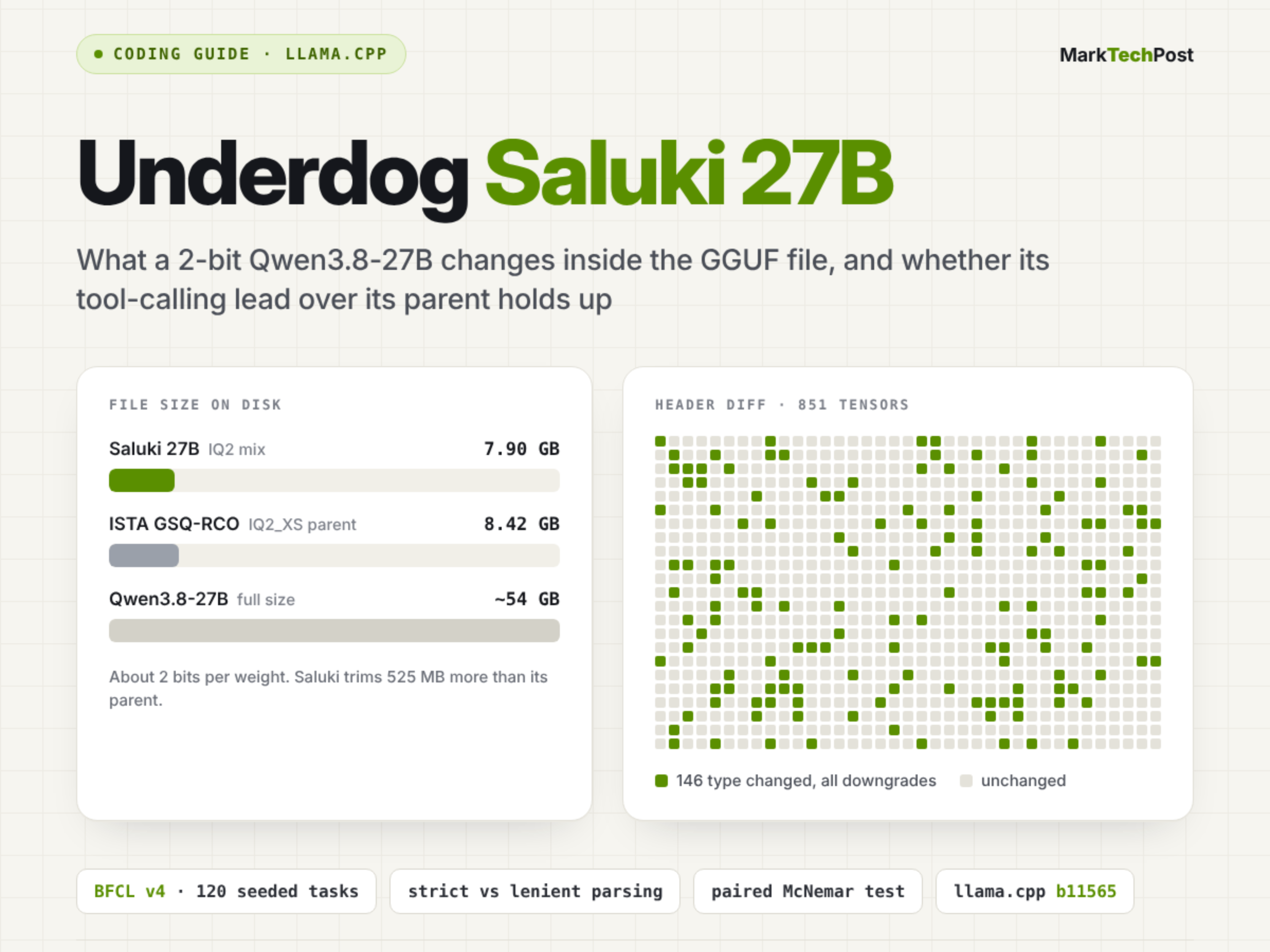
Underdog Saluki 27B: Technical Analysis of the 2-bit Qwen3.8-27B Tool-Calling Model Based on GSQ-RCO

This article introduces Saluki 27B, a model released by Underdog—a 7.9 GB, 2-bit quantized variant of Qwen3.8-27B—built using the GSQ-RCO method from ISTA-DASLab. It claims to outperform the original 54 GB full-precision model on the BFCL v4 benchmark across 120 tasks; however, all performance conclusions are based solely on the developers’ assertions and have not been independently verified.

How to Run Underdog Saluki 27B: 2-Bit Qwen3.8-27B Tool-Calling Guide
Timeline and related coverage

The PHP “Meltdown” incident reveals how AI can amplify the threat of legacy vulnerabilities.

Security researchers, using AI tools, have turned a PHP vulnerability—known collectively as PHP2Shell—that has existed for years and was once considered difficult to exploit—into a real-world exploitable attack surface. Within hours of the vulnerability being made public, it was already targeted in millions of exploitation attempts, yet no successful intrusions have been reported to date.

Why it matters:This incident clearly demonstrates for the first time that AI does not create new vulnerabilities out of thin air; rather, it significantly lowers the barrier to exploiting existing vulnerabilities, highlighting AI’s dual role in accelerating both offensive and defensive security dynamics. Moreover, all valid findings rely on human–machine collaboration.

Timeline and related coverage

Sebastian Raschka has released an eight-video course titled “Building a Reasoning Model from Scratch.”

On October 24, 2026, Sebastian Raschka published an eight-part, over-11-hour hands-on video course on Python and PyTorch in Ahead of AI magazine (magazine.sebastianraschka.com), systematically covering the evaluation of inference models, scaling during inference, reinforcement learning (RLVR), and knowledge distillation, with all methods implemented using the pre-trained Qwen3-0.6B model.

Why it matters:This course is the author’s advanced technical educational offering, following “Building Large Language Models from Scratch.” It focuses on the core evolutionary direction of today’s mainstream LLMs—enhancing inference capabilities—covering the entire technical pipeline from setting up the foundational environment to GRPO reinforcement learning and self‑distillation. The author explicitly states that all implementations are “hand‑crafted from scratch,” fully reproducible, and highly instructive with significant engineering reference value.

Timeline and related coverage

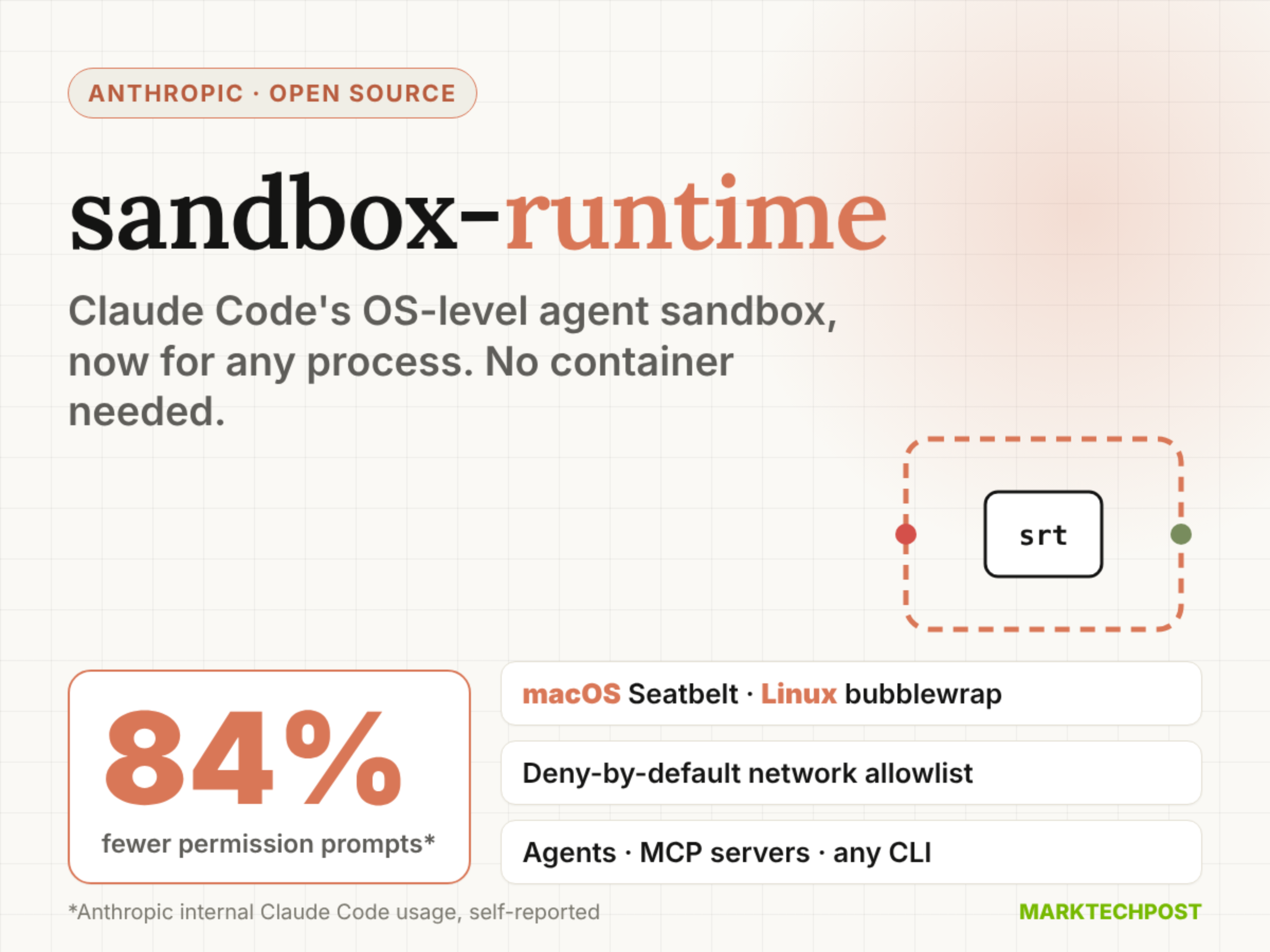
Anthropic open-sources the OS-level sandbox sandbox-runtime: providing container-free file and network isolation for AI agents.

On October 24, 2026, Anthropic open-sourced sandbox-runtime (srt), an OS-level sandboxing tool that operates without containers, designed to restrict file read/write and network access permissions for AI agents, MCP servers, and CLI tools. It supports macOS (Seatbelt), Linux (bubblewrap), and Windows (alpha), with npm package version 0.0.81 under the Apache-2.0 license.

Meet Anthropic’s sandbox-runtime: OS-Level Sandboxing for AI Agents, No Containers

Why it matters:This tool represents a significant advancement in AI security infrastructure—achieving fine-grained, full-process-tree coverage through the operating system’s native isolation mechanisms, directly addressing the risks of prompt injection and privilege escalation, and has already been deployed for internal validation within Claude Code.

Timeline and related coverage

月之暗面发布Kimi K3.1 Pro:2.8万亿参数开源权重模型,11月4日开放权重

月之暗面于2026年10月22日前后发布Kimi K3.1 Pro,一款2.8万亿参数、1040亿激活参数的多模态MoE模型,宣称性能逼近Fable 5.1;官方承诺11月4日发布开源权重,但截至报道时权重尚未公开;独立评测显示其在智能指数、代码与网络安全基准中表现突出,但存在推理成本、本地部署可行性及营销透明度等争议。

[AINews] Kimi 3.1 Pro 104BA-2.8T: Fable-5.1-Class Open Weights narrows Closed-AI lead to 1 month... and Pro Highspeed API with 2-3× speed
Timeline and related coverage

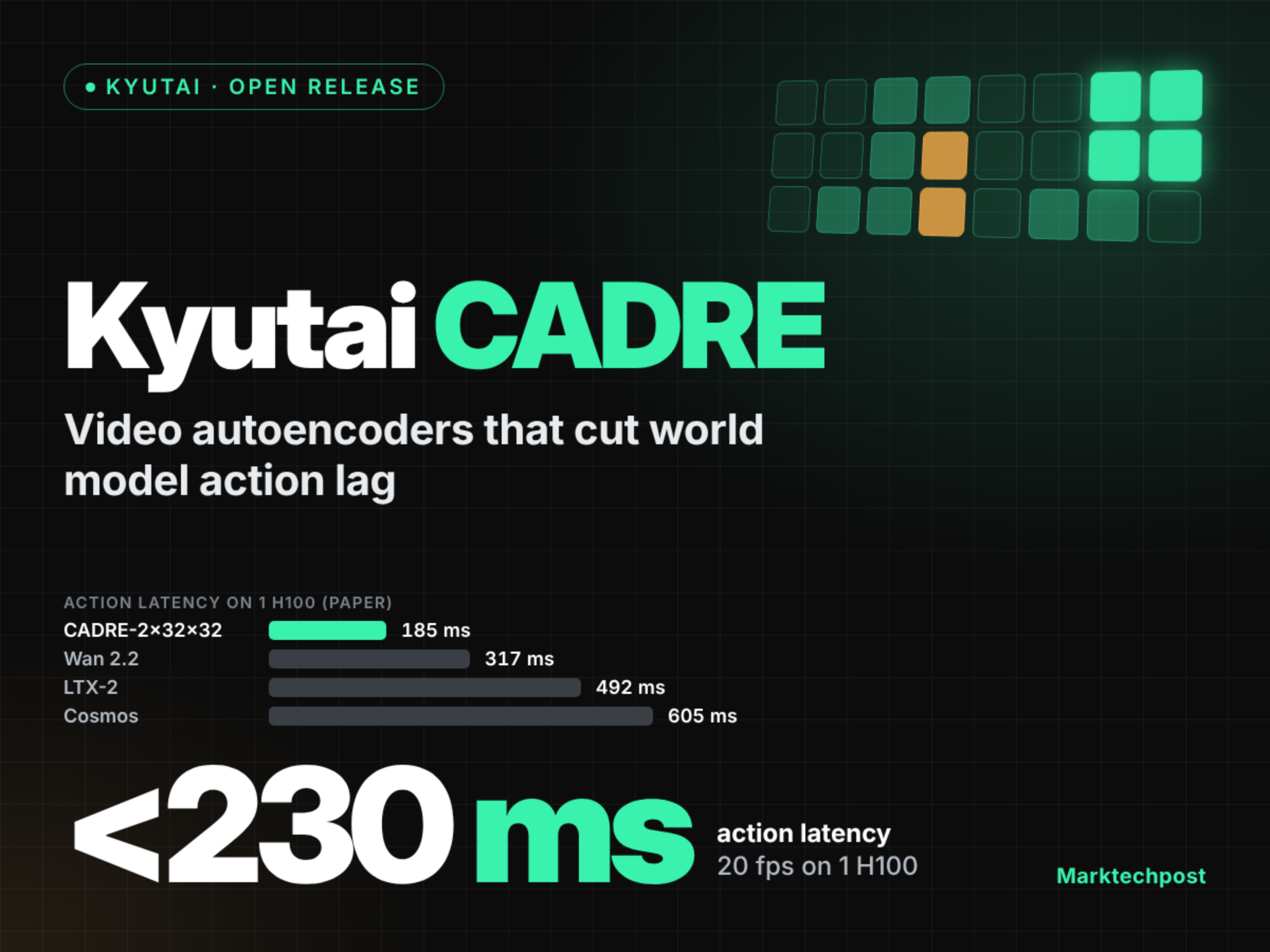
Kyutai releases the CADRE video autoencoder family: designed for interactive world models, with end-to-end action latency reduced to below 230 milliseconds.

On October 23, 2026, Kyutai unveiled CADRE—a family of seven open-source causal diffusion-based video autoencoders designed to reduce action latency in world models. On a single H100 GPU, measured response latency was as low as 185 ms, with inference throughput reaching 23.4 fps, and the scene FVD metric dropping to 162.6 (compared to 599.7 for Wan 2.2). However, in robotic manipulation tasks, its action following rate (ARR) lagged behind both Wan 2.2 and Cosmos.

Kyutai CADRE: Video Autoencoders That Cut World Model Lag Below 230 ms
Timeline and related coverage

Amazon SageMaker AI has launched a Multi-Step Reinforcement Learning (MTRL) framework, supporting end-to-end training of agents to accomplish multi-step tasks.

AWS has launched the Multi-Turn Reinforcement Learning (MTRL) feature, enabling users to train large‑model agents on SageMaker AI using full task trajectories and final outcome feedback, without requiring step‑level annotations. A end-to-end demonstration is provided using Wordle as an example, covering AgentCore deployment, data preparation, GRPO training, reward design, and cost analysis.

Timeline and related coverage

AWS CDK builds reusable constructs to resolve the blocking issue during SageMaker endpoint scaling updates.

When a SageMaker real-time AI endpoint has Application Auto Scaling enabled, attempting to update its configuration—such as instance type or count—directly via AWS CDK or CloudFormation will fail. This paper proposes a CDK construct based on custom resources that leverages strict dependency orchestration to achieve atomic updates of both the endpoint’s configuration and its scaling policies, eliminating the need for manual intervention.

Timeline and related coverage

AI-driven retro game porting wave shakes up the traditional emulation community

Recently, thanks to new AI tools, numerous unofficial cross-platform porting projects of retro games—such as “Halo” running on the web, “The Wind Waker” arriving on iPhone, and “Super Smash Bros.” entering mixed reality—have been gaining popularity. However, this AI‑accelerated decompilation–recompilation (decomp/recomp) approach is sparking controversy and division within the old-school game preservation community.

Timeline and related coverage

Black October: A Comprehensive Overview of the AI-Driven Cybersecurity Crisis—From Its Peak to Defensive Response

Around October 21–22, 2026, over a span of approximately 48 hours, more than a dozen high‑severity AI‑related vulnerabilities and intrusion incidents were reported worldwide, including PHP2Shell, GitLab RCE (CVSS 10), NGINX/HTTP/3 DoS, LiteLLM password theft, eMudhra CA key leakage, and Quest Diagnostics medical data exposure. State actors such as Storm‑0940 leveraged open‑source intelligent penetration‑testing frameworks like ARTEX to launch large‑scale attacks. Concurrently, AI security defense systems were rapidly being developed, encompassing formal verification, open‑source patching agents, standardization of agent capabilities, and hardware‑level optimizations.

Timeline and related coverage

Major upgrade to Amazon Polly’s generative engine: 14 new voices added, and for the first time, support for Hindi and Finnish generative speech, with zero-code migration.

Amazon Polly’s generative engine has undergone a major upgrade, significantly enhancing speech naturalness, accuracy, and emotional expressiveness, while supporting low-latency streaming synthesis. Fourteen new generative voices have been added, covering nine regions, and for the first time, generative voices in Hindi (Arjun, Kiara) and Finnish (Suvi) are universally available. The entire update is a seamless, drop-in replacement, requiring no changes to API calls or code.

Timeline and related coverage

Amazon SageMaker AI has launched GPU-free managed model training sessions, now generally available.

AWS has announced that SageMaker AI’s serverless model customization feature now includes “Training Sessions,” which are fully available starting today. Users can independently define post-training logic—such as custom loss functions, reward signals, or multi‑round reinforcement learning—while the platform automatically handles GPU allocation, distributed execution, fault tolerance, and checkpoint storage.

Timeline and related coverage

Amazon SageMaker launches the Training Session API: users can write custom training loops for large models without managing GPUs.

Amazon SageMaker has released the Training Sessions API, enabling users to implement custom large-model training workflows—such as SFT, RLHF, GRPO, and KTO—using pure Python scripts. GPU resource scheduling, fault tolerance, distributed execution, and checkpoint management are all handled by the service.

Timeline and related coverage